Zhou Dongsheng, Lv Dan, Wang Zhen, Zhang Yanhua, Chen Zhongming, Wang Chuang
Ningbo Kangning Hospital, Ningbo, China.
Ningbo Key Laboratory of Behavioral Neuroscience, School of Medicine, Ningbo University, Ningbo, China.
Front Mol Neurosci. 2018 Apr 11;11:121. doi: 10.3389/fnmol.2018.00121. eCollection 2018.
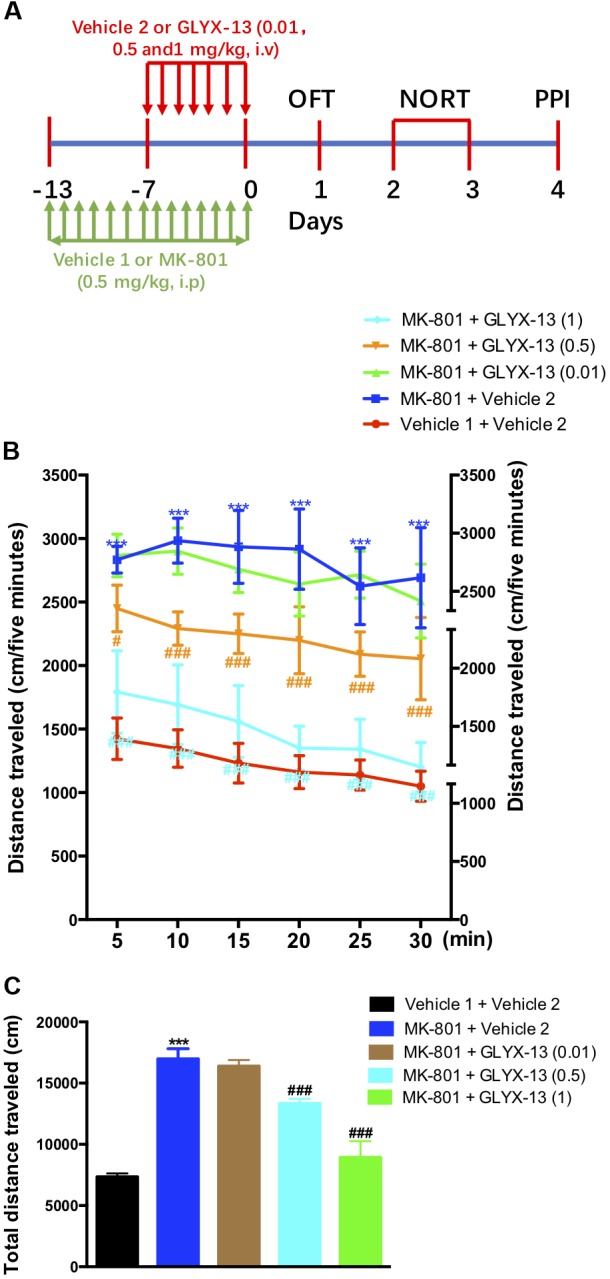
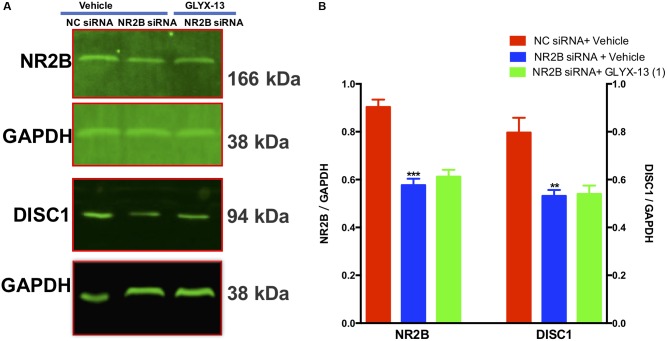
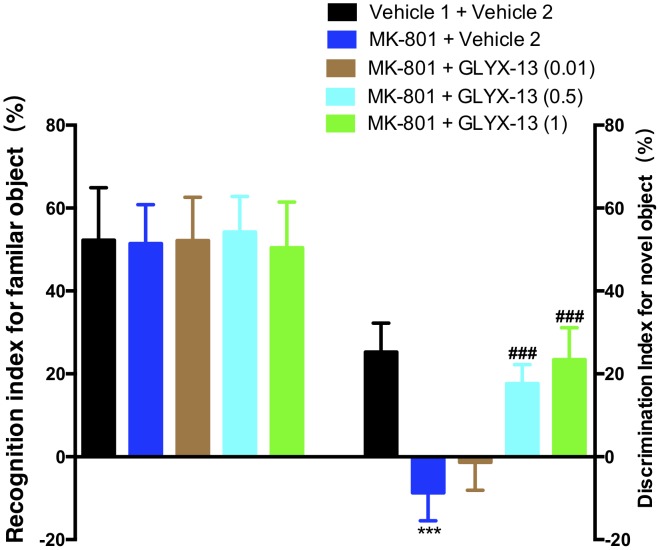
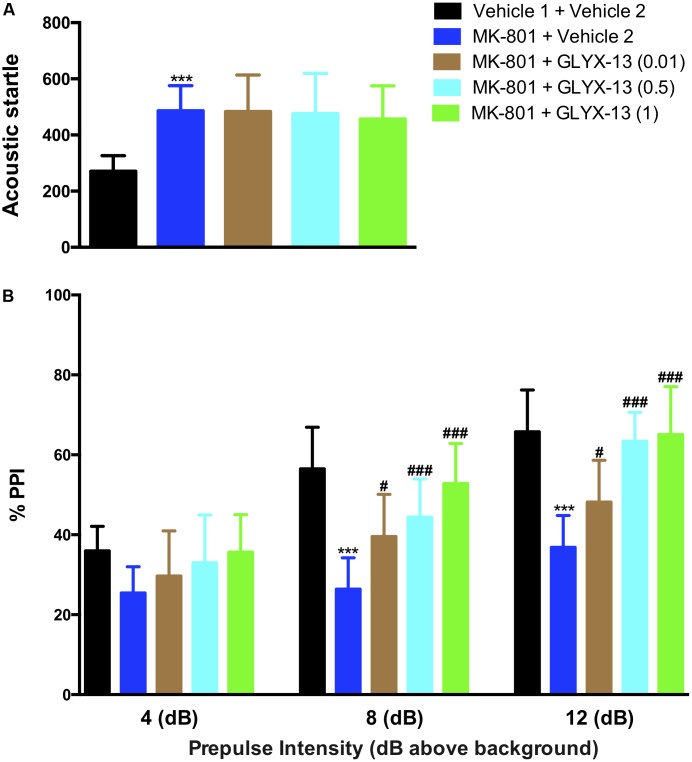
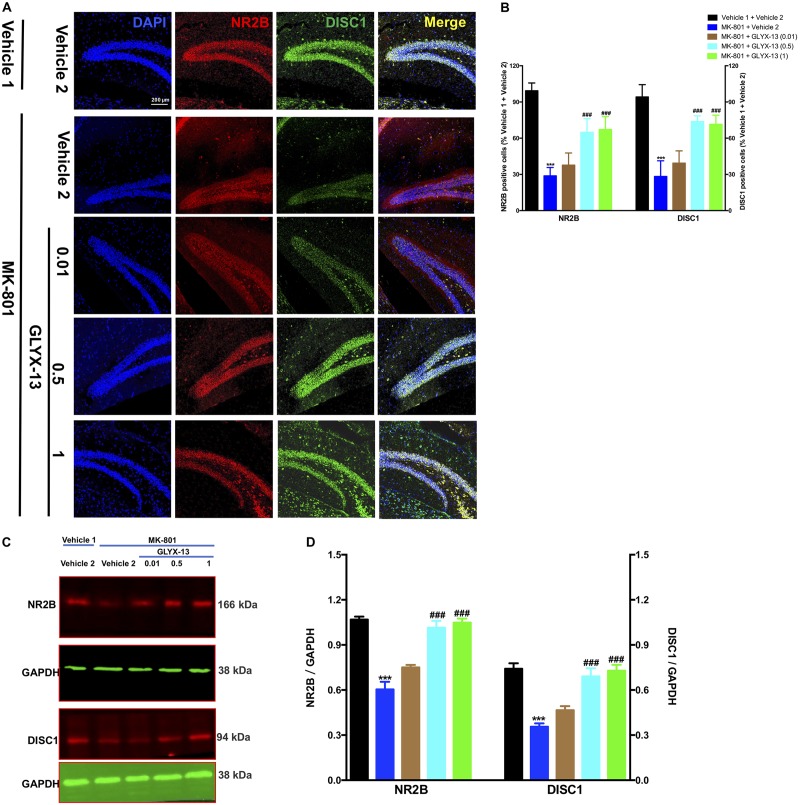
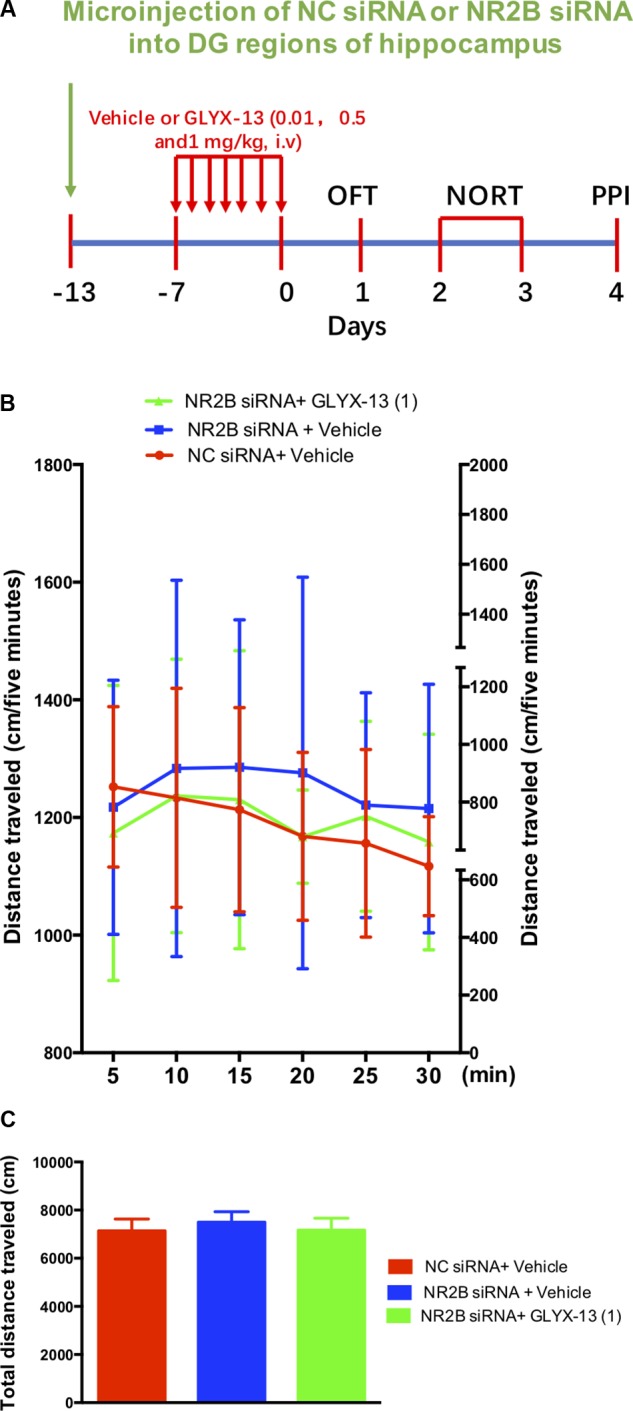
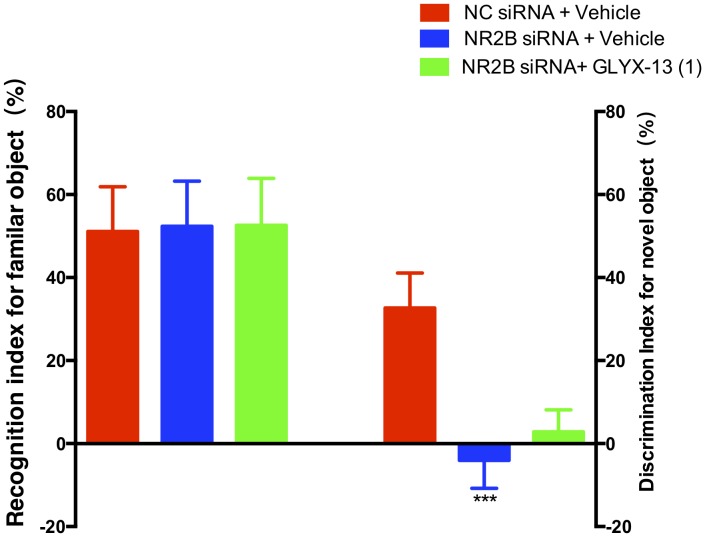
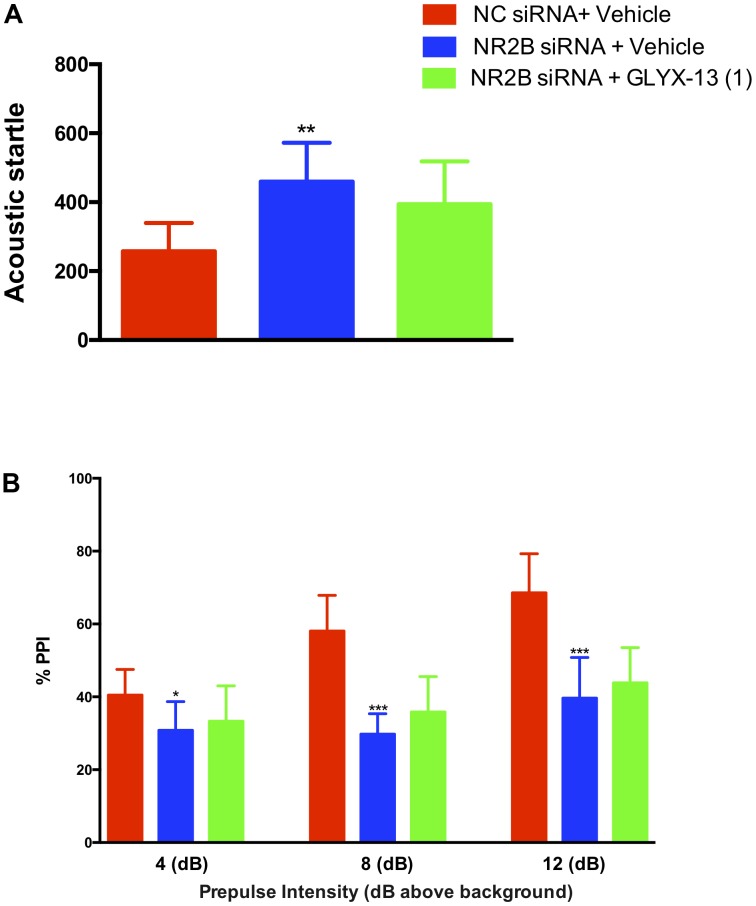
Evidence supports that the hypofunction of -methyl-D-aspartate receptor (NMDAR) and downregulation of disrupted-in-schizophrenia 1 (DISC1) contribute to the pathophysiology of schizophrenia. -Methyl D-aspartate receptor subtype 2B (NR2B)-containing NMDAR are associated with cognitive dysfunction in schizophrenia. GLYX-13 is an NMDAR glycine-site functional partial agonist and cognitive enhancer that does not induce psychotomimetic side effects. However, it remains unclear whether NR2B plays a critical role in the GLYX-13-induced alleviation of schizophrenia-like behaviors in mice. The effect of GLYX-13 was tested by observing changes in locomotor activity, novel object recognition ability, and prepulse inhibition (PPI) induced by dizocilpine (known as MK-801) in mice. Lentivirus-mediated NR2B knockdown in the hippocampus was assessed to confirm the role of NR2B in GLYX-13 pathophysiology, using Western blots and immunohistochemistry. The systemic administration of GLYX-13 (0.5 and 1 mg/kg, i.p.) ameliorates MK-801 (0.5 mg/kg, i.p.)-induced hyperlocomotion, deficits in memory, and PPI in mice. Additionally, GLYX-13 normalized the MK-801-induced alterations in signaling molecules, including NR2B and DISC1 in the hippocampus. Furthermore, we found that NR2B knockdown produced memory and PPI deficits without any changes in locomotor activity. Notably, DISC1 levels significantly decreased by NR2B knockdown. However, the effective dose of GLYX-13 did not alleviate the memory and PPI dysfunctions or downregulation of DISC1 induced by NR2B knockdown. Our results suggest GLYX-13 as a candidate for schizophrenia treatment, and NR2B and DISC1 in the hippocampus may account for the molecular mechanisms of GLYX-13.
有证据支持,N-甲基-D-天冬氨酸受体(NMDAR)功能减退和精神分裂症相关基因1(DISC1)下调与精神分裂症的病理生理学有关。含N-甲基-D-天冬氨酸受体亚型2B(NR2B)的NMDAR与精神分裂症的认知功能障碍有关。GLYX-13是一种NMDAR甘氨酸位点功能性部分激动剂和认知增强剂,不会诱发拟精神病副作用。然而,尚不清楚NR2B在GLYX-13诱导减轻小鼠精神分裂症样行为中是否起关键作用。通过观察小鼠中由地佐环平(又称MK-801)诱导的运动活动、新物体识别能力和前脉冲抑制(PPI)的变化来测试GLYX-13的作用。使用蛋白质免疫印迹法和免疫组织化学法,评估慢病毒介导的海马体中NR2B基因敲低,以确认NR2B在GLYX-13病理生理学中的作用。全身性给予GLYX-13(0.5和1毫克/千克,腹腔注射)可改善MK-801(0.5毫克/千克,腹腔注射)诱导的小鼠运动亢进、记忆缺陷和PPI。此外,GLYX-13使MK-801诱导的海马体中信号分子(包括NR2B和DISC1)的改变恢复正常。此外,我们发现NR2B基因敲低会产生记忆和PPI缺陷,而运动活动没有任何变化。值得注意的是,NR2B基因敲低使DISC1水平显著降低。然而,GLYX-13的有效剂量并不能减轻NR2B基因敲低诱导的记忆和PPI功能障碍或DISC1下调。我们的研究结果表明GLYX-13可作为精神分裂症治疗的候选药物,海马体中的NR2B和DISC1可能是GLYX-13作用的分子机制。