Plataki Maria E, Diskos Konstantinos, Sougklakos Christos, Velissariou Marouso, Georgilis Alexandros, Stavroulaki Vasiliki, Sidiropoulou Kyriaki
Department of Biology, University of Crete, Heraklion, Greece.
Institute of Molecular Biology and Biotechnology-Foundation for Research and Technology Hellas, Heraklion, Greece.
Front Behav Neurosci. 2021 Jun 11;15:689193. doi: 10.3389/fnbeh.2021.689193. eCollection 2021.
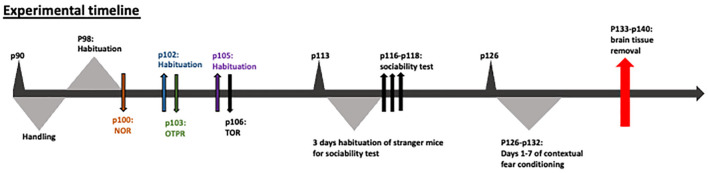
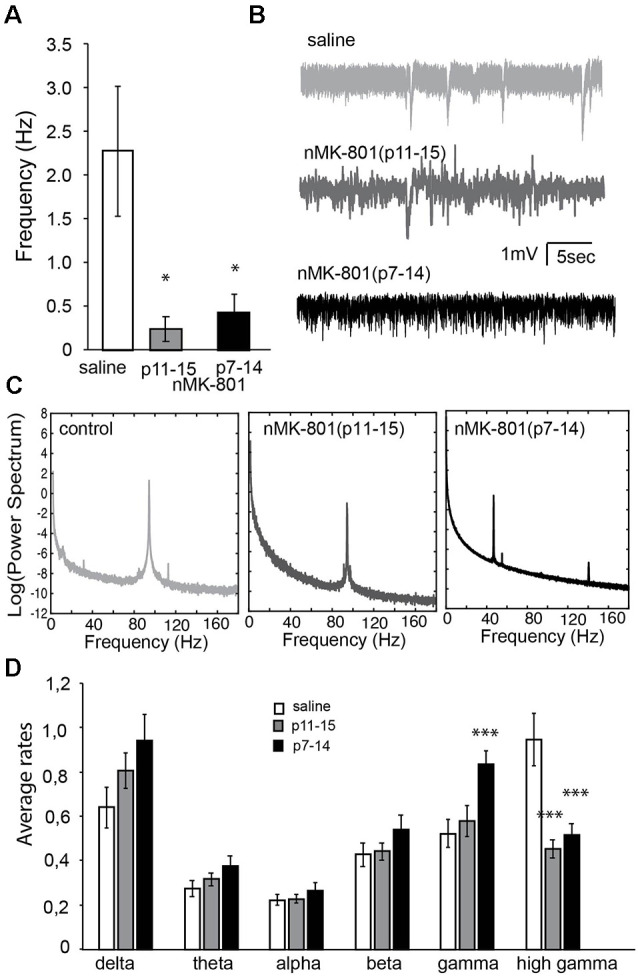
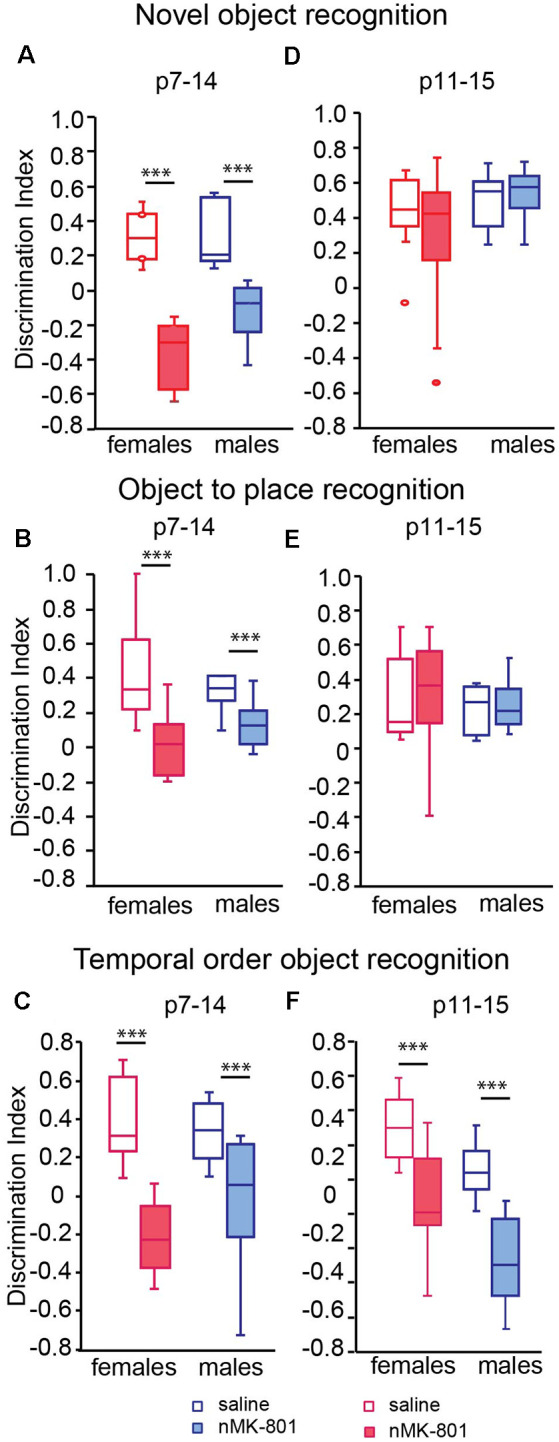
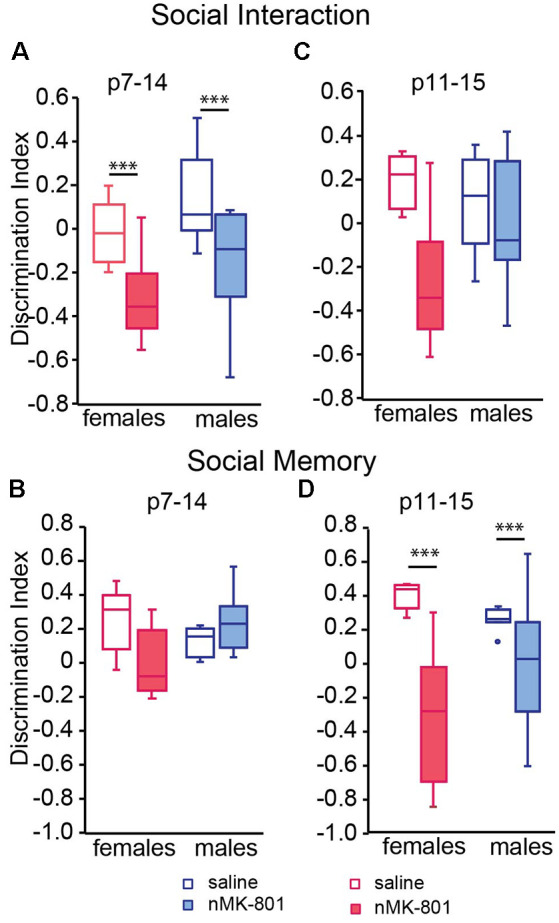
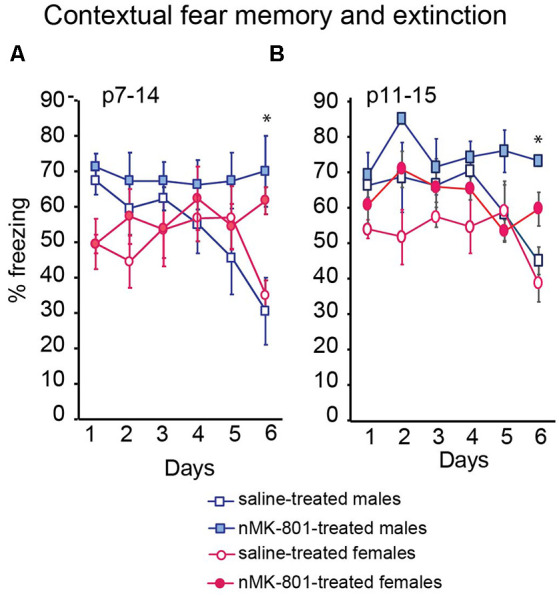
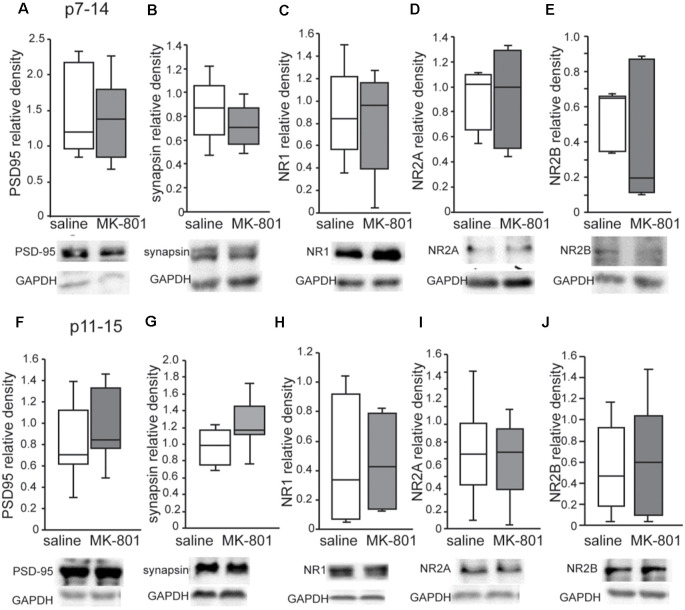
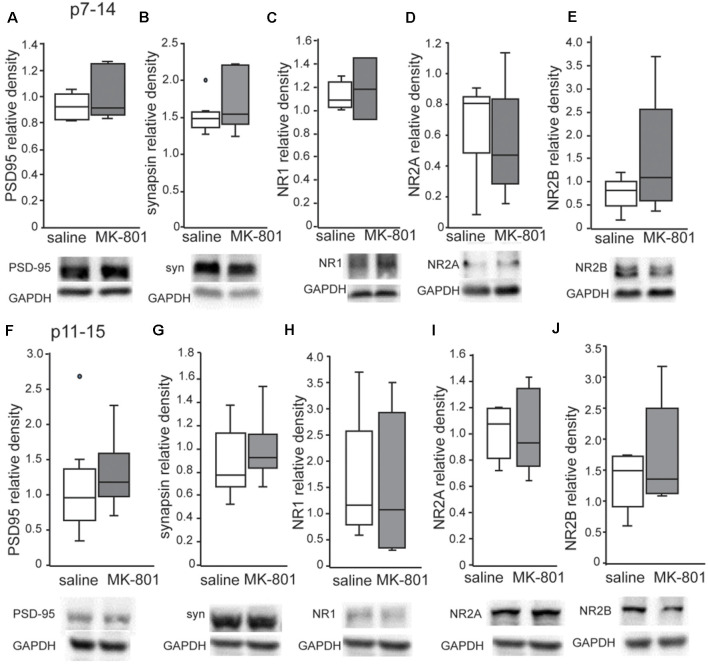
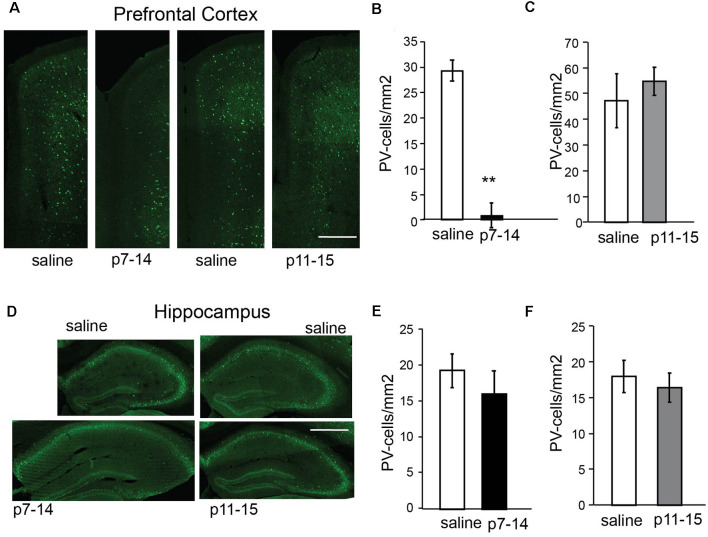
The neonatal MK-801 model of schizophrenia has been developed based on the neurodevelopmental and NMDA receptor hypofunction hypotheses of schizophrenia. This animal model is generated with the use of the NMDA receptor antagonist, MK-801, during different temporal windows of postnatal life of rodents leading to behavioral defects in adulthood. However, no studies have examined the role of specific postnatal time periods in the neonatal MK-801 (nMK-801) rodent model and the resulting behavioral and neurobiological effects. Thus, the goal of this study is to systematically investigate the role of NMDA hypofunction, during specific temporal windows in postnatal life on different cognitive and social behavioral paradigms, as well as various neurobiological effects during adulthood. Both female and male mice were injected intraperitoneally (i.p.) with MK-801 during postnatal days 7-14 (p7-14) or 11-15 (p11-15). Control mice were injected with saline during the respective time period. In adulthood, mice were tested in various cognitive and social behavioral tasks. Mice nMK-801-treated on p7-14 show impaired performance in the novel object, object-to-place, and temporal order object recognition (TOR) tasks, the sociability test, and contextual fear extinction. Mice nMK-801-treated on p11-15 only affects performance in the TOR task, the social memory test, and contextual fear extinction. No differences were identified in the expression of NMDA receptor subunits, the synapsin or PSD-95 proteins, either in the prefrontal cortex (PFC) or the hippocampus (HPC), brain regions significantly affected in schizophrenia. The number of parvalbumin (PV)-expressing cells is significantly reduced in the PFC, but not in the HPC, of nMK-801-treated mice on p7-14 compared to their controls. No differences in PV-expressing cells (PFC or HPC) were identified in nMK-801-treated mice on p11-15. We further examined PFC function by recording spontaneous activity in a solution that allows up state generation. We find that the frequency of up states is significantly reduced in both nMK-801-treated mice on p7-14 and p11-15 compared to saline-treated mice. Furthermore, we find adaptations in the gamma and high gamma activity in nMK-801-treated mice. In conclusion, our results show that MK-801 treatment during specific postnatal temporal windows has differential effects on cognitive and social behaviors, as well as on underlying neurobiological substrates.
精神分裂症的新生期MK-801模型是基于精神分裂症的神经发育和NMDA受体功能低下假说而建立的。该动物模型是通过在啮齿动物出生后不同时间段使用NMDA受体拮抗剂MK-801生成的,这会导致成年后出现行为缺陷。然而,尚无研究考察新生期特定时间段在新生期MK-801(nMK-801)啮齿动物模型中的作用以及由此产生的行为和神经生物学效应。因此,本研究的目的是系统地研究出生后特定时间段内NMDA功能低下在不同认知和社会行为范式上的作用,以及成年期的各种神经生物学效应。在出生后第7 - 14天(p7 - 14)或11 - 15天(p11 - 15),对雄性和雌性小鼠腹腔注射(i.p.)MK-801。对照小鼠在相应时间段注射生理盐水。成年后,对小鼠进行各种认知和社会行为任务测试。在p7 - 14接受nMK-801处理的小鼠在新物体、物体到位置和时间顺序物体识别(TOR)任务、社交能力测试以及情境恐惧消退测试中表现受损。在p11 - 15接受nMK-801处理的小鼠仅影响TOR任务、社会记忆测试和情境恐惧消退测试中的表现。在前额叶皮质(PFC)或海马体(HPC)中,NMDA受体亚基、突触素或PSD-95蛋白的表达没有差异,这两个脑区在精神分裂症中受到显著影响。与对照组相比,在p7 - 14接受nMK-801处理的小鼠的PFC中表达小白蛋白(PV)的细胞数量显著减少,但在HPC中没有。在p11 - 15接受nMK-801处理的小鼠中,未发现PV表达细胞(PFC或HPC)有差异。我们通过记录在允许产生上行状态的溶液中的自发活动来进一步检测PFC功能。我们发现,与生理盐水处理的小鼠相比,在p7 - 14和p11 - 15接受nMK-801处理的小鼠的上行状态频率均显著降低。此外,我们发现接受nMK-801处理的小鼠的γ和高γ活动有适应性变化。总之,我们的结果表明,在出生后特定时间段进行MK-801处理对认知和社会行为以及潜在的神经生物学底物有不同的影响。