Mäkelä Mika J, Christensen Helene Nordahl, Karlsson Antti, Rastogi Sarang, Kettunen Kirsi
Skin and Allergy Hospital, Helsinki University Hospital, and University of Helsinki, Helsinki, Finland.
AstraZeneca, Södertälje, Sweden.
Eur Clin Respir J. 2018 Apr 15;5(1):1458560. doi: 10.1080/20018525.2018.1458560. eCollection 2018.
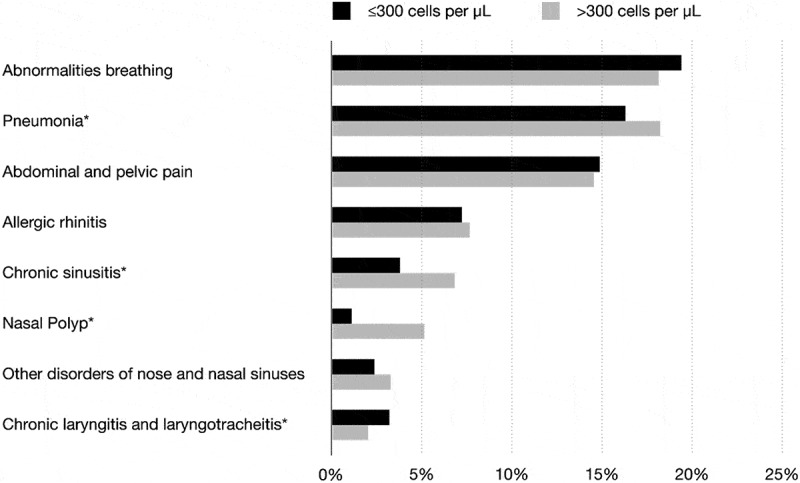
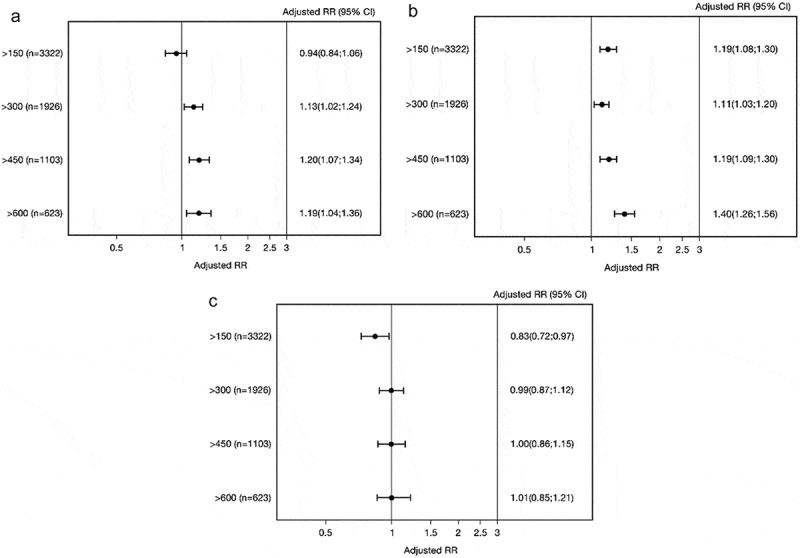
: Eosinophilic airway inflammation is common in asthma patients and appears to be associated with severe exacerbations and loss of asthma control. : To describe the resource utilization and clinical characteristics of patients with eosinophilic asthma. : Asthma patients ≥18 years with ≥1 blood eosinophil count in secondary care (South West Finland) during 2003‒2013 were included. Clinical characteristics (age, lung function, body mass index, and comorbidities) and asthma-related resource utilization (hospital admissions, outpatient visits, and emergency room [ER] visits) were retrieved. Resource utilization rates were compared for patients with blood eosinophil ≤ or >300 cells/μL, using adjusted negative binomial regression models. : Overall, 4,357 eligible patients were identified (mean age 60 years, females 68%), of which 1,927 (44%) had >300 eosinophil cells/μL blood. Patients with ≤300 and >300 eosinophil counts, exhibited similar clinical characteristics, including advanced age, poor lung function, and overweight. Comorbidities such as pneumonia, sinusitis, and nasal polyps, were more frequent among those with >300 eosinophil cells/μL blood compared with patients with lower counts. Eosinophil counts >300 cells/μL were associated with greater hospital admissions (rate ratio [RR] [95% confidence interval CI]: 1.13 [1.02;1.24]) and outpatient visits (RR [95% CI]: 1.11 [1.03;1.20]) compared with patients with lower eosinophil counts. Rates of ER visits were similar between the patient groups (RR [95% CI]: 0.99 [0.87;1.12]). : Hospital admissions and outpatient visits occurred more often for patients with eosinophil counts >300 cells/µL, than for patients with lower eosinophil counts. Routine blood eosinophil screening might be useful to identify patients with an eosinophilic phenotype eligible for more targeted treatments.
嗜酸性气道炎症在哮喘患者中很常见,似乎与严重发作和哮喘控制不佳有关。
描述嗜酸性粒细胞性哮喘患者的资源利用情况和临床特征。
纳入2003年至2013年在芬兰西南部二级医疗保健机构中年龄≥18岁且血液嗜酸性粒细胞计数≥1次的哮喘患者。检索临床特征(年龄、肺功能、体重指数和合并症)以及与哮喘相关的资源利用情况(住院、门诊就诊和急诊室就诊)。使用调整后的负二项回归模型比较血液嗜酸性粒细胞≤或>300个/μL的患者的资源利用率。
总体而言,共识别出4357名符合条件的患者(平均年龄60岁,女性占68%),其中1927名(44%)血液嗜酸性粒细胞>300个/μL。血液嗜酸性粒细胞计数≤300和>300的患者表现出相似的临床特征,包括年龄较大、肺功能差和超重。与计数较低的患者相比,血液嗜酸性粒细胞>300个/μL的患者中肺炎、鼻窦炎和鼻息肉等合并症更为常见。与嗜酸性粒细胞计数较低的患者相比,嗜酸性粒细胞计数>300个/μL与更高的住院率(率比[RR][95%置信区间CI]:1.13[1.02;1.24])和门诊就诊率(RR[95%CI]:1.11[1.03;1.20])相关。两组患者的急诊室就诊率相似(RR[95%CI]:0.99[0.87;1.12])。
嗜酸性粒细胞计数>300个/μL的患者比嗜酸性粒细胞计数较低的患者更常发生住院和门诊就诊。常规血液嗜酸性粒细胞筛查可能有助于识别适合更有针对性治疗的嗜酸性粒细胞表型患者。