The First School of Clinical Medicine, Southern Medical University, Guangzhou, China.
Department of Critical Care Medicine, Nanfang Hospital, Southern Medical University, Guangzhou, China.
Mol Cell Biochem. 2018 Dec;449(1-2):257-265. doi: 10.1007/s11010-018-3362-4. Epub 2018 Apr 25.
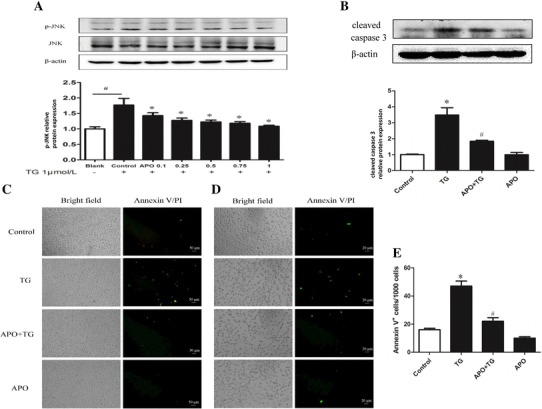
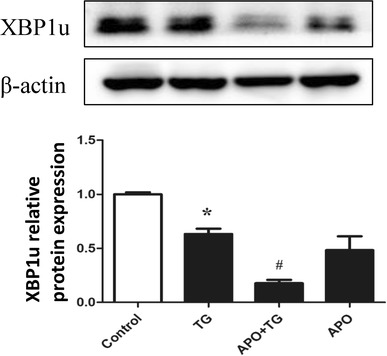
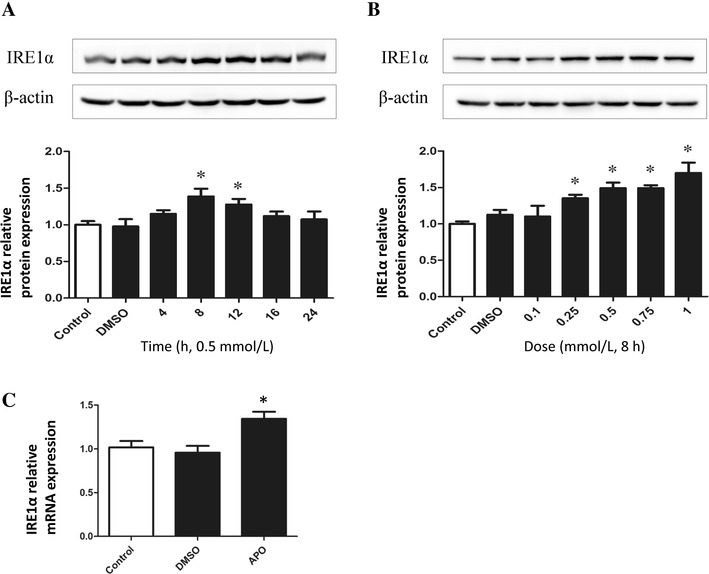
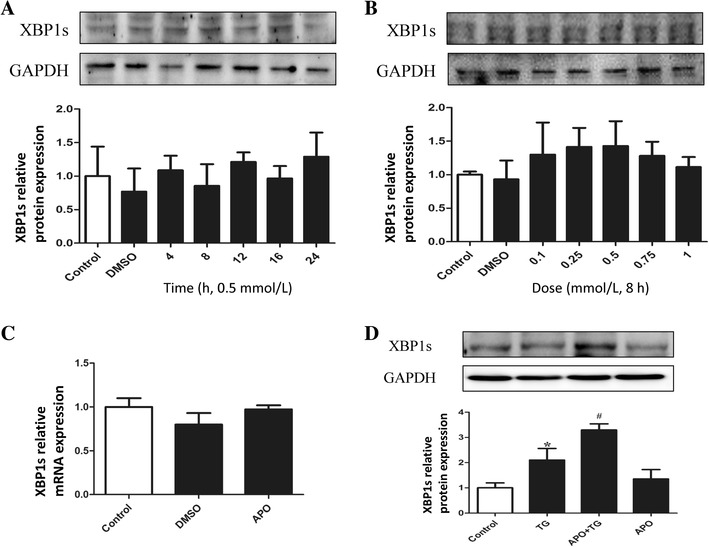
Endoplasmic reticulum (ER) stress-induced endothelial cell (EC) apoptosis has been implicated in a variety of human diseases. In addition to being regarded as an NADPH oxidase (NOX) inhibitor, apocynin (APO) exhibits an anti-apoptotic effect in various cells. The present study aimed to identify the protective role of apocynin in ER stress-mediated EC apoptosis and the underlying mechanisms. We found that ER stress resulted in a significant increase in c-Jun N-terminal kinase phosphorylation, and elicited caspase 3 cleavage and apoptosis. However, apocynin obviously attenuated EC apoptosis and this effect was partly dependent on ER stress sensor inositol-requiring enzyme 1α (IRE1α). Importantly, apocynin upregulated IRE1α expression in both protein and mRNA levels and promoted the pro-survival XBP1 splicing. Our results suggest that apocynin protects ECs against ER stress-induced apoptosis via IRE1α involvement. These findings may provide a novel mechanistic explanation for the anti-apoptotic effect of apocynin in ER stress.
内质网(ER)应激诱导的内皮细胞(EC)凋亡与多种人类疾病有关。除了被认为是 NADPH 氧化酶(NOX)抑制剂外,育亨宾(APO)在各种细胞中表现出抗凋亡作用。本研究旨在确定育亨宾在 ER 应激介导的 EC 凋亡中的保护作用及其潜在机制。我们发现 ER 应激导致 c-Jun N 末端激酶磷酸化显著增加,并引发 caspase 3 切割和凋亡。然而,育亨宾明显减轻了 EC 凋亡,这种作用部分依赖于内质网应激传感器肌醇需求酶 1α(IRE1α)。重要的是,育亨宾在蛋白和 mRNA 水平上均上调 IRE1α 的表达,并促进了生存促进的 XBP1 剪接。我们的研究结果表明,育亨宾通过 IRE1α 的参与保护 EC 免受 ER 应激诱导的凋亡。这些发现可能为育亨宾在 ER 应激中的抗凋亡作用提供新的机制解释。