Leibniz-Institut für Wissensmedien, Tübingen, Germany.
PLoS One. 2018 Apr 26;13(4):e0196420. doi: 10.1371/journal.pone.0196420. eCollection 2018.
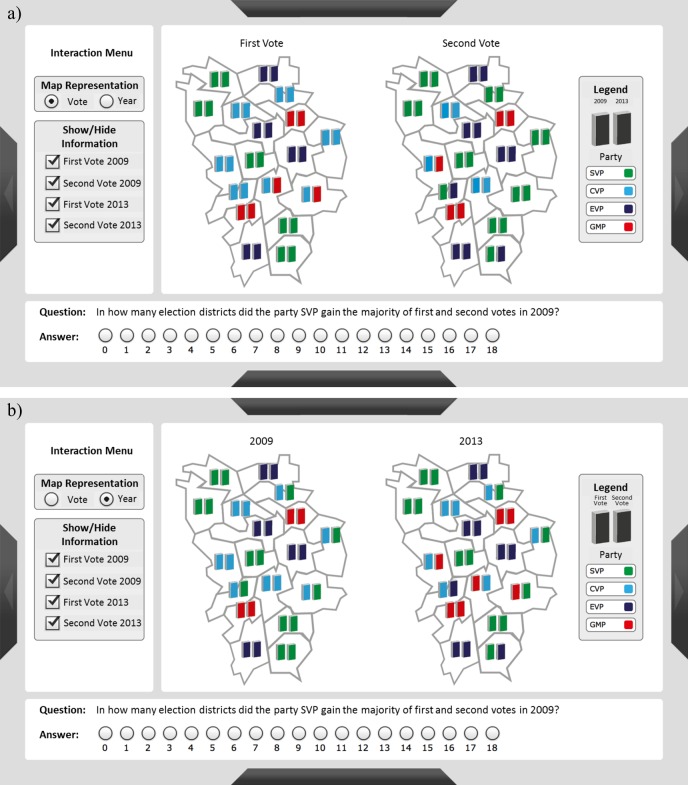
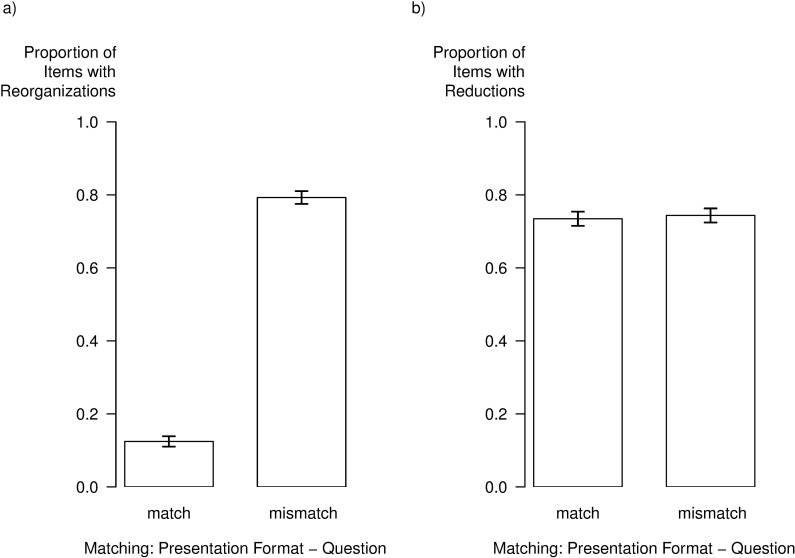
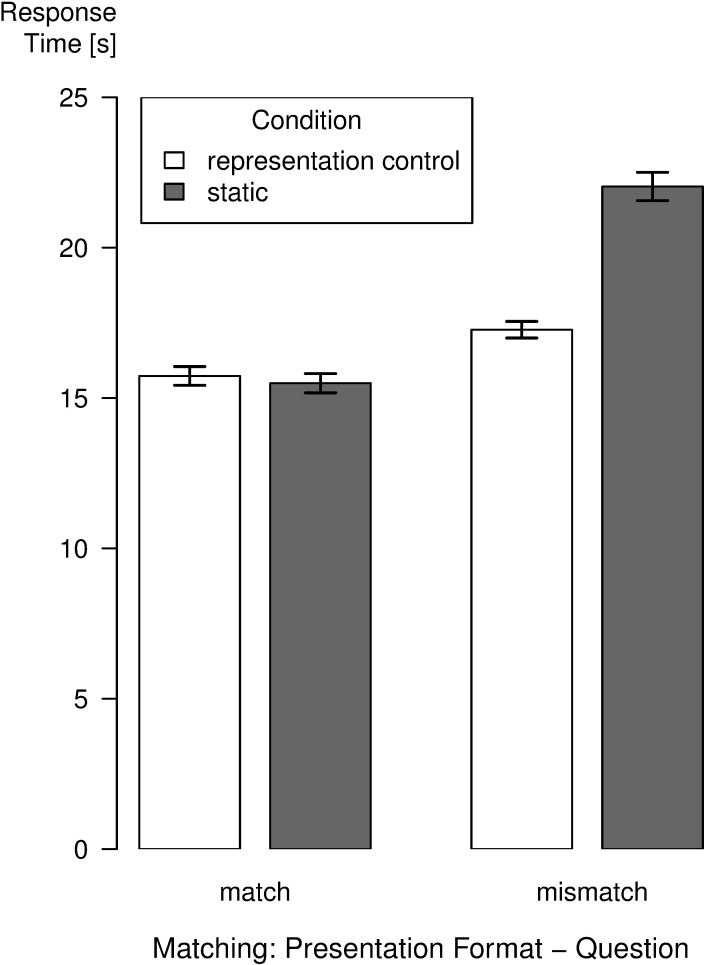
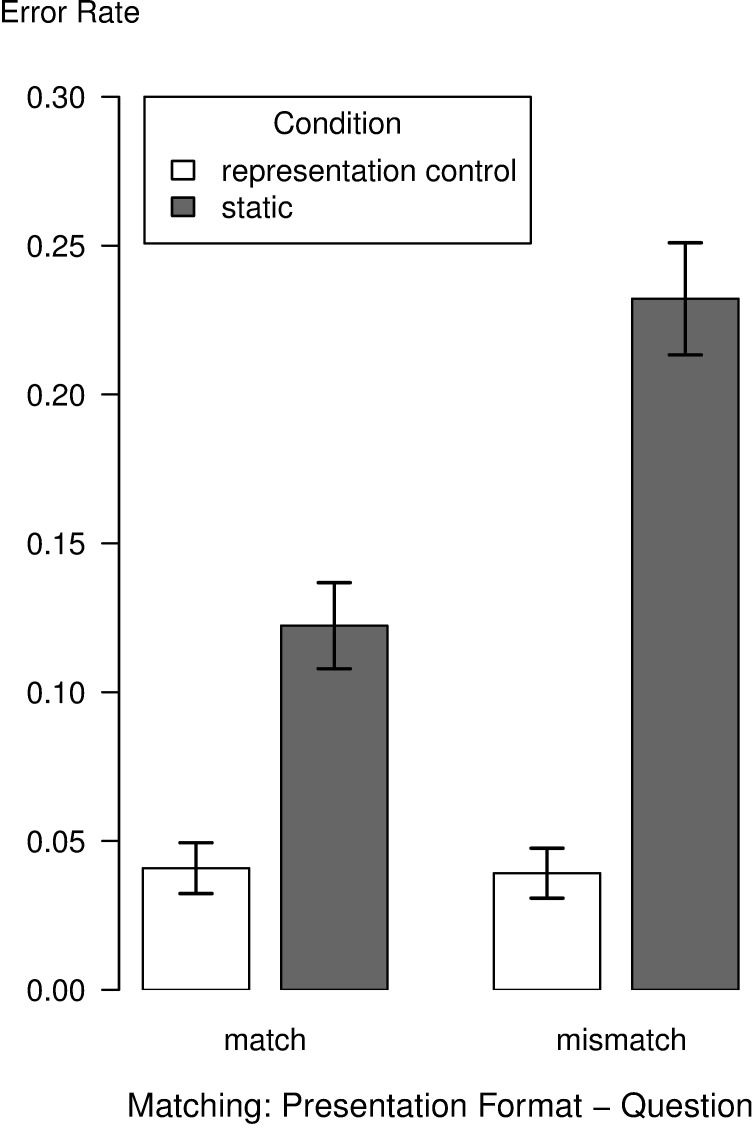
In complex graphical representations, the relevant information for a specific task is often distributed across multiple spatial locations. In such situations, understanding the representation requires internal transformation processes in order to extract the relevant information. However, digital technology enables observers to alter the spatial arrangement of depicted information and therefore to offload the transformation processes. The objective of this study was to investigate the use of such a representation control (i.e. the users' option to decide how information should be displayed) in order to accomplish an information extraction task in terms of solution time and accuracy. In the representation control condition, the participants were allowed to reorganize the graphical representation and reduce information density. In the control condition, no interactive features were offered. We observed that participants in the representation control condition solved tasks that required reorganization of the maps faster and more accurate than participants without representation control. The present findings demonstrate how processes of cognitive offloading, spatial contiguity, and information coherence interact in knowledge media intended for broad and diverse groups of recipients.
在复杂的图形表示中,特定任务的相关信息通常分布在多个空间位置。在这种情况下,理解表示形式需要内部转换过程才能提取相关信息。然而,数字技术使观察者能够改变所描绘信息的空间排列,从而减轻转换过程的负担。本研究的目的是调查这种表示控制(即用户决定信息应如何显示的选项)的使用情况,以便根据解决时间和准确性来完成信息提取任务。在表示控制条件下,允许参与者重新组织图形表示并降低信息密度。在对照条件下,不提供交互功能。我们观察到,在表示控制条件下的参与者比没有表示控制的参与者更快、更准确地解决了需要重新组织地图的任务。本研究结果表明了认知卸载、空间连续性和信息连贯性在为广泛和多样化的受众设计的知识媒体中是如何相互作用的。