Department of Veterinary Clinical Pathobiology, Graduate School of Agricultural and Life Sciences, The University of Tokyo, Tokyo, Japan.
Veterinary Medical Center, Graduate School of Agricultural and Life Sciences, The University of Tokyo, Tokyo, Japan.
BMC Cancer. 2018 Apr 27;18(1):472. doi: 10.1186/s12885-018-4409-3.
Invasive urothelial carcinoma (iUC) is a major cause of death in humans, and approximately 165,000 individuals succumb to this cancer annually worldwide. Comparative oncology using relevant animal models is necessary to improve our understanding of progression, diagnosis, and treatment of iUC. Companion canines are a preferred animal model of iUC due to spontaneous tumor development and similarity to human disease in terms of histopathology, metastatic behavior, and treatment response. However, the comprehensive molecular characterization of canine iUC is not well documented. In this study, we performed transcriptome analysis of tissue samples from canine iUC and normal bladders using an RNA sequencing (RNA-Seq) approach to identify key molecular pathways in canine iUC.
Total RNA was extracted from bladder tissues of 11 dogs with iUC and five healthy dogs, and RNA-Seq was conducted. Ingenuity Pathway Analysis (IPA) was used to assign differentially expressed genes to known upstream regulators and functional networks.
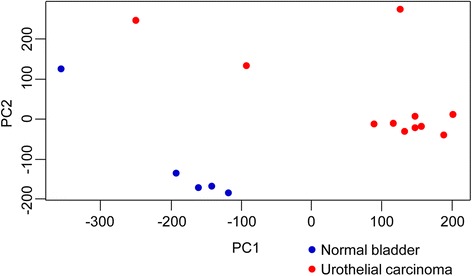
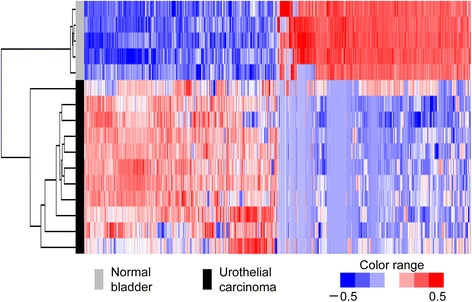
Differential gene expression analysis of the RNA-Seq data revealed 2531 differentially expressed genes, comprising 1007 upregulated and 1524 downregulated genes, in canine iUC. IPA revealed that the most activated upstream regulator was PTGER2 (encoding the prostaglandin E receptor EP2), which is consistent with the therapeutic efficiency of cyclooxygenase inhibitors in canine iUC. Similar to human iUC, canine iUC exhibited upregulated ERBB2 and downregulated TP53 pathways. Biological functions associated with cancer, cell proliferation, and leukocyte migration were predicted to be activated, while muscle functions were predicted to be inhibited, indicating muscle-invasive tumor property.
Our data confirmed similarities in gene expression patterns between canine and human iUC and identified potential therapeutic targets (PTGER2, ERBB2, CCND1, Vegf, and EGFR), suggesting the value of naturally occurring canine iUC as a relevant animal model for human iUC.
浸润性膀胱癌(iUC)是人类死亡的主要原因,全球每年约有 16.5 万人死于这种癌症。使用相关动物模型进行比较肿瘤学研究对于提高我们对 iUC 的进展、诊断和治疗的理解是必要的。伴侣犬是 iUC 的首选动物模型,因为它们会自发形成肿瘤,并且在组织病理学、转移行为和治疗反应方面与人类疾病相似。然而,犬 iUC 的全面分子特征尚未得到很好的描述。在这项研究中,我们使用 RNA 测序(RNA-Seq)方法对来自犬 iUC 和正常膀胱的组织样本进行了转录组分析,以确定犬 iUC 中的关键分子途径。
从 11 只患有 iUC 的犬和 5 只健康犬的膀胱组织中提取总 RNA,并进行 RNA-Seq。使用 IPA 对差异表达基因进行分析,将其分配到已知的上游调节剂和功能网络中。
RNA-Seq 数据的差异基因表达分析显示,犬 iUC 中有 2531 个差异表达基因,包括 1007 个上调基因和 1524 个下调基因。IPA 显示,最活跃的上游调节剂是 PTGER2(编码前列腺素 E 受体 EP2),这与 COX 抑制剂在犬 iUC 中的治疗效果一致。与人类 iUC 相似,犬 iUC 中 ERBB2 途径上调,TP53 途径下调。预测与癌症、细胞增殖和白细胞迁移相关的生物学功能被激活,而肌肉功能被预测受到抑制,表明肿瘤具有肌肉浸润性。
我们的数据证实了犬 iUC 和人类 iUC 之间的基因表达模式相似,并确定了潜在的治疗靶点(PTGER2、ERBB2、CCND1、Vegf 和 EGFR),这表明自然发生的犬 iUC 作为人类 iUC 的相关动物模型具有价值。