Departments of Neurobiology, Duke University, Durham, NC, 27710, USA.
Pediatrics, Duke University, Durham, NC, 27710, USA.
Transl Psychiatry. 2018 Apr 27;8(1):94. doi: 10.1038/s41398-018-0142-6.
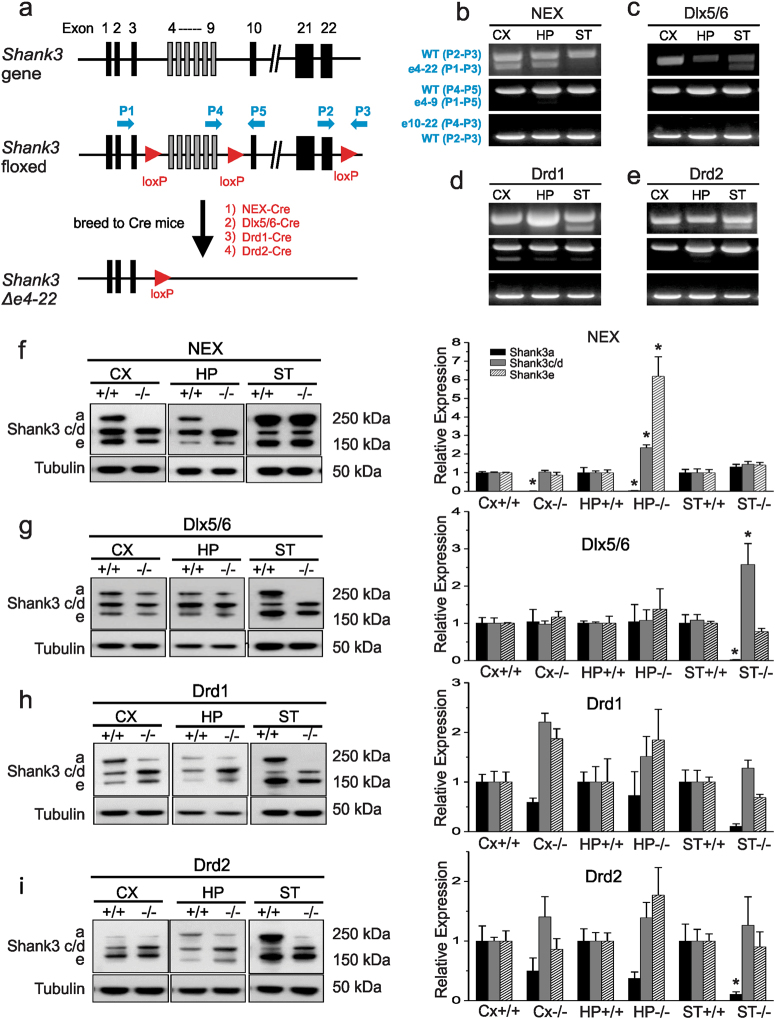
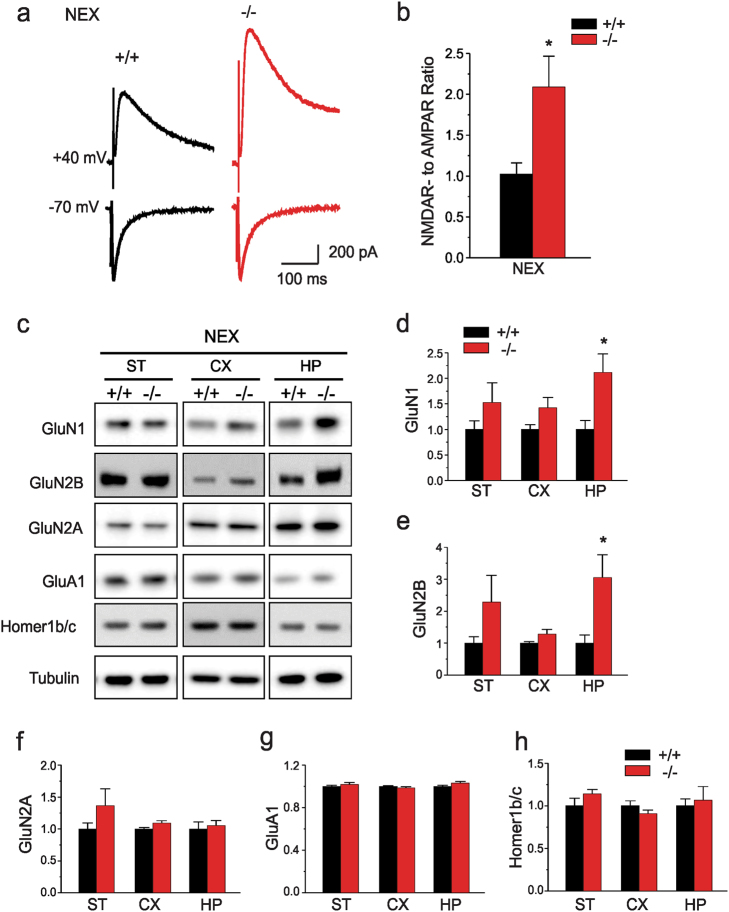
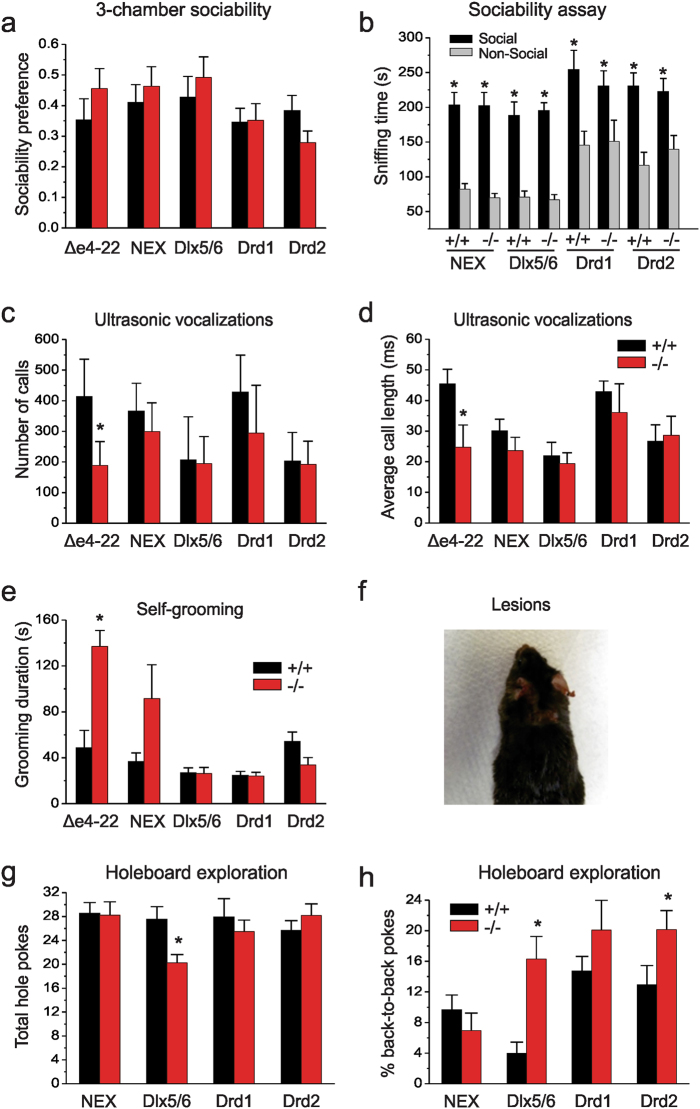
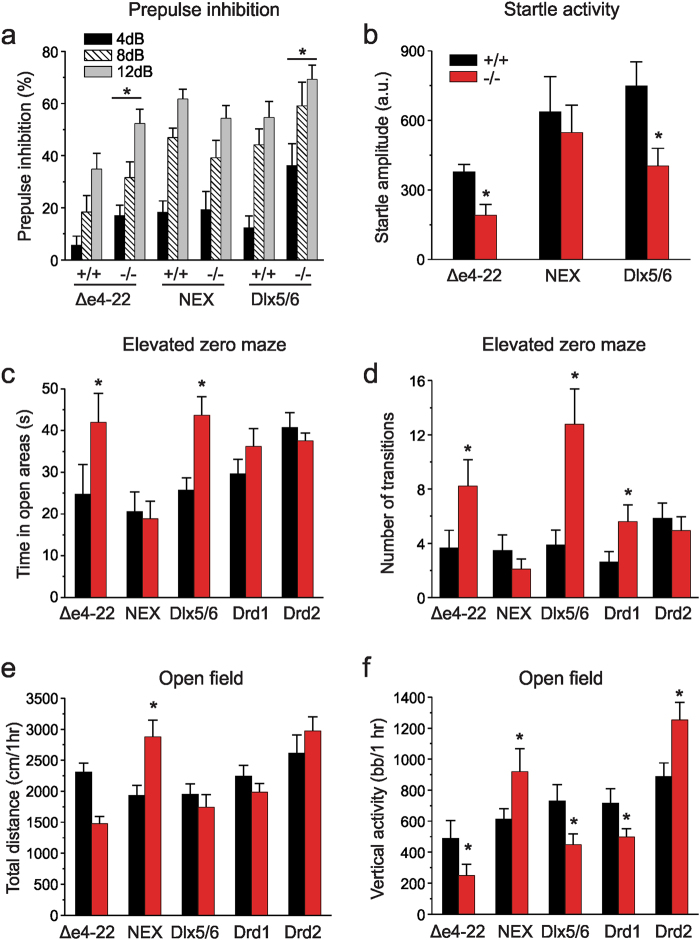
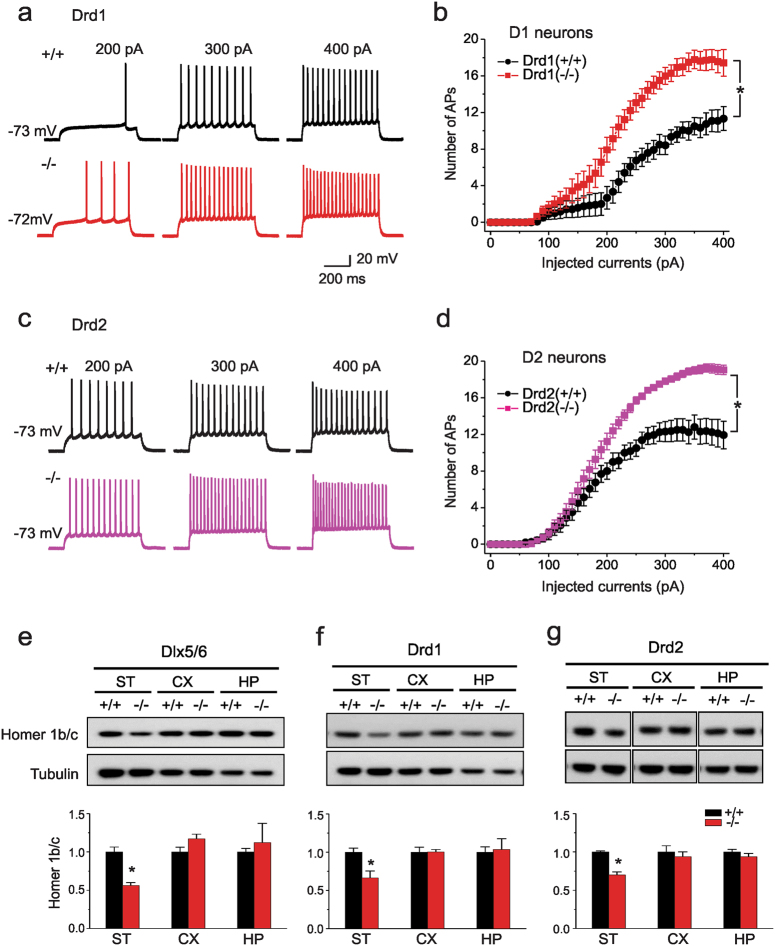
We previously reported a new line of Shank3 mutant mice which led to a complete loss of Shank3 by deleting exons 4-22 (Δe4-22) globally. Δe4-22 mice display robust ASD-like behaviors including impaired social interaction and communication, increased stereotypical behavior and excessive grooming, and a profound deficit in instrumental learning. However, the anatomical and neural circuitry underlying these behaviors are unknown. We generated mice with Shank3 selectively deleted in forebrain, striatum, and striatal D1 and D2 cells. These mice were used to interrogate the circuit/brain-region and cell-type specific role of Shank3 in the expression of autism-related behaviors. Whole-cell patch recording and biochemical analyses were used to study the synaptic function and molecular changes in specific brain regions. We found perseverative exploratory behaviors in mice with deletion of Shank3 in striatal inhibitory neurons. Conversely, self-grooming induced lesions were observed in mice with deletion of Shank3 in excitatory neurons of forebrain. However, social, communicative, and instrumental learning behaviors were largely unaffected in these mice, unlike what is seen in global Δe4-22 mice. We discovered unique patterns of change for the biochemical and electrophysiological findings in respective brain regions that reflect the complex nature of transcriptional regulation of Shank3. Reductions in Homer1b/c and membrane hyper-excitability were observed in striatal loss of Shank3. By comparison, Shank3 deletion in hippocampal neurons resulted in increased NMDAR-currents and GluN2B-containing NMDARs. These results together suggest that Shank3 may differentially regulate neural circuits that control behavior. Our study supports a dissociation of Shank3 functions in cortical and striatal neurons in ASD-related behaviors, and it illustrates the complexity of neural circuit mechanisms underlying these behaviors.
我们之前报道了一种新型 Shank3 突变小鼠,该小鼠通过删除外显子 4-22(Δe4-22)导致 Shank3 完全缺失。Δe4-22 小鼠表现出典型的 ASD 样行为,包括社交互动和交流受损、刻板行为和过度修饰增加,以及工具性学习严重缺陷。然而,这些行为的解剖学和神经回路基础尚不清楚。我们生成了 Shank3 在大脑前脑、纹状体和纹状体 D1 和 D2 细胞中选择性缺失的小鼠。这些小鼠用于探究 Shank3 在自闭症相关行为表达中的回路/脑区和细胞类型特异性作用。全细胞膜片钳记录和生化分析用于研究特定脑区的突触功能和分子变化。我们发现纹状体抑制性神经元中 Shank3 缺失的小鼠存在持续探索行为。相反,在大脑前脑兴奋性神经元中 Shank3 缺失的小鼠观察到自我修饰诱导的损伤。然而,与全局Δe4-22 小鼠不同,这些小鼠的社交、交流和工具性学习行为在很大程度上没有受到影响。我们发现,在各自的脑区中,生化和电生理发现的变化模式是独特的,反映了 Shank3 转录调控的复杂性。在纹状体 Shank3 缺失的情况下,Homer1b/c 和膜超兴奋性降低。相比之下,海马神经元中的 Shank3 缺失导致 NMDAR 电流和含 GluN2B 的 NMDAR 增加。这些结果共同表明,Shank3 可能在调节控制行为的神经回路方面存在差异。我们的研究支持 Shank3 在 ASD 相关行为中皮质和纹状体神经元中的功能分离,并说明了这些行为背后的神经回路机制的复杂性。