Institute of Oral Biology, National Yang-Ming University, Taipei, Taiwan.
Department of Dentistry, Changhua Christian Hospital, Changhua, Taiwan.
Sci Rep. 2018 Apr 26;8(1):6623. doi: 10.1038/s41598-018-24590-x.
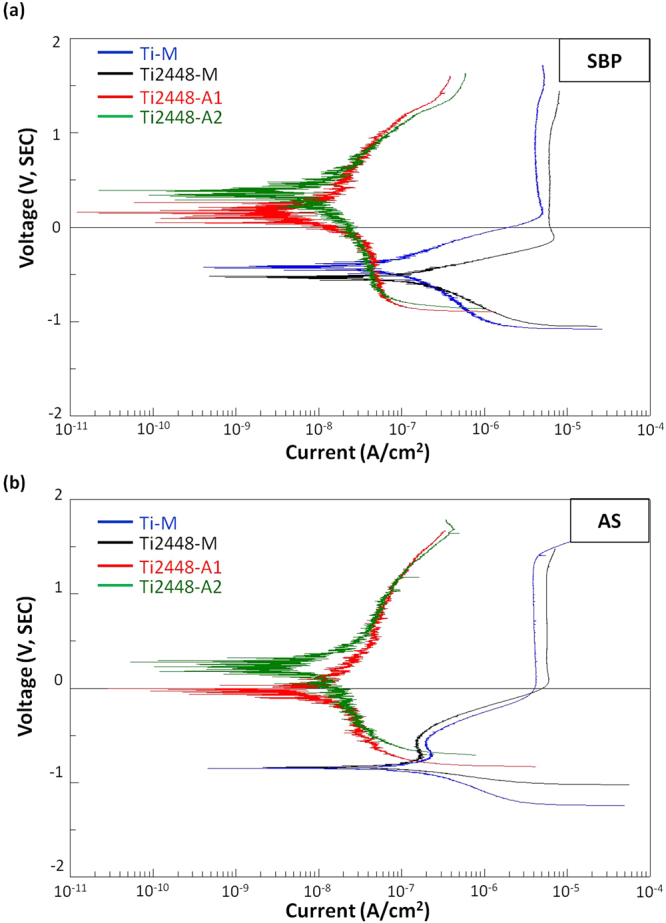
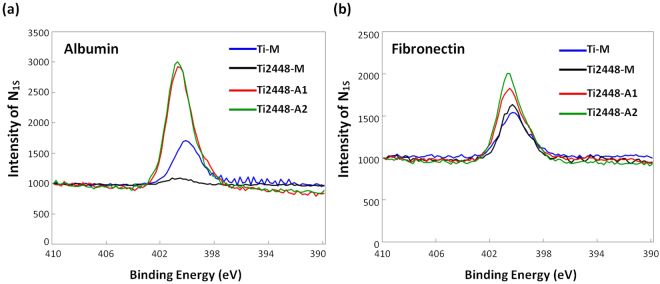
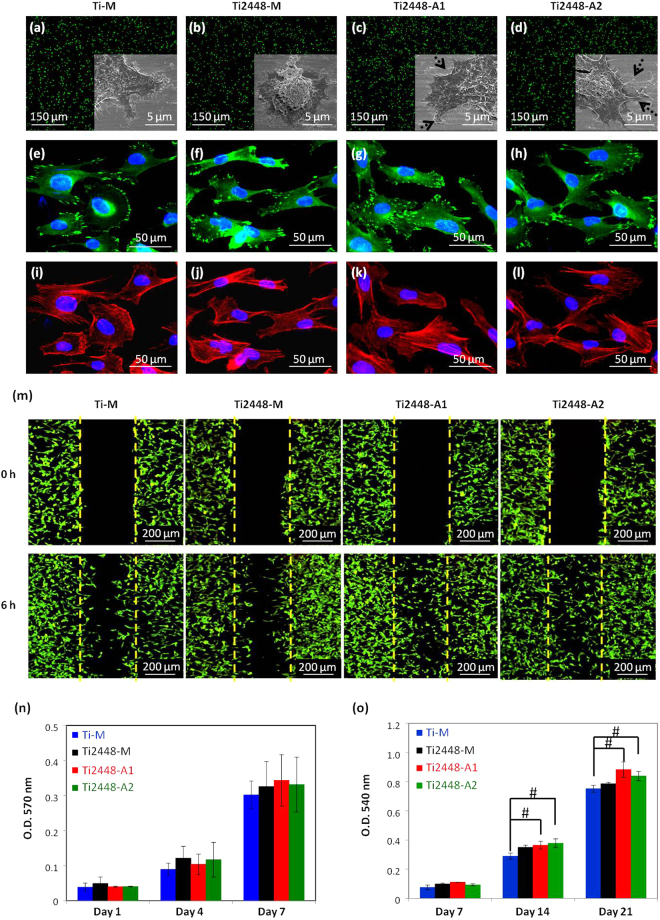
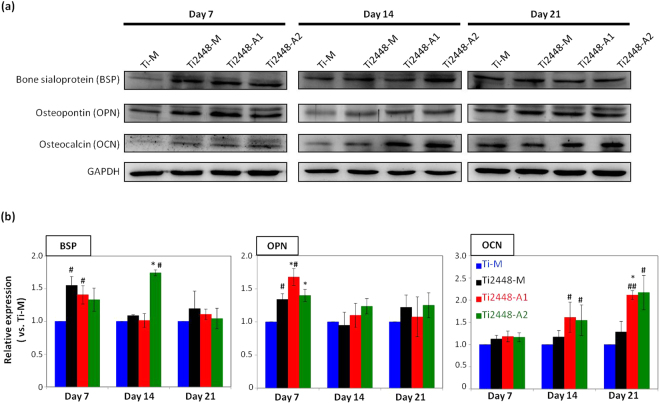
Ti-24Nb-4Zr-8Sn (Ti2448), a new β-type Ti alloy, consists of nontoxic elements and exhibits a low uniaxial tensile elastic modulus of approximately 45 GPa for biomedical implant applications. Nevertheless, the bio-corrosion resistance and biocompatibility of Ti2448 alloys must be improved for long-term clinical use. In this study, a rapid electrochemical anodization treatment was used on Ti2448 alloys to enhance the bio-corrosion resistance and bone cell responses by altering the surface characteristics. The proposed anodization process produces a unique hybrid oxide layer (thickness 50-120 nm) comprising a mesoporous outer section and a dense inner section. Experiment results show that the dense inner section enhances the bio-corrosion resistance. Moreover, the mesoporous surface topography, which is on a similar scale as various biological species, improves the wettability, protein adsorption, focal adhesion complex formation and bone cell differentiation. Outside-in signals can be triggered through the interaction of integrins with the mesoporous topography to form the focal adhesion complex and to further induce osteogenic differentiation pathway. These results demonstrate that the proposed electrochemical anodization process for Ti2448 alloys with a low uniaxial tensile elastic modulus has the potential for biomedical implant applications.
Ti-24Nb-4Zr-8Sn(Ti2448)是一种新型的β型钛合金,由无毒元素组成,具有约 45GPa 的低单轴拉伸弹性模量,适用于生物医学植入物应用。然而,为了长期临床应用,Ti2448 合金的生物耐腐蚀性能和生物相容性必须得到改善。在这项研究中,采用快速电化学阳极氧化处理方法来改变表面特性,从而提高 Ti2448 合金的生物耐腐蚀性能和骨细胞响应。所提出的阳极氧化工艺产生了一种独特的混合氧化物层(厚度 50-120nm),包括一个具有中孔结构的外层和一个致密的内层。实验结果表明,致密的内层提高了生物耐腐蚀性能。此外,具有与各种生物物种相似尺度的中孔表面形貌提高了润湿性、蛋白质吸附、黏着斑复合体形成和骨细胞分化。通过整合素与中孔形貌的相互作用,可以触发由外向内的信号,形成黏着斑复合体,并进一步诱导成骨分化途径。这些结果表明,具有低单轴拉伸弹性模量的 Ti2448 合金的这种电化学阳极氧化处理方法具有用于生物医学植入物的应用潜力。