Center for Nanotechnology & Sustainability, Department of Mechanical Engineering, National University of Singapore, Singapore 117581, Singapore.
Engineering Research Center in Biomaterials, Sichuan University, Chengdu 610064, China.
Int J Mol Sci. 2021 Oct 30;22(21):11788. doi: 10.3390/ijms222111788.
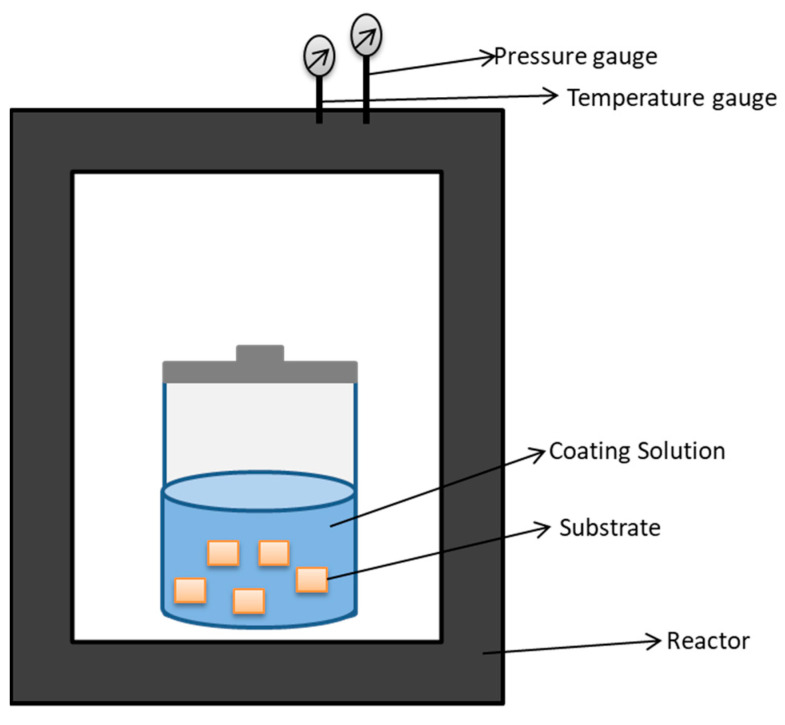
Decades of intense scientific research investigations clearly suggest that only a subset of a large number of metals, ceramics, polymers, composites, and nanomaterials are suitable as biomaterials for a growing number of biomedical devices and biomedical uses. However, biomaterials are prone to microbial infection due to (), (), (), hepatitis, tuberculosis, human immunodeficiency virus (HIV), and many more. Hence, a range of surface engineering strategies are devised in order to achieve desired biocompatibility and antimicrobial performance in situ. Surface engineering strategies are a group of techniques that alter or modify the surface properties of the material in order to obtain a product with desired functionalities. There are two categories of surface engineering methods: conventional surface engineering methods (such as coating, bioactive coating, plasma spray coating, hydrothermal, lithography, shot peening, and electrophoretic deposition) and emerging surface engineering methods (laser treatment, robot laser treatment, electrospinning, electrospray, additive manufacturing, and radio frequency magnetron sputtering technique). Atomic-scale engineering, such as chemical vapor deposition, atomic layer etching, plasma immersion ion deposition, and atomic layer deposition, is a subsection of emerging technology that has demonstrated improved control and flexibility at finer length scales than compared to the conventional methods. With the advancements in technologies and the demand for even better control of biomaterial surfaces, research efforts in recent years are aimed at the atomic scale and molecular scale while incorporating functional agents in order to elicit optimal in situ performance. The functional agents include synthetic materials (monolithic ZnO, quaternary ammonium salts, silver nano-clusters, titanium dioxide, and graphene) and natural materials (chitosan, totarol, botanical extracts, and nisin). This review highlights the various strategies of surface engineering of biomaterial including their functional mechanism, applications, and shortcomings. Additionally, this review article emphasizes atomic scale engineering of biomaterials for fabricating antimicrobial biomaterials and explores their challenges.
几十年来,大量的科学研究调查清楚地表明,只有一小部分金属、陶瓷、聚合物、复合材料和纳米材料适合越来越多的生物医学设备和生物医学用途。然而,由于()、()、()、肝炎、结核病、人类免疫缺陷病毒(HIV)等原因,生物材料容易受到微生物感染。因此,设计了一系列表面工程策略,以便在原位获得所需的生物相容性和抗菌性能。表面工程策略是一组改变或修饰材料表面特性的技术,以获得具有所需功能的产品。表面工程方法有两种类型:传统表面工程方法(如涂层、生物活性涂层、等离子喷涂涂层、水热法、光刻、喷丸和电泳沉积)和新兴表面工程方法(激光处理、机器人激光处理、静电纺丝、电喷雾、增材制造和射频磁控溅射技术)。原子尺度工程,如化学气相沉积、原子层刻蚀、等离子体浸没离子沉积和原子层沉积,是新兴技术的一个分支,与传统方法相比,它在更精细的长度尺度上展示了更好的控制和灵活性。随着技术的进步和对生物材料表面更好控制的需求,近年来的研究工作旨在原子和分子尺度上进行,并结合功能剂,以产生最佳的原位性能。功能剂包括合成材料(整体式 ZnO、季铵盐、银纳米簇、二氧化钛和石墨烯)和天然材料(壳聚糖、托罗尔、植物提取物和乳链菌肽)。本文综述了生物材料表面工程的各种策略,包括它们的功能机制、应用和缺点。此外,本文还强调了生物材料原子尺度工程在制备抗菌生物材料方面的应用,并探讨了其面临的挑战。