Institut Pasteur, Department of Development & Stem Cell Biology, Mouse Functional Genetics, F-75015, Paris, France.
Centre National de la Recherche Scientifique, CNRS UMR 3738, F-75015, Paris, France.
BMC Genomics. 2018 Apr 27;19(1):303. doi: 10.1186/s12864-018-4667-0.
Salmonella is a Gram-negative bacterium causing a wide range of clinical syndromes ranging from typhoid fever to diarrheic disease. Non-typhoidal Salmonella (NTS) serovars infect humans and animals, causing important health burden in the world. Susceptibility to salmonellosis varies between individuals under the control of host genes, as demonstrated by the identification of over 20 genetic loci in various mouse crosses. We have investigated the host response to S. Typhimurium infection in 35 Collaborative Cross (CC) strains, a genetic population which involves wild-derived strains that had not been previously assessed.
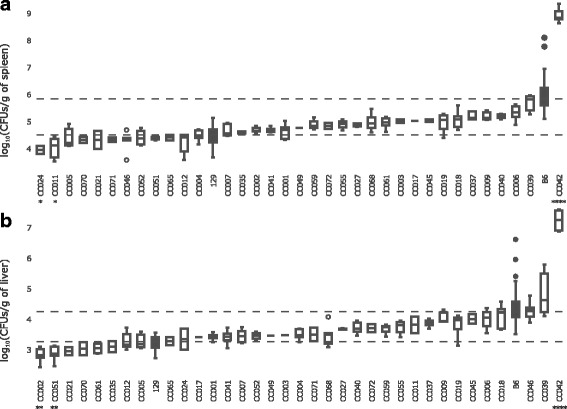
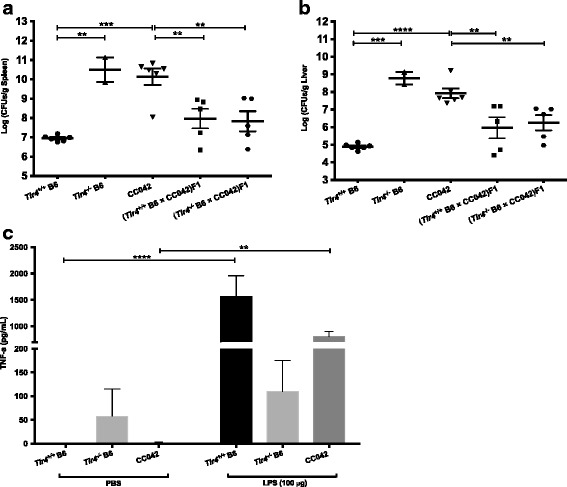
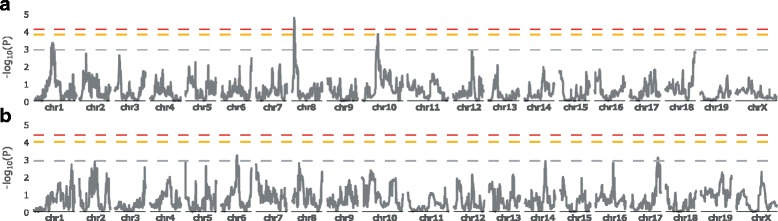
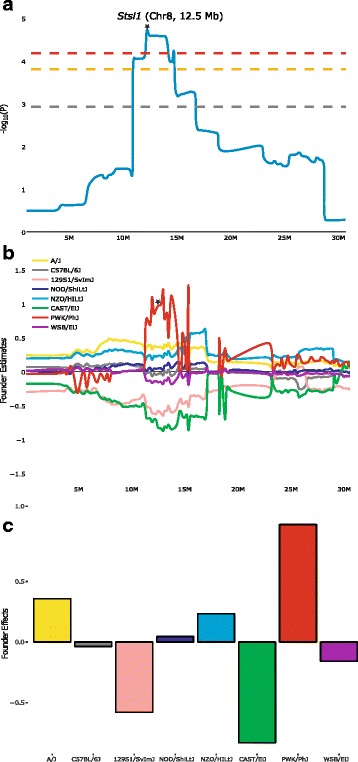
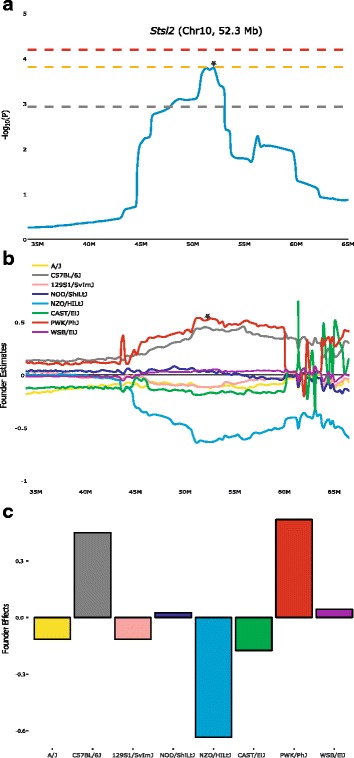
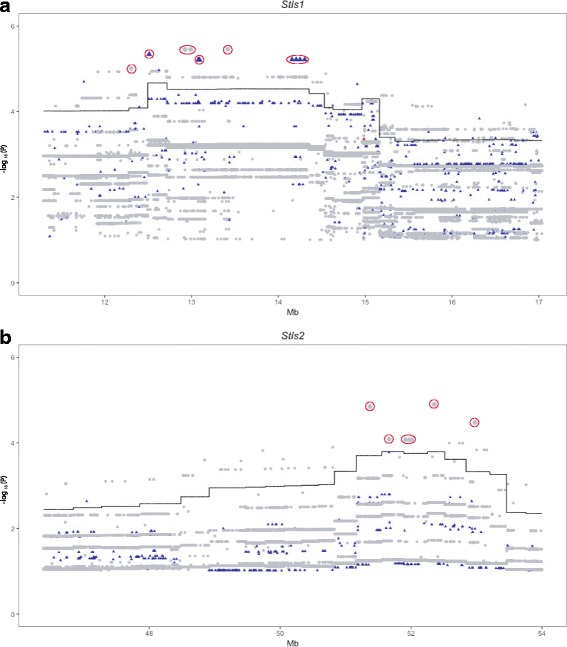
One hundred and forty-eight mice from 35 CC strains were challenged intravenously with 1000 colony-forming units (CFUs) of S. Typhimurium. Bacterial load was measured in spleen and liver at day 4 post-infection. CC strains differed significantly (P < 0.0001) in spleen and liver bacterial loads, while sex and age had no effect. Two significant quantitative trait loci (QTLs) on chromosomes 8 and 10 and one suggestive QTL on chromosome 1 were found for spleen bacterial load, while two suggestive QTLs on chromosomes 6 and 17 were found for liver bacterial load. These QTLs are caused by distinct allelic patterns, principally involving alleles originating from the wild-derived founders. Using sequence variations between the eight CC founder strains combined with database mining for expression in target organs and known immune phenotypes, we were able to refine the QTLs intervals and establish a list of the most promising candidate genes. Furthermore, we identified one strain, CC042/GeniUnc (CC042), as highly susceptible to S. Typhimurium infection.
By exploring a broader genetic variation, the Collaborative Cross population has revealed novel loci of resistance to Salmonella Typhimurium. It also led to the identification of CC042 as an extremely susceptible strain.
沙门氏菌是一种革兰氏阴性细菌,可引起多种临床综合征,从伤寒热到腹泻病不等。非伤寒沙门氏菌(NTS)血清型感染人类和动物,在世界范围内造成了重要的健康负担。对沙门氏菌病的易感性因宿主基因的控制而在个体之间有所不同,这一点已通过在各种小鼠杂交中鉴定出 20 多个遗传基因座得到证实。我们研究了 35 个合作杂交(CC)品系的小鼠对 S. Typhimurium 感染的宿主反应,这是一个遗传群体,涉及以前未评估过的野生来源的品系。
来自 35 个 CC 品系的 148 只小鼠经静脉内接种 1000 个菌落形成单位(CFU)的 S. Typhimurium。在感染后第 4 天测量脾脏和肝脏中的细菌载量。脾脏和肝脏细菌载量在 CC 品系之间存在显著差异(P < 0.0001),而性别和年龄没有影响。发现了两个位于染色体 8 和 10 上的显著数量性状基因座(QTL)和一个位于染色体 1 上的提示性 QTL 与脾脏细菌载量有关,而两个位于染色体 6 和 17 上的提示性 QTL 与肝脏细菌载量有关。这些 QTL 是由不同的等位基因模式引起的,主要涉及来自野生来源的创始人的等位基因。利用 8 个 CC 创始人品系之间的序列变异,并结合数据库挖掘目标器官中的表达和已知的免疫表型,我们能够细化 QTL 区间,并列出最有希望的候选基因。此外,我们确定了一个菌株 CC042/GeniUnc(CC042)对 S. Typhimurium 感染高度敏感。
通过探索更广泛的遗传变异,合作杂交群体揭示了对沙门氏菌 Typhimurium 的新的抗性基因座。它还导致了 CC042 作为一个极其易感菌株的鉴定。