Department of Animal Science, University of California, 95616, Davis, CA, USA.
J Anim Sci Biotechnol. 2013 Feb 25;4(1):5. doi: 10.1186/2049-1891-4-5.
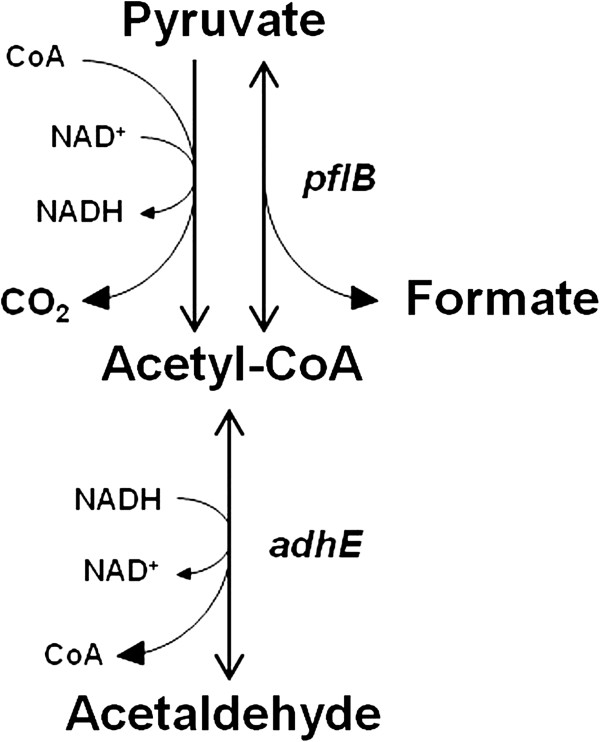
Salmonella enterica serovar Typhimurium is a major foodborne pathogen worldwide. S. Typhimurium encodes type III secretion systems via Salmonella pathogenicity islands (SPI), producing the major effector proteins of virulence. Previously, we identified two genes of Salmonella pyruvate metabolism that were up-regulated during chicken cell infection: pyruvate formate lyase I (pflB) and bifunctional acetaldehyde-CoA/alcohol dehydrogenase (adhE). We were therefore interested in examining the role these genes may play in the transmission of Salmonella to humans.
Mutant strains of Salmonella with single gene deletions for pflB and adhE were created. Invasion and growth in human HCT-8 intestinal epithelial cells and THP-1 macrophages was examined. Quantitative PCR was performed on 19 SPI-1 genes.
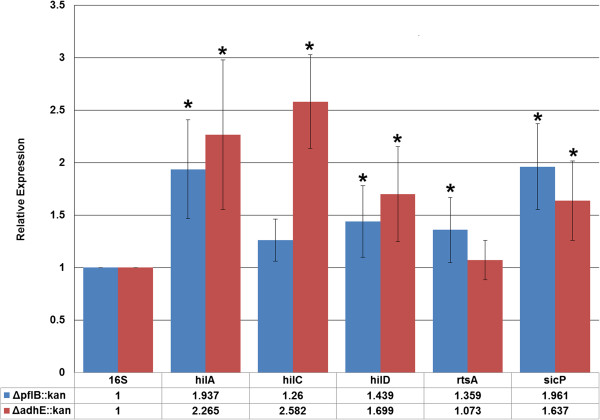
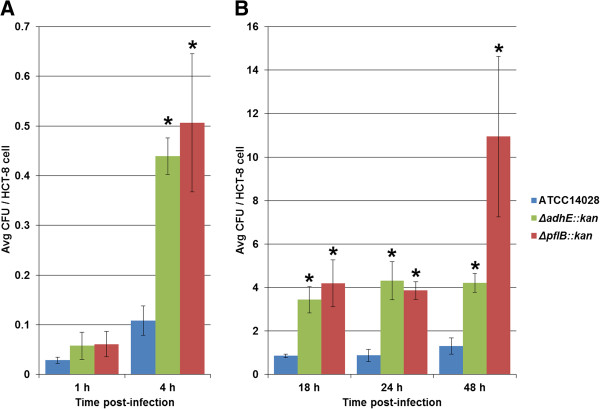
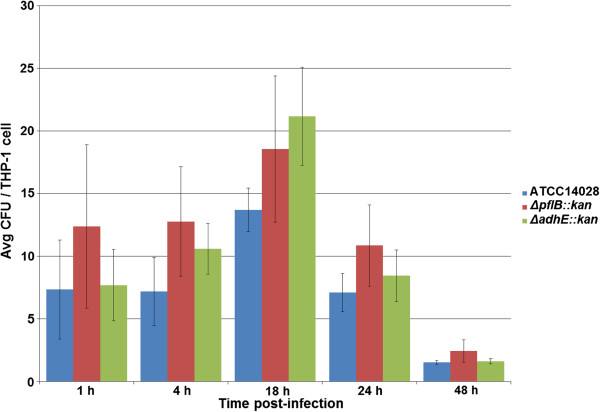
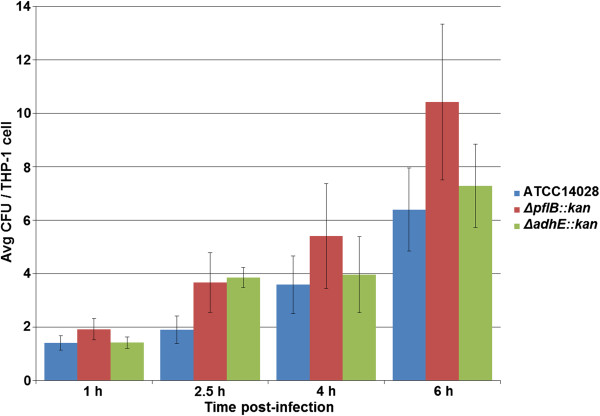
In HCT-8 cells, both mutant strains had significantly higher intracellular counts than the wild-type from 4 to 48 h post-infection. Various SPI-1 genes in the mutants were up-regulated over the wild-type as early as 1 h and lasting until 24 h post-infection. In THP-1 cells, no significant difference in internal Salmonella counts was observed; however, SPI-1 genes were largely down-regulated in the mutants during the time-course of infection. We also found five SPI-1 genes - hilA, hilC hilD, sicP and rtsA - which were up-regulated in at least one of the mutant strains in log-phase broth cultures alone. We have therefore identified a set of SPI-1 virulence genes whose regulation is effected by the central metabolism of Salmonella.
鼠伤寒沙门氏菌是一种主要的食源性病原体,在全球范围内广泛存在。鼠伤寒沙门氏菌通过沙门氏菌致病岛(SPI)编码 III 型分泌系统,产生主要的毒力效应蛋白。先前,我们鉴定出了沙门氏菌丙酮酸代谢的两个基因,它们在鸡细胞感染过程中上调:丙酮酸甲酸裂解酶 I(pflB)和双功能乙醛-CoA/乙醇脱氢酶(adhE)。因此,我们有兴趣研究这些基因在沙门氏菌向人类传播过程中可能发挥的作用。
创建了沙门氏菌单基因突变株,缺失了 pflB 和 adhE 基因。检测了其在人 HCT-8 肠上皮细胞和 THP-1 巨噬细胞中的侵袭和生长情况。对 19 个 SPI-1 基因进行了定量 PCR。
在 HCT-8 细胞中,从感染后 4 到 48 小时,两个突变株的细胞内计数均显著高于野生型。在感染后 1 小时至 24 小时,突变株中的各种 SPI-1 基因均上调,与野生型相比差异显著。在 THP-1 细胞中,未观察到内部沙门氏菌计数的显著差异;然而,在感染过程中,突变株中的 SPI-1 基因大量下调。我们还发现了五个 SPI-1 基因——hilA、hilC hilD、sicP 和 rtsA——在至少一个突变株的对数期肉汤培养物中单独上调。因此,我们鉴定出了一组 SPI-1 毒力基因,其调控受到沙门氏菌中心代谢的影响。