Yang Wei, Zhang Ning, Shi Boyang, Zhang Shen, Zhang Lihong, Zhang Weimin
School of Life Sciences, Institute of Aquatic Economic Animals, Guangdong Province Key Laboratory for Aquatic Economic Animals, Sun Yat-Sen University, Guangzhou, China.
Biology Department, School of Life Sciences, Sun Yat-Sen University, Guangzhou, China.
Front Endocrinol (Lausanne). 2018 Apr 12;9:166. doi: 10.3389/fendo.2018.00166. eCollection 2018.
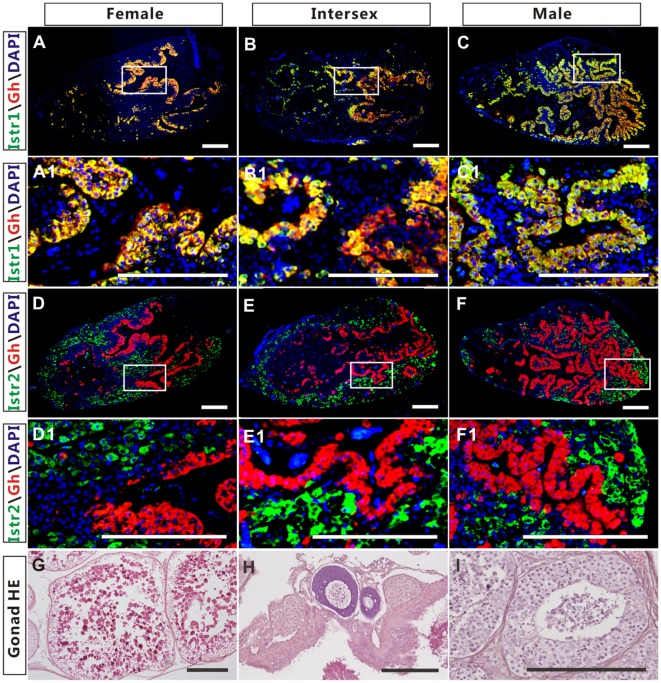
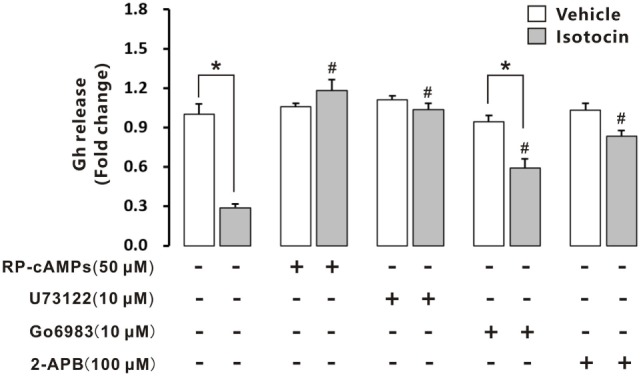
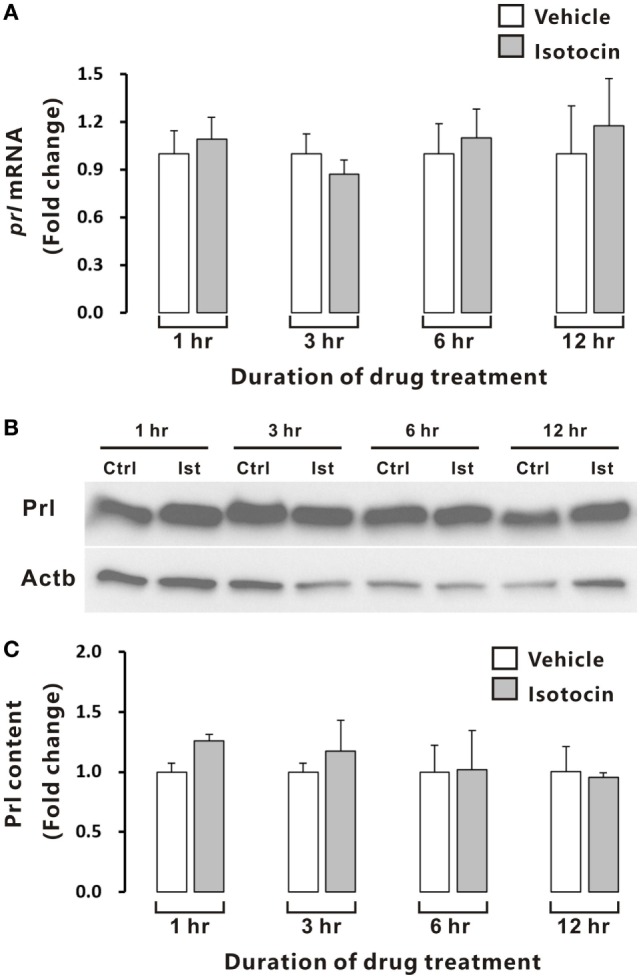
The neurohypophyseal hormone oxytocin (Oxt) has been shown to stimulate prolactin (Prl) synthesis and release from the adenohypophysis in rats. However, little is known about the functional roles of Oxt-like neuropeptides in the adenohypophysis of non-mammalian vertebrates. In this study, cDNAs encoding ricefield eel oxytocin-like receptors (Oxtlr), namely isotocin (Ist) receptor 1 (Istr1) and 2 (Istr2), were isolated and specific antisera were generated, respectively. RT-PCR and Western blot analysis detected the presence of both Istr1 and Istr2 in the brain and pituitary, but differential expression in some peripheral tissues, including the liver and kidney, where only Istr1 was detected. In the pituitary, immunoreactive Istr1 and Istr2 were differentially distributed, with the former mainly in adenohypophyseal cell layers adjacent to the neurohypophysis, whereas the latter in peripheral areas of the adenohypophysis. Double immunofluorescent images showed that immunostaining of Istr1, but not Istr2 was localized to growth hormone (Gh) cells, but neither of them was expressed in Prl cells. Ist inhibited Gh release in primary pituitary cells of ricefield eels and increased Gh contents in the pituitary gland of ricefield eels at 6 h after administration. Ist inhibition of Gh release is probably mediated by cAMP, PKC/DAG, and IP3/Ca pathways. In contrast, Ist did not affect either gene expression or Prl contents in primary pituitary cells. Results of this study demonstrated that Ist may not be involved in the regulation of Prl, but inhibit Gh release Istr1 rather than Istr2 in ricefield eels, and provided evidence for the direct regulation of Gh cells by oxytocin-like neuropeptides in the pituitary of non-mammalian vertebrates.
神经垂体激素催产素(Oxt)已被证明可刺激大鼠腺垂体催乳素(Prl)的合成与释放。然而,关于非哺乳脊椎动物腺垂体中类催产素神经肽的功能作用知之甚少。在本研究中,分别分离出编码黄鳝类催产素受体(Oxtlr),即异催产素(Ist)受体1(Istr1)和2(Istr2)的cDNA,并制备了特异性抗血清。RT-PCR和蛋白质印迹分析检测到Istr1和Istr2在脑和垂体中均存在,但在包括肝脏和肾脏在内的一些外周组织中存在差异表达,在这些组织中仅检测到Istr1。在垂体中,免疫反应性Istr1和Istr2分布不同,前者主要位于与神经垂体相邻的腺垂体细胞层,而后者位于腺垂体的外周区域。双重免疫荧光图像显示,Istr1而非Istr2的免疫染色定位于生长激素(Gh)细胞,但两者均未在Prl细胞中表达。Ist抑制黄鳝原代垂体细胞中Gh的释放,并在给药后6小时增加黄鳝垂体中Gh的含量。Ist对Gh释放的抑制可能由cAMP、PKC/DAG和IP3/Ca途径介导。相反,Ist对原代垂体细胞中的基因表达或Prl含量均无影响。本研究结果表明,Ist可能不参与Prl的调节,但在黄鳝中通过Istr1而非Istr2抑制Gh释放,并为非哺乳脊椎动物垂体中类催产素神经肽对Gh细胞的直接调节提供了证据。