Mirbolouk Fardin, Gholipour Mahboobeh, Salari Arsalan, Shakiba Maryam, Kheyrkhah Jalal, Nikseresht Vahid, Sotoudeh Nozar, Moghadam Negar, Mirbolouk Mohammad Jaafar, Moayeri Far Mani
Cardiovascular Diseases Research Center, Department of Cardiology, Heshmat Hospital, School of Medicine, Guilan University of Medical Sciences, Rasht, Iran.
Cardiovascular diseases research Center, Guilan University of Medical Sciences, Rasht, Iran.
J Cardiovasc Thorac Res. 2018;10(1):46-52. doi: 10.15171/jcvtr.2018.08. Epub 2018 Mar 18.
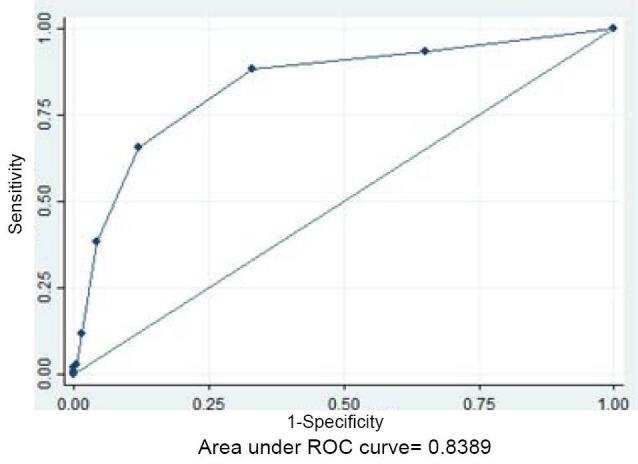
No-reflow is one of the major complications of primary PCI in patients with acute ST elevation myocardial infarction. This phenomenon is associated with adverse outcomes in these patients. In the current study, we evaluated the effectiveness of CHA2DS2-VASc score in predicting no-reflow phenomenon. CHA2DS2-VASc score is a risk stratification method to estimate the risk of thromboembolism in patients with atrial fibrillation. In total, 396 patients with ST elevation myocardial infarction who had undergone primary PCI were evaluated in our study. Based on post interventional TIMI flow rate results, the patients were divided into two groups: control group (294 patients) and no-reflow group (102 patients). The CHA2DS2-VASc score was calculated for each participant. Multivariate regression analysis was performed to determine the predictive value of this score. Our findings showed that CHA2DS2-VASc score can predict no-reflow independently (odds ratio: 3.06, 95%, confidence interval: 2.23-4.21, P <0 .001). Moreover, lower systolic blood pressure, higher diastolic blood pressure, grade 0 initial TIMI flow rate and smaller stent size were other independent predictors of the no-reflow in our study. We also defined a cut off value of ≥ 2 for the CHA2DS2-VASc score in predicting the no-reflow with a sensitivity of 88% and specificity of 67%, area under curve: 0.83 with 95% CI (0.79-0.88). The CHA2DS2-VASc score could be used as a simple applicable tool in the prediction of no-reflow before primary PCI in the acute ST elevation myocardial infarction patients.
无复流是急性ST段抬高型心肌梗死患者直接经皮冠状动脉介入治疗(primary PCI)的主要并发症之一。这一现象与这些患者的不良预后相关。在本研究中,我们评估了CHA2DS2-VASc评分预测无复流现象的有效性。CHA2DS2-VASc评分是一种用于评估心房颤动患者血栓栓塞风险的风险分层方法。本研究共纳入396例接受直接PCI的ST段抬高型心肌梗死患者。根据介入术后心肌梗死溶栓试验(TIMI)血流分级结果,将患者分为两组:对照组(294例患者)和无复流组(102例患者)。计算每位参与者的CHA2DS2-VASc评分。进行多因素回归分析以确定该评分的预测价值。我们的研究结果表明,CHA2DS2-VASc评分可独立预测无复流(优势比:3.06,95%置信区间:2.23 - 4.21,P <0.001)。此外,较低的收缩压、较高的舒张压、0级初始TIMI血流分级以及较小的支架尺寸是本研究中无复流的其他独立预测因素。我们还确定CHA2DS2-VASc评分≥2为预测无复流的临界值,其敏感性为88%,特异性为67%,曲线下面积:0.83,95%CI为(0.79 - 0.88)。CHA2DS2-VASc评分可作为急性ST段抬高型心肌梗死患者直接PCI术前预测无复流的一种简单实用工具。