Jung Jun-Hong, Kim Sang-Yun, Yi Yang-Jin, Lee Bu-Kyu, Kim Young-Kyun
School of Dentistry, The Graduate School, Seoul National University, Seoul, Republic of Korea.
Department of Oral and Maxillofacial Surgery, Section of Dentistry, Seoul National University Bundang Hospital, Seongnam, Republic of Korea.
J Adv Prosthodont. 2018 Apr;10(2):85-92. doi: 10.4047/jap.2018.10.2.85. Epub 2018 Apr 18.
This research evaluated clinical outcomes of two types of hydroxyapatite (HA)-coated implants: OT (Osstem TS III-HA, Osstem implant Co., Busan, Korea) and ZM (Zimmer TSV-HA, Zimmer dental, Carlsbad, USA).
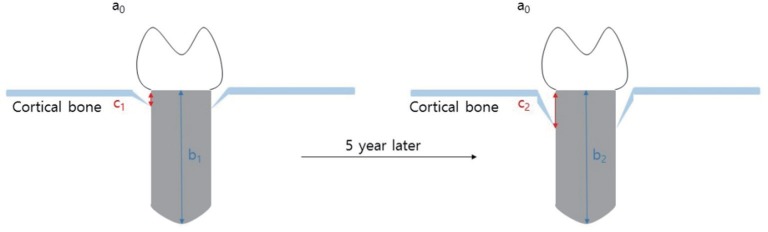
The research was conducted on 303 implants (89 of OT, 214 of ZM), which were placed from January 16, 2010 to December 20, 2012. The prognosis was evaluated in terms of success rates, survival rates, annual marginal bone loss, and implant stability quotients (ISQ). The samples were classified into immediate, early, conventional, and delayed groups according to the loading time.
Overall, there were no significant differences between OT and ZM in success rates, survival rates, and annual marginal bone loss, except for the result of secondary stability. OT showed 77.83 ± 8.23 ISQ, which was marginally higher than 76.09 ± 6.90 ISQ of ZM (<.05). In terms of healing periods, only immediate loading showed statistically significant differences (<.05). Differences between OT and ZM were observed in terms of two indices, the annual marginal bone loss (0.17 ± 0.58 mm/year < 0.45 ± 0.80 mm/year) and secondary stability (84.36 ± 3.80 ISQ > 82.48 ± 3.69 ISQ) (<.05). OT and ZM did not have any statistically significant differences in early, conventional, and delayed loading (>.05).
OT (97.75%) and ZM (98.50%) showed relatively good outcomes in terms of survival rates. In general, OT and ZM did not show statistically significant differences in most indices (>.05), although OT performed marginally better than ZM in the immediate loading and 1-stage surgery (<.05).
本研究评估了两种羟基磷灰石(HA)涂层种植体的临床效果:OT(韩国釜山奥齿泰公司的奥齿泰TS III - HA种植体)和ZM(美国卡尔斯巴德zimmer牙科公司的zimmer TSV - HA种植体)。
该研究对2010年1月16日至2012年12月20日期间植入的303颗种植体(OT种植体89颗,ZM种植体214颗)进行。从成功率、存活率、每年边缘骨丢失量和种植体稳定性商数(ISQ)方面评估预后情况。根据加载时间将样本分为即刻、早期、传统和延迟组。
总体而言,除二级稳定性结果外,OT和ZM在成功率、存活率和每年边缘骨丢失量方面无显著差异。OT的ISQ为77.83±8.23,略高于ZM的76.09±6.90(P<0.05)。在愈合期方面,仅即刻加载显示出统计学显著差异(P<0.05)。OT和ZM在每年边缘骨丢失量(0.17±0.58毫米/年<0.45±0.80毫米/年)和二级稳定性(84.36±3.80 ISQ>82.48±3.69 ISQ)这两个指标上存在差异(P<0.05)。OT和ZM在早期、传统和延迟加载方面无统计学显著差异(P>0.05)。
OT(97.75%)和ZM(98.50%)在存活率方面显示出相对较好的结果。总体而言,OT和ZM在大多数指标上无统计学显著差异(P>0.05),尽管OT在即刻加载和一期手术中表现略优于ZM(P<0.05)。