Cronin Owen, Barton Wiley, Skuse Peter, Penney Nicholas C, Garcia-Perez Isabel, Murphy Eileen F, Woods Trevor, Nugent Helena, Fanning Aine, Melgar Silvia, Falvey Eanna C, Holmes Elaine, Cotter Paul D, O'Sullivan Orla, Molloy Michael G, Shanahan Fergus
APC Microbiome Ireland, National University of Ireland, Cork, Ireland.
Department of Medicine, National University of Ireland, Cork, Ireland.
mSystems. 2018 Apr 24;3(3). doi: 10.1128/mSystems.00044-18. eCollection 2018 May-Jun.
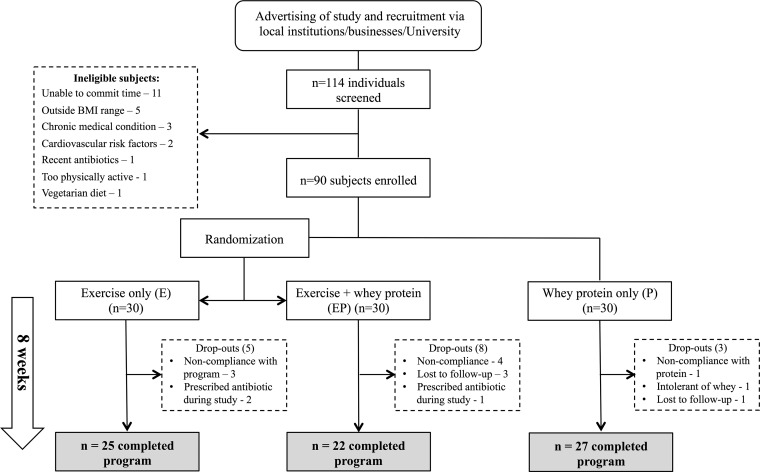
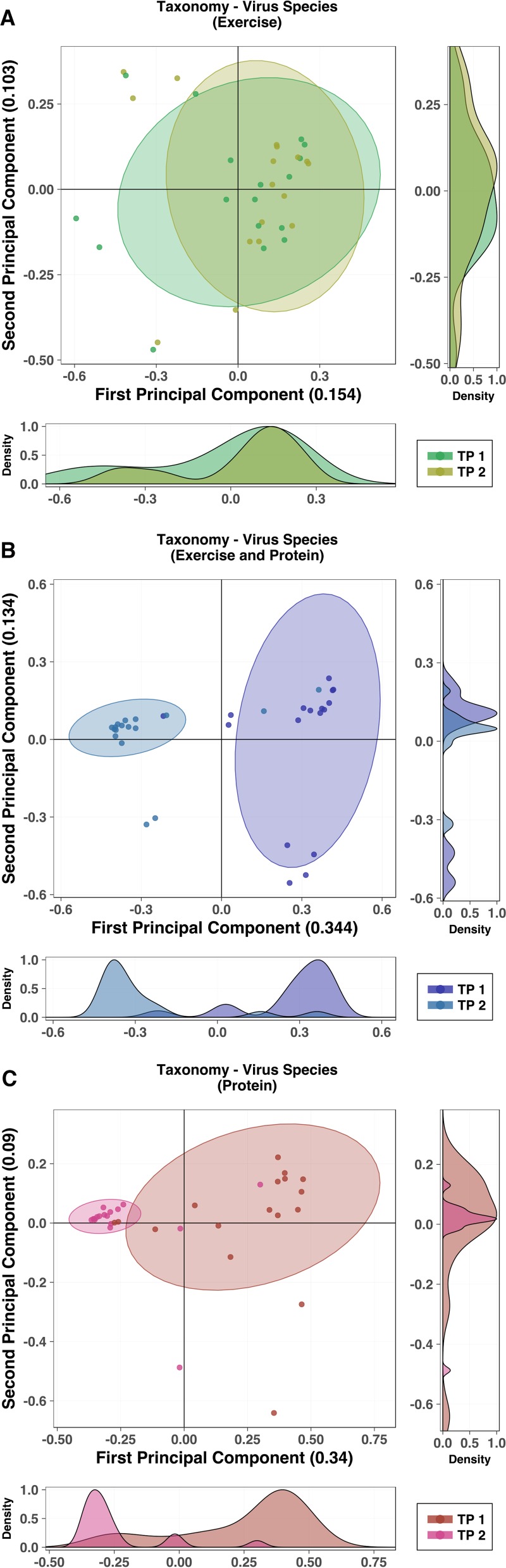
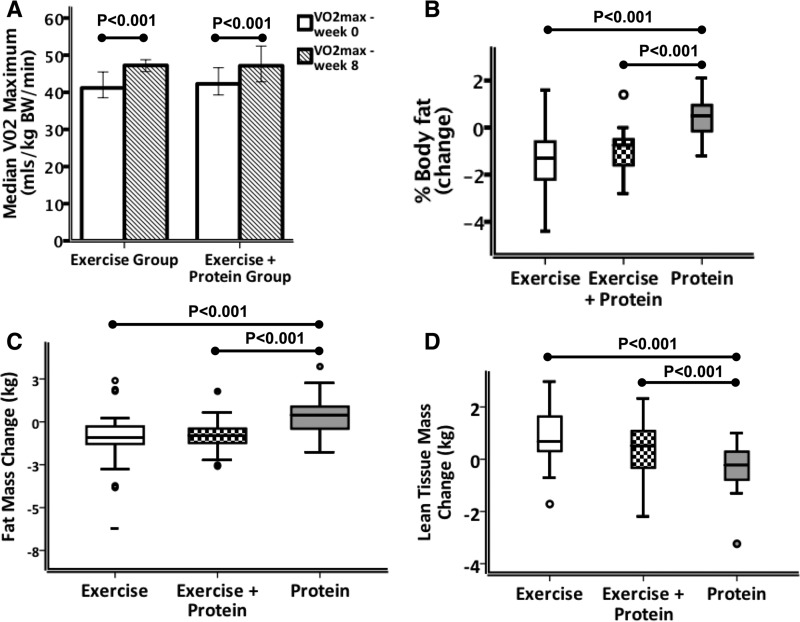
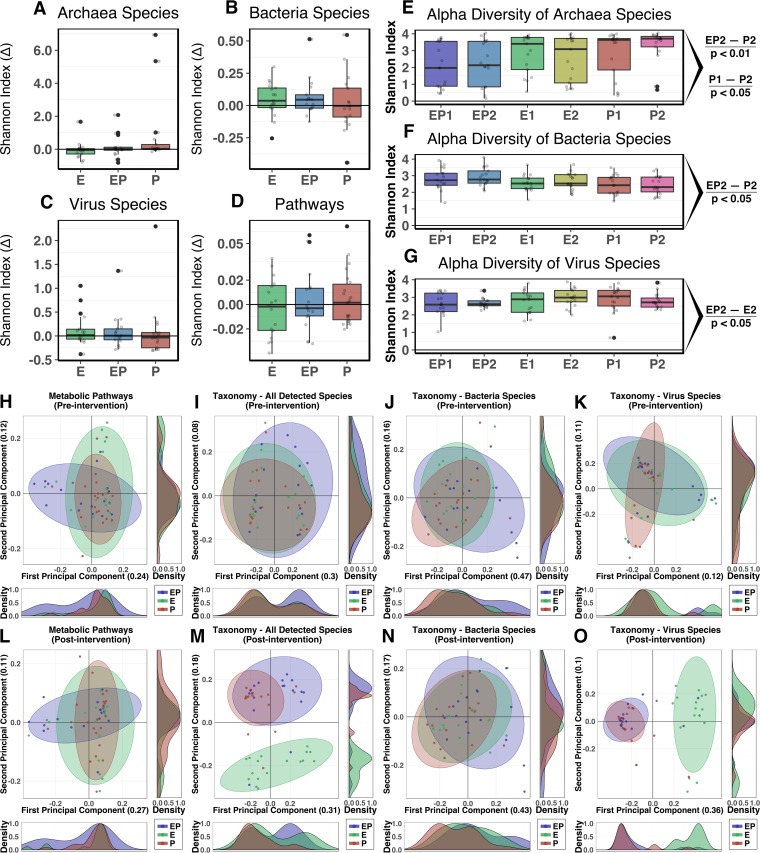
Many components of modern living exert influence on the resident intestinal microbiota of humans with resultant impact on host health. For example, exercise-associated changes in the diversity, composition, and functional profiles of microbial populations in the gut have been described in cross-sectional studies of habitual athletes. However, this relationship is also affected by changes in diet, such as changes in dietary and supplementary protein consumption, that coincide with exercise. To determine whether increasing physical activity and/or increased protein intake modulates gut microbial composition and function, we prospectively challenged healthy but sedentary adults with a short-term exercise regime, with and without concurrent daily whey protein consumption. Metagenomics- and metabolomics-based assessments demonstrated modest changes in gut microbial composition and function following increases in physical activity. Significant changes in the diversity of the gut virome were evident in participants receiving daily whey protein supplementation. Results indicate that improved body composition with exercise is not dependent on major changes in the diversity of microbial populations in the gut. The diverse microbial characteristics previously observed in long-term habitual athletes may be a later response to exercise and fitness improvement. The gut microbiota of humans is a critical component of functional development and subsequent health. It is important to understand the lifestyle and dietary factors that affect the gut microbiome and what impact these factors may have. Animal studies suggest that exercise can directly affect the gut microbiota, and elite athletes demonstrate unique beneficial and diverse gut microbiome characteristics. These characteristics are associated with levels of protein consumption and levels of physical activity. The results of this study show that increasing the fitness levels of physically inactive humans leads to modest but detectable changes in gut microbiota characteristics. For the first time, we show that regular whey protein intake leads to significant alterations to the composition of the gut virome.
现代生活中的许多因素都会对人类肠道内的微生物群产生影响,进而影响宿主健康。例如,在对习惯运动的运动员进行的横断面研究中,已经描述了运动与肠道微生物种群的多样性、组成和功能特征变化之间的关联。然而,这种关系也会受到饮食变化的影响,比如与运动同时发生的饮食和补充蛋白质摄入量的变化。为了确定增加体力活动和/或增加蛋白质摄入量是否会调节肠道微生物的组成和功能,我们对健康但久坐不动的成年人进行了一项前瞻性研究,让他们进行短期运动,并分别在有无每日补充乳清蛋白的情况下进行。基于宏基因组学和代谢组学的评估表明,体力活动增加后,肠道微生物的组成和功能发生了适度变化。在每日补充乳清蛋白的参与者中,肠道病毒组的多样性有明显变化。结果表明,运动改善身体成分并不依赖于肠道微生物种群多样性的重大变化。长期习惯运动的运动员中先前观察到的多样微生物特征可能是对运动和健康改善的后期反应。人类的肠道微生物群是功能发育及后续健康的关键组成部分。了解影响肠道微生物组的生活方式和饮食因素以及这些因素可能产生的影响非常重要。动物研究表明,运动可以直接影响肠道微生物群,精英运动员表现出独特的有益且多样的肠道微生物组特征。这些特征与蛋白质摄入量和体力活动水平有关。本研究结果表明,提高缺乏运动的人的健康水平会导致肠道微生物群特征出现适度但可检测到的变化。我们首次表明,定期摄入乳清蛋白会导致肠道病毒组的组成发生显著改变。