
预测新型抗黏附疗法以对抗烧伤创面细菌定植的模型。
Predictive modelling of a novel anti-adhesion therapy to combat bacterial colonisation of burn wounds.
机构信息
School of Mathematics, University of Birmingham, Edgbaston, Birmingham, United Kingdom.
Institute of Microbiology and Infection, School of Biosciences, University of Birmingham, Edgbaston, Birmingham, United Kingdom.
出版信息
PLoS Comput Biol. 2018 May 3;14(5):e1006071. doi: 10.1371/journal.pcbi.1006071. eCollection 2018 May.
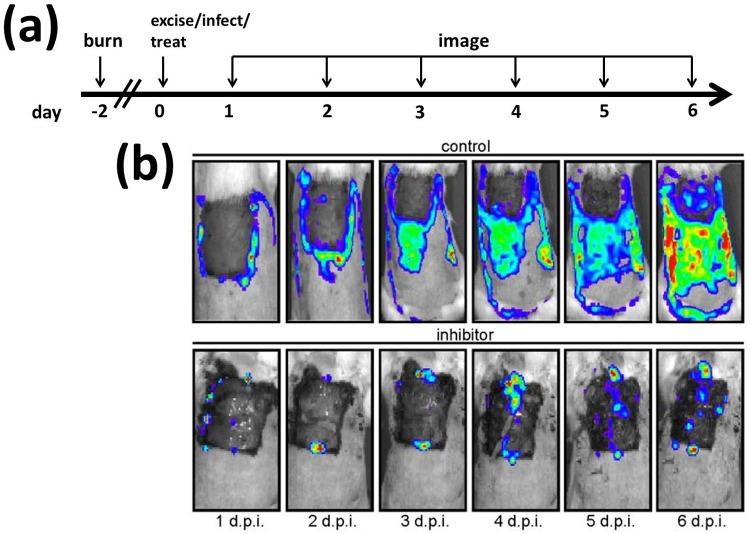
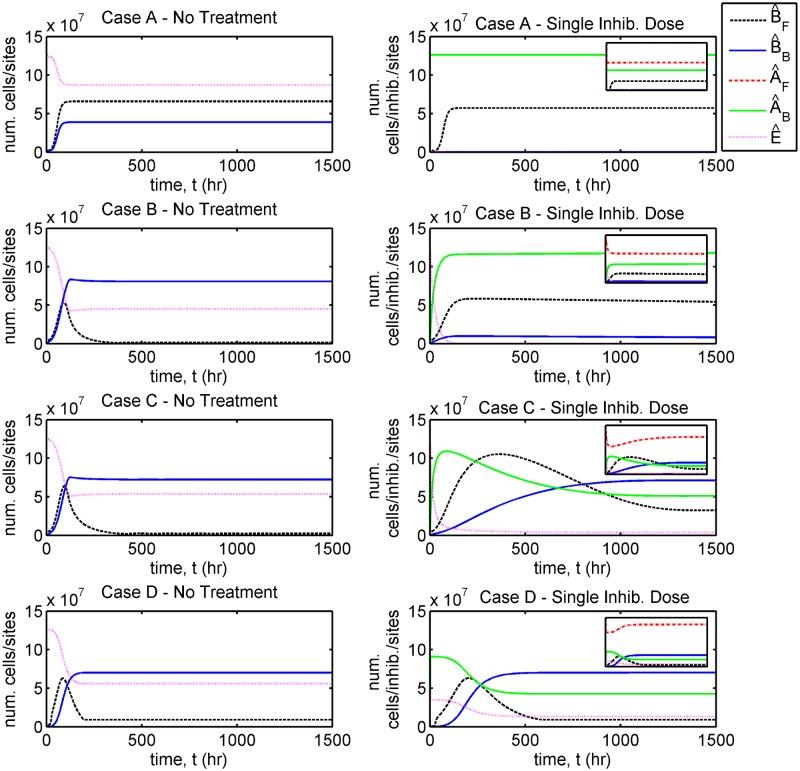
As the development of new classes of antibiotics slows, bacterial resistance to existing antibiotics is becoming an increasing problem. A potential solution is to develop treatment strategies with an alternative mode of action. We consider one such strategy: anti-adhesion therapy. Whereas antibiotics act directly upon bacteria, either killing them or inhibiting their growth, anti-adhesion therapy impedes the binding of bacteria to host cells. This prevents bacteria from deploying their arsenal of virulence mechanisms, while simultaneously rendering them more susceptible to natural and artificial clearance. In this paper, we consider a particular form of anti-adhesion therapy, involving biomimetic multivalent adhesion molecule 7 coupled polystyrene microbeads, which competitively inhibit the binding of bacteria to host cells. We develop a mathematical model, formulated as a system of ordinary differential equations, to describe inhibitor treatment of a Pseudomonas aeruginosa burn wound infection in the rat. Benchmarking our model against in vivo data from an ongoing experimental programme, we use the model to explain bacteria population dynamics and to predict the efficacy of a range of treatment strategies, with the aim of improving treatment outcome. The model consists of two physical compartments: the host cells and the exudate. It is found that, when effective in reducing the bacterial burden, inhibitor treatment operates both by preventing bacteria from binding to the host cells and by reducing the flux of daughter cells from the host cells into the exudate. Our model predicts that inhibitor treatment cannot eliminate the bacterial burden when used in isolation; however, when combined with regular or continuous debridement of the exudate, elimination is theoretically possible. Lastly, we present ways to improve therapeutic efficacy, as predicted by our mathematical model.
随着新型抗生素的开发速度放缓,细菌对现有抗生素的耐药性问题日益严重。一种潜在的解决方案是开发具有替代作用机制的治疗策略。我们考虑了一种这样的策略:抗黏附治疗。抗生素直接作用于细菌,要么杀死它们,要么抑制它们的生长,而抗黏附治疗则阻碍了细菌与宿主细胞的结合。这阻止了细菌利用其毒性机制,同时使它们更容易被自然和人工清除。在本文中,我们考虑了一种特殊形式的抗黏附治疗,涉及仿生多价黏附分子 7 偶联聚苯乙烯微球,它竞争性地抑制细菌与宿主细胞的结合。我们开发了一个数学模型,该模型被表述为一个常微分方程组,用于描述抑制剂对大鼠铜绿假单胞菌烧伤感染的治疗。通过将我们的模型与正在进行的实验计划中的体内数据进行基准测试,我们使用该模型来解释细菌种群动态,并预测一系列治疗策略的疗效,旨在改善治疗结果。该模型由两个物理隔室组成:宿主细胞和渗出物。研究发现,当抑制剂有效降低细菌负荷时,它通过防止细菌与宿主细胞结合以及减少宿主细胞中细菌子细胞进入渗出物的通量来发挥作用。我们的模型预测,当单独使用抑制剂治疗时,不能消除细菌负荷;然而,当与渗出物的常规或连续清创相结合时,从理论上可以消除细菌负荷。最后,我们根据我们的数学模型提出了提高治疗效果的方法。





 Zotero 插件