Center for Infectious Disease and Cancer Research (CICAR), Kaohsiung Medical University, Kaohsiung, Taiwan.
Department of Cell Biology and Anatomy, College of Medicine, National Cheng Kung University, Tainan, Taiwan.
Sci Rep. 2018 May 3;8(1):6960. doi: 10.1038/s41598-018-22298-6.
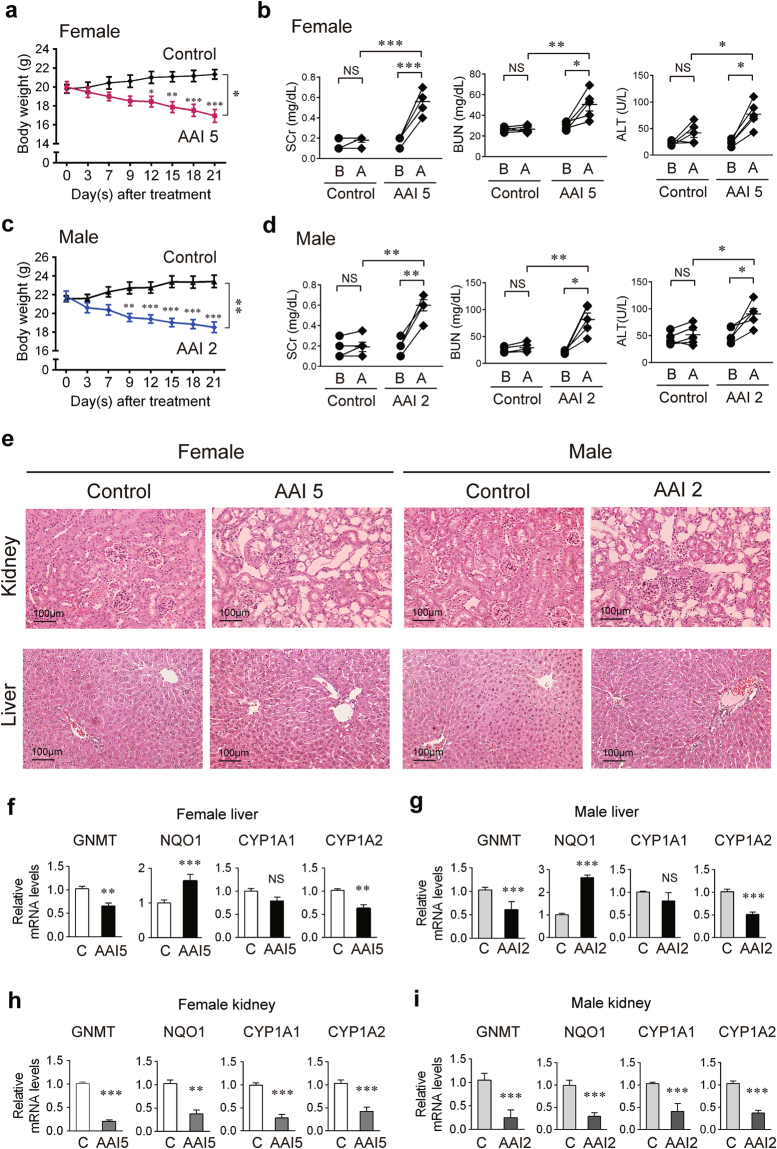
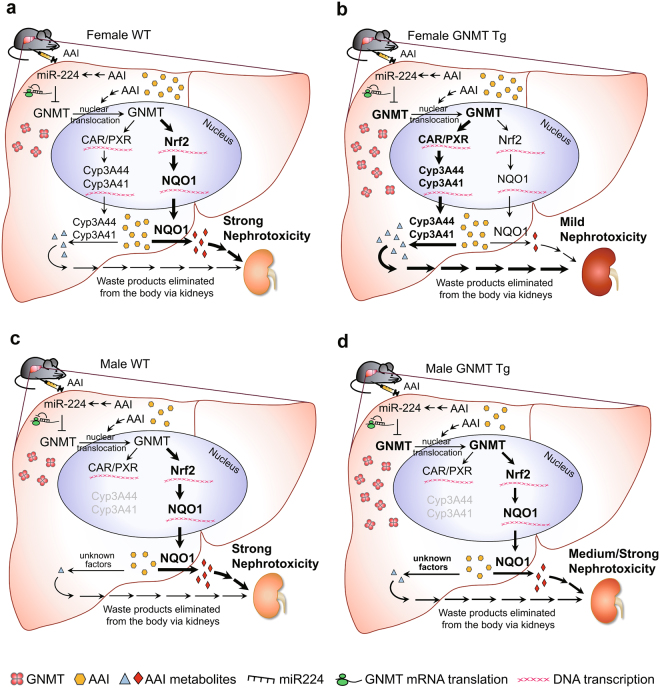
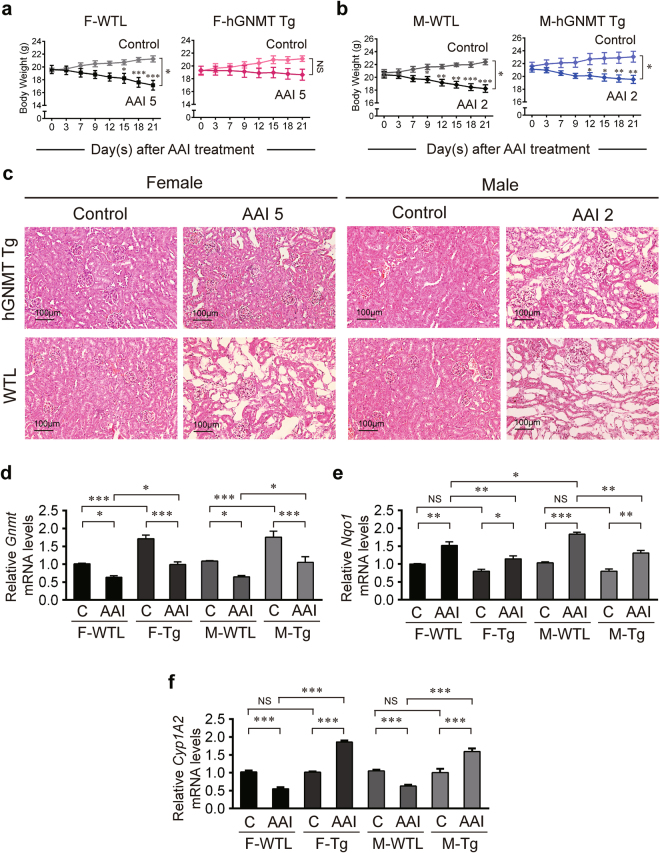
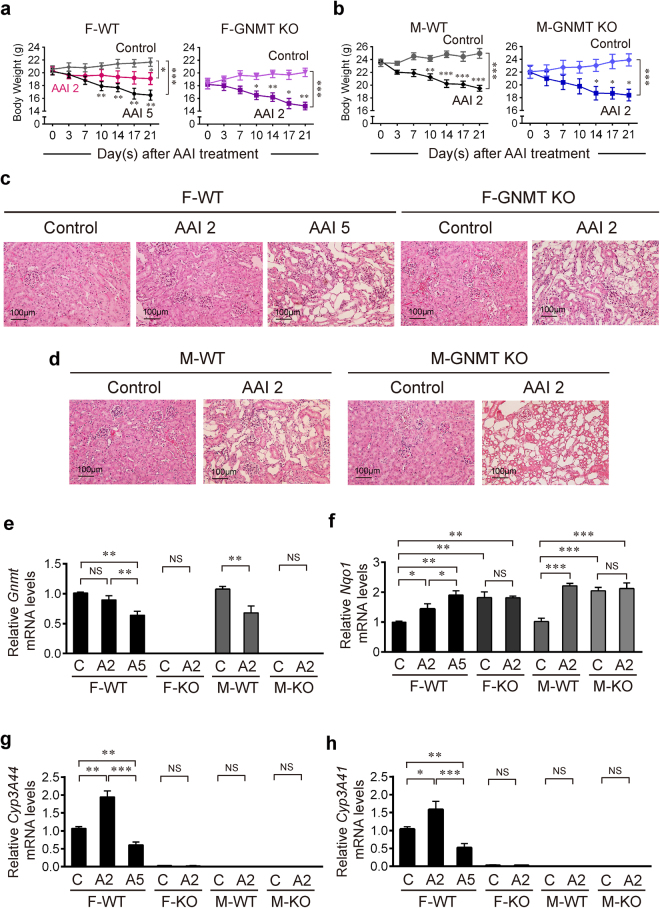
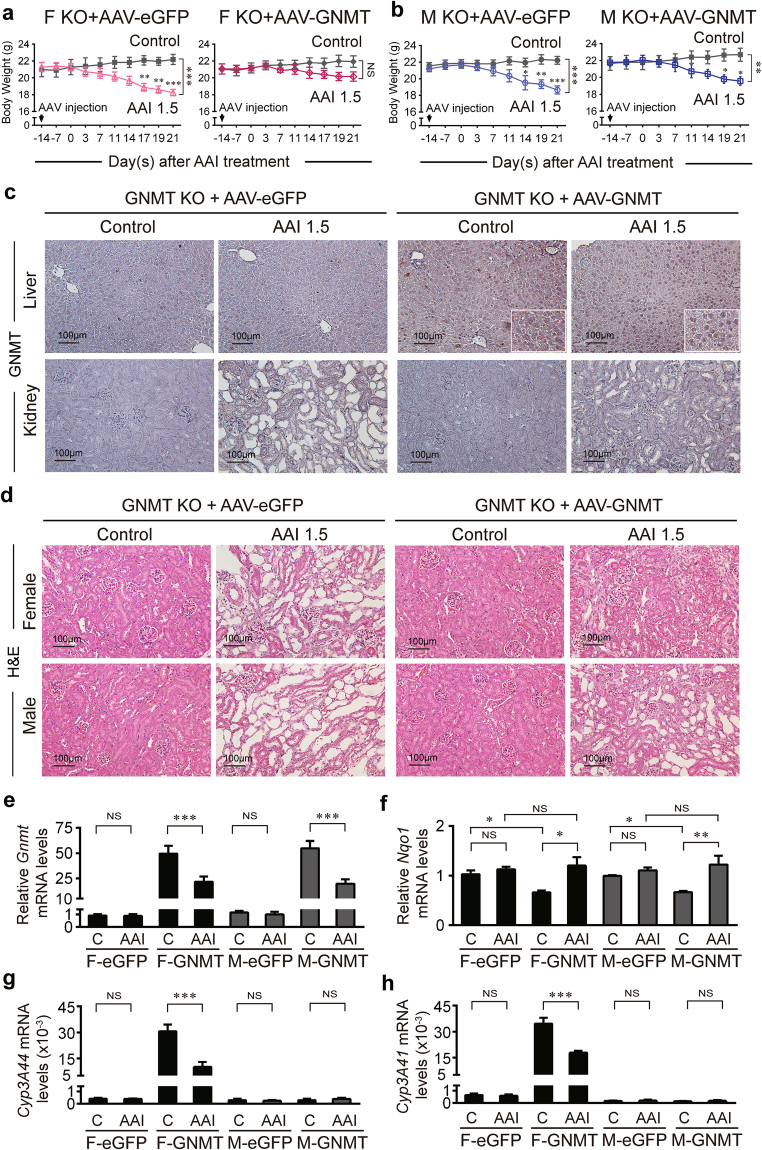
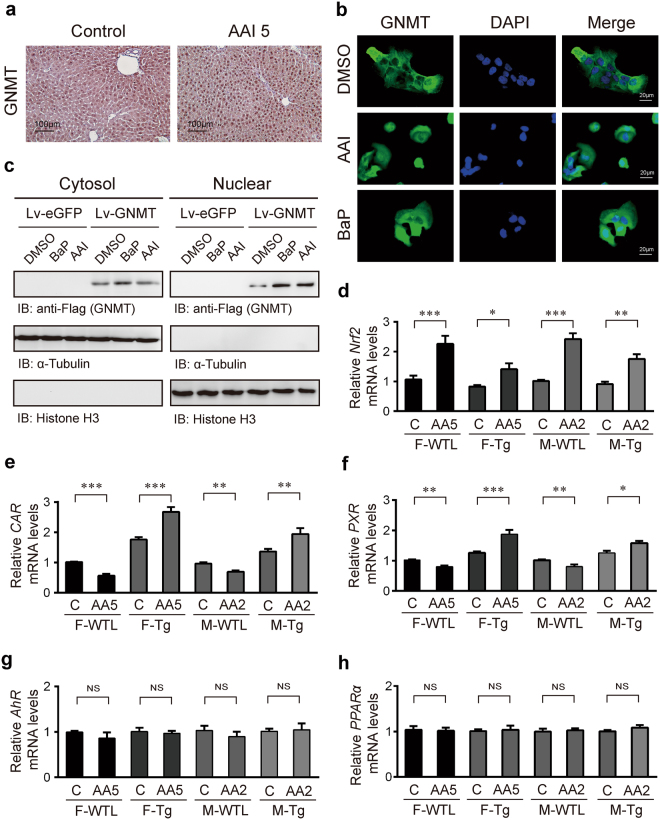
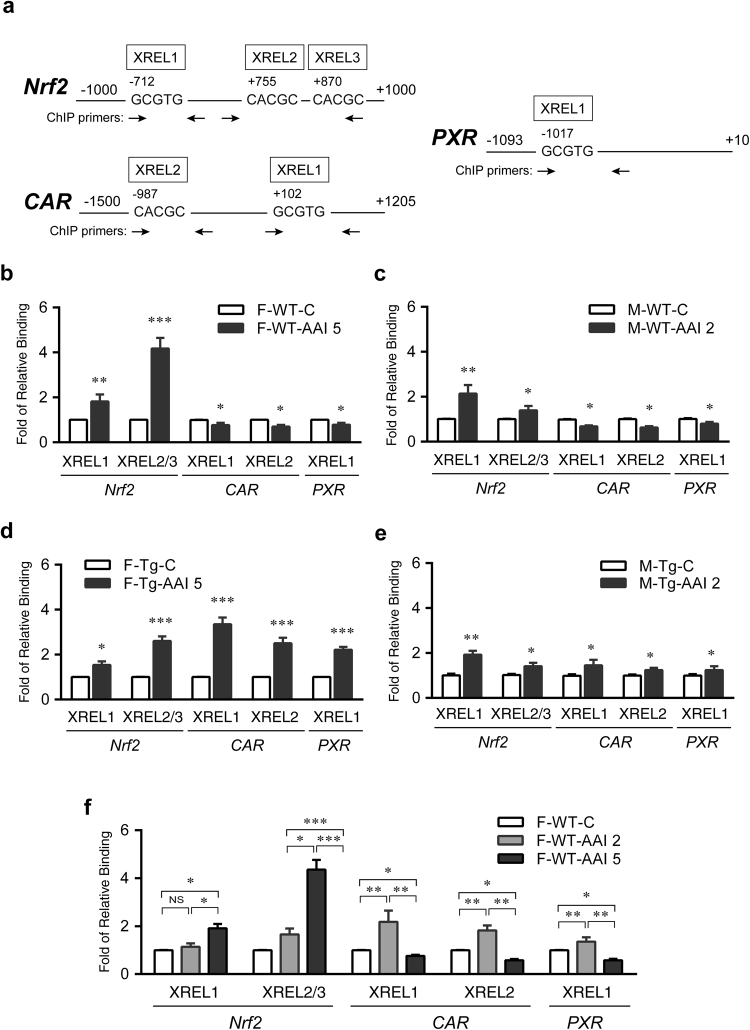
Plants containing aristolochic acids (AA) are nephrotoxins. Glycine N-methyltransferase (GNMT) acts to bind environmental toxins such as benzo(a)pyrene and aflatoxin B1, translocate into nucleus, and alter hepatic metabolism. This study aims to determine the role of GNMT in AA-induced nephropathy. We established an AA nephropathy mouse model and found that AA type I (AAI)-induced nephropathy at a lower concentration in male than in female mice, implying sex differences in AAI resistance. Microarray analysis and AAI-treated mouse models showed that GNMT moderately reduced AAI-induced nephropathy by lowering the upregulated level of NQO1 in male, but significantly improved the nephropathy additionally by increasing Cyp3A44/3A41 in female. The protective effects of GNMT were absent in female GNMT knockout mice, in which re-expression of hepatic GNMT significantly decreased AAI-induced nephropathy. Mechanism-wise, AAI enhanced GNMT nuclear translocation, resulting in GNMT interaction with the promoter region of the genes encoding Nrf2 and CAR/PXR, the transcription factors for NQO1 and CYP3A44/3A41, respectively. Unlike the preference for Nrf2/NQO1 transcriptions at lower levels of GNMT, overexpression of GNMT preferred CAR/PXR/CYP3A44/3A41 transcriptions and alleviated kidney injury upon AAI treatment. In summary, hepatic GNMT protected mice from AAI nephropathy by enhancing CAR/PXR/CYP3A44/3A41 transcriptions and reducing Nrf2/NQO1 transcriptions.
含马兜铃酸(AA)的植物是肾毒素。甘氨酸 N-甲基转移酶(GNMT)的作用是结合苯并(a)芘和黄曲霉毒素 B1 等环境毒素,将其转位到细胞核内,并改变肝脏代谢。本研究旨在确定 GNMT 在 AA 诱导的肾病中的作用。我们建立了 AA 肾病小鼠模型,发现 AA 型 I(AAI)在雄性小鼠中的致肾病浓度低于雌性小鼠,这表明雄性小鼠对 AAI 的耐药性存在性别差异。基因芯片分析和 AAI 处理的小鼠模型表明,GNMT 通过降低雄性中 NQO1 的上调水平,适度减轻 AAI 诱导的肾病,但在雌性中通过增加 Cyp3A44/3A41 显著改善肾病。在雌性 GNMT 敲除小鼠中,GNMT 的保护作用缺失,而肝脏 GNMT 的重新表达显著降低了 AAI 诱导的肾病。从机制上讲,AAI 增强了 GNMT 的核转位,导致 GNMT 与编码 Nrf2 和 CAR/PXR 的基因的启动子区域相互作用,分别为 NQO1 和 CYP3A44/3A41 的转录因子。与 GNMT 水平较低时优先转录 Nrf2/NQO1 不同,GNMT 的过表达优先转录 CAR/PXR/CYP3A44/3A41,并减轻 AAI 处理后的肾损伤。总之,肝脏 GNMT 通过增强 CAR/PXR/CYP3A44/3A41 的转录和减少 Nrf2/NQO1 的转录来保护小鼠免受 AAI 肾病的侵害。