Institute of Biology/Plant Physiology department, Martin-Luther-University Halle-Wittenberg, Halle, (Saale), Germany.
Physiology and Cell Biology department, Leibniz Institute of Plant Genetics and Crop Plant Research (IPK), Gatersleben, OT, Germany.
BMC Plant Biol. 2018 May 4;18(1):77. doi: 10.1186/s12870-018-1301-x.
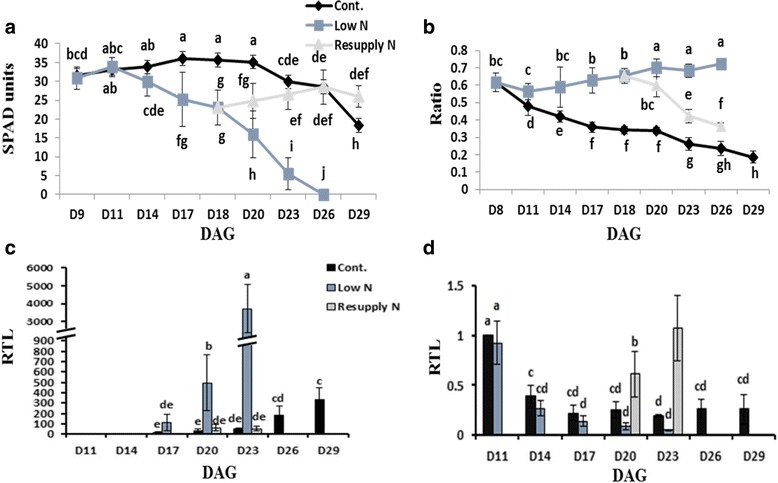
Low availability of nitrogen (N) severely affects plant growth at different levels, which can be reverted by the resupply of N. To unravel the critical steps in primary metabolism underlying the growth adjustment in response to changes in N availability, transcriptomic and comprehensive metabolite analyses were performed in barley using primary leaves at early and later stages of N deprivation, and after N resupply to N-deficient plants.
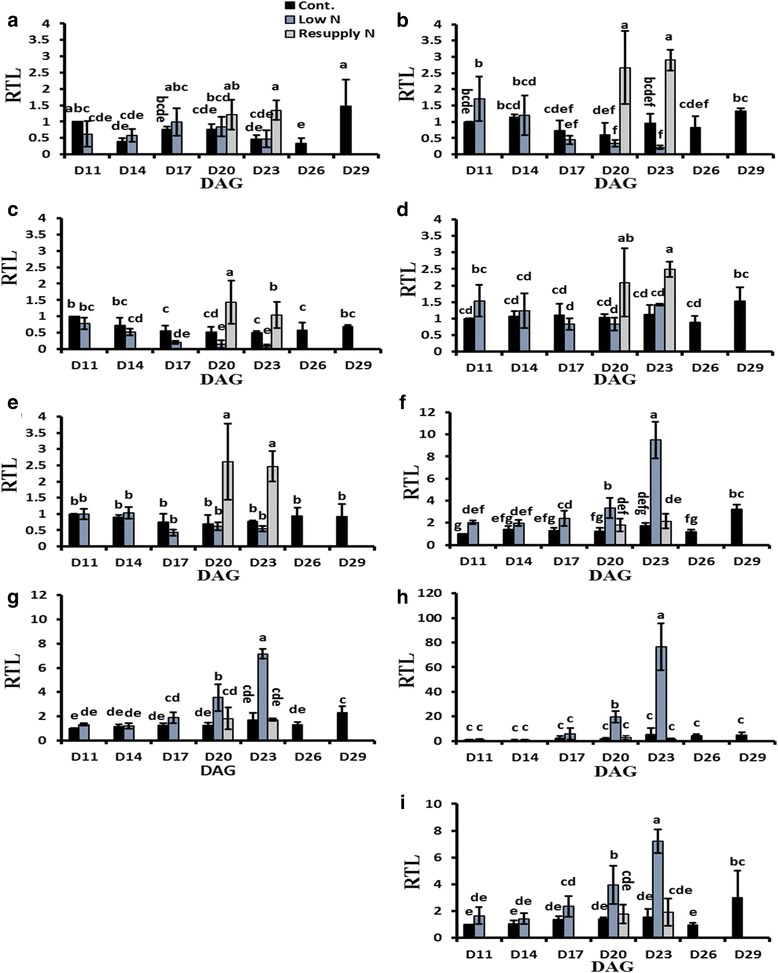
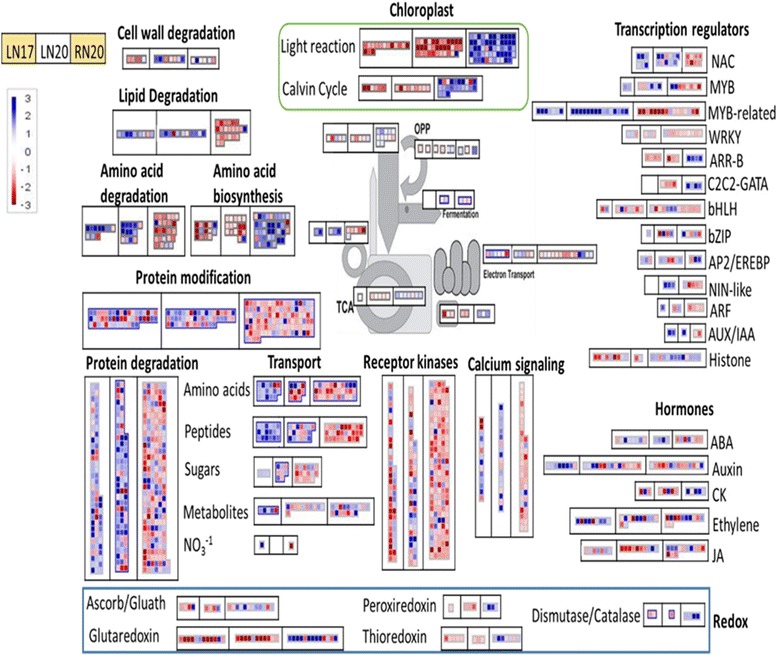
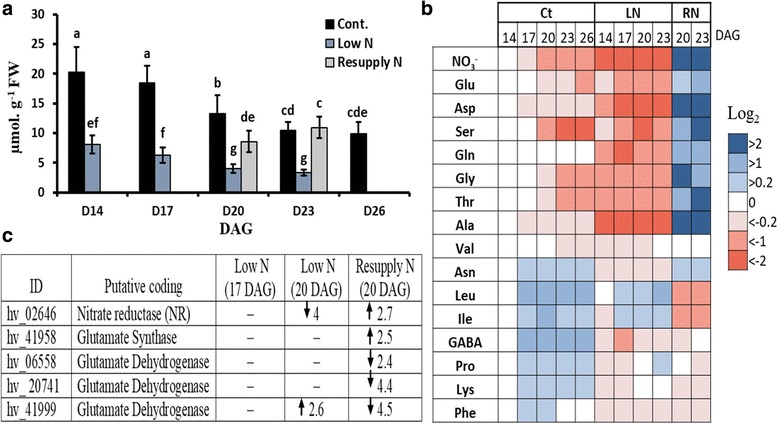
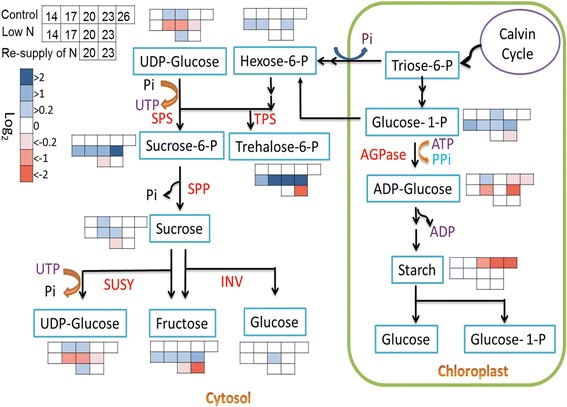
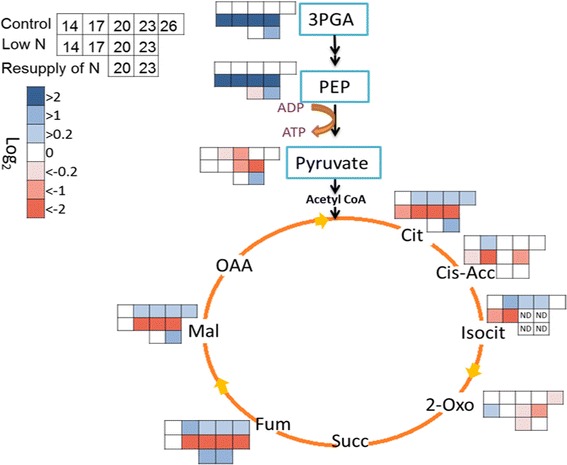
N deficiency in leaves caused differential regulation of 1947 genes, mostly belonging to the functional classes photosynthesis, cell wall degradation, lipid degradation, amino acid degradation, transcription factors, phytohormone metabolism and receptor-like kinases. Interestingly, 62% of the genes responding to low N were regulated in the opposite direction after two days of N resupply. Reprogramming of gene transcription was linked to metabolic rearrangements and affected the metabolism of amino acids and sugars. The levels of major amino acids, including Glu, Asp, Ser, Gln, Gly, Thr, Ala, and Val, decreased during primary leaf age and, more pronounced, during low N-induced senescence, which was efficiently reverted after resupply of N. A significant decrease was observed for pyruvate and metabolites involved in the TCA cycle under low N, and this was reverted to initial levels after 5 days of N resupply. Correspondingly, transcript levels of genes coding for pyruvate kinase, pyruvate dehydrogenase, and pyruvate orthophosphate dikinase followed the same trend as related metabolites.
Our results show that upon N limitation a specific pathway for remobilization at the link between glycolysis and TCA cycle in barley is established that is at least partly regulated by a strict reprogramming of the gene coding for pyruvate orthophosphate dikinase. Further analysis of this pathway, its regulatory levels and biochemical changing of pyruvate metabolism enzymes in response to N availability is needed to determine the link between N status and primary metabolism.
氮(N)的供应不足严重影响植物在不同水平上的生长,而这种影响可以通过 N 的再供应来逆转。为了揭示响应 N 可利用性变化的生长调节中初级代谢的关键步骤,使用大麦的初生叶片,在 N 剥夺的早期和晚期阶段以及 N 缺乏植物的 N 再供应后,进行了转录组和综合代谢物分析。
叶片中的 N 缺乏导致 1947 个基因的差异调控,这些基因主要属于光合作用、细胞壁降解、脂质降解、氨基酸降解、转录因子、植物激素代谢和类受体激酶等功能类群。有趣的是,在 N 再供应两天后,62%响应低 N 的基因以相反的方向调节。基因转录的重新编程与代谢重排有关,并影响氨基酸和糖的代谢。主要氨基酸(包括 Glu、Asp、Ser、Gln、Gly、Thr、Ala 和 Val)的水平在初生叶片的年龄过程中降低,在低 N 诱导的衰老过程中降低更为明显,而在 N 再供应后可有效地恢复。在低 N 条件下,丙酮酸和 TCA 循环代谢物的水平显著降低,在 N 再供应 5 天后恢复到初始水平。相应地,编码丙酮酸激酶、丙酮酸脱氢酶和丙酮酸磷酸二激酶的基因的转录水平与相关代谢物呈相同趋势。
我们的研究结果表明,在 N 限制下,大麦中糖酵解和 TCA 循环之间的再利用途径建立了一个特定的途径,该途径至少部分受到严格的丙酮酸磷酸二激酶编码基因的重新编程调节。需要进一步分析该途径及其调控水平,以及丙酮酸代谢酶对 N 可利用性的生化变化,以确定 N 状态和初级代谢之间的联系。