Li Xiaohu, Shu Hongmin, Zhang Yifei, Li Xiaoshu, Song Jian, Du Junhua, Qian Yinfeng, Liu Bin, Yu Yongqiang
Department of Radiology, The First Affiliated Hospital of Anhui Medical University, Hefei, China.
Department of Urology, The First Affiliated Hospital of Anhui Medical University, Hefei, China.
Oncotarget. 2018 Apr 13;9(28):20103-20111. doi: 10.18632/oncotarget.25047.
To prospectively determine the diagnostic performance of low-dose CT (LDCT) with adaptive statistical iterative reconstruction (ASIR) technique for the detection of urinary stone disease.
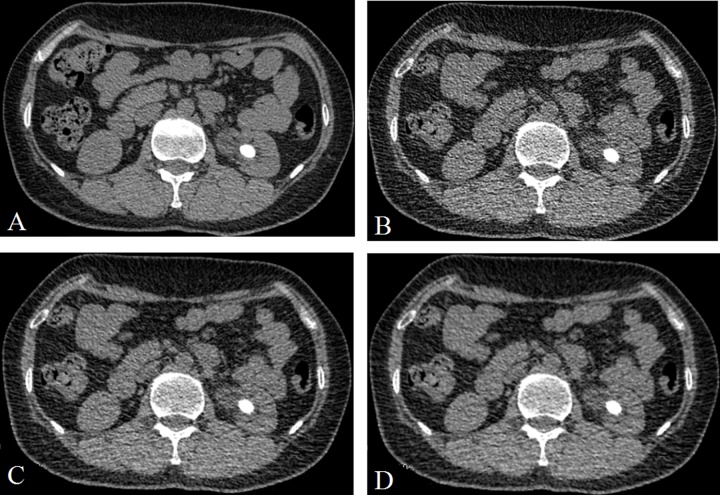
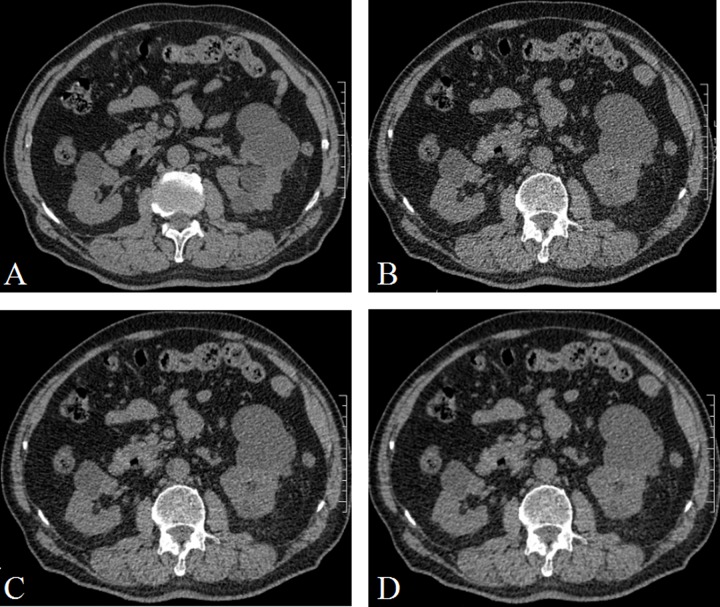
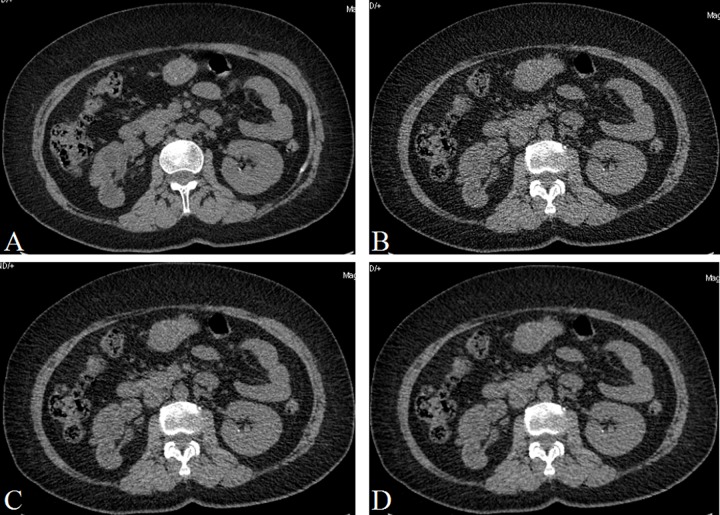
The average DLP and ED was 408.16 ± 119.04 mGy and 6.12 ± 1.79 mSv in CDCT, and 138.19 ± 76.87 mGy and 2.07 ± 1.15 mSv in LDCT, respectively. The dose reduction rate of LDCT was nearly 66.1% for both DLP and ED ( < 0.05). LDCT-80% ASIR images showed great image quality (mean score = 4.09), which was similar to CDCT-FBP images (mean score = 4.17) ( > 0.05), but higher than LDCT-FBP images (mean score = 2.77) ( < 0.05).
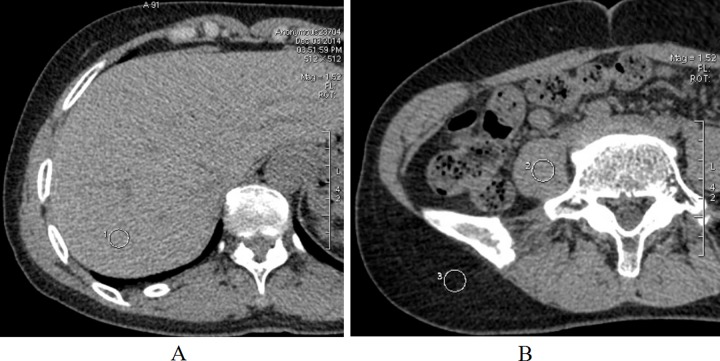
70 consetutive patients with clinically suspected urolithiasis underwent non-enhanced CT. Followed by both conventional-dose CT (CDCT) and low-dose CT (LDCT) scans. Automatic tube current modulation (ATCM) scanning was used, with a noise index setting of 13 in CDCT and 25 in LDCT. Reconstructions were performed with filtered back projection (FBP) and different settings of adaptive statistical iterative reconstruction [ASIR(40%, 60%, 80%)]. Urinary calculi (size, location, number), image quality (scale 1-5), image noise (scale 1-3) and diagnostic confidence levels (scale 1-3) were evaluated and measured by two radiologists independently. Radiation dose was recorded by calculating dose length product (DLP) and effective dose (ED). Statistical analyses included Mann-Whitney test and Paired tests.
LDCT with ASIR can reduce the radiation dose while maintain relatively high image quality in the diagnosis of urinary stone diseases.
前瞻性地确定采用自适应统计迭代重建(ASIR)技术的低剂量CT(LDCT)对尿路结石病的诊断性能。
常规剂量CT(CDCT)的平均剂量长度乘积(DLP)和有效剂量(ED)分别为408.16±119.04 mGy和6.12±1.79 mSv,而LDCT的平均DLP和ED分别为138.19±76.87 mGy和2.07±1.15 mSv。LDCT的DLP和ED剂量降低率均近66.1%(P<0.05)。LDCT-80%ASIR图像显示出良好的图像质量(平均评分=4.09),与CDCT-滤波反投影(FBP)图像(平均评分=4.17)相似(P>0.05),但高于LDCT-FBP图像(平均评分=2.77)(P<0.05)。
70例临床怀疑尿路结石的患者接受非增强CT检查。随后进行常规剂量CT(CDCT)和低剂量CT(LDCT)扫描。采用自动管电流调制(ATCM)扫描,CDCT的噪声指数设置为13,LDCT的噪声指数设置为25。采用滤波反投影(FBP)和不同设置的自适应统计迭代重建[ASIR(40%、60%、80%)]进行重建。由两名放射科医生独立评估和测量尿路结石(大小、位置、数量)、图像质量(1-5级)、图像噪声(1-3级)和诊断置信度水平(1-3级)。通过计算剂量长度乘积(DLP)和有效剂量(ED)记录辐射剂量。统计分析包括Mann-Whitney检验和配对检验。
在尿路结石病的诊断中,采用ASIR的LDCT在降低辐射剂量的同时可保持相对较高的图像质量。