a Leonard Davis School of Gerontology of the Ethel Percy , Andrus Gerontology Center, The University of Southern California , Los Angeles , CA , USA.
b Oswaldo Cruz Foundation, Oswaldo Cruz Institute , Laboratory on Thymus Research , Rio de Janeiro , Brazil.
Free Radic Res. 2018 Jul;52(7):737-750. doi: 10.1080/10715762.2018.1475733. Epub 2018 Jun 4.
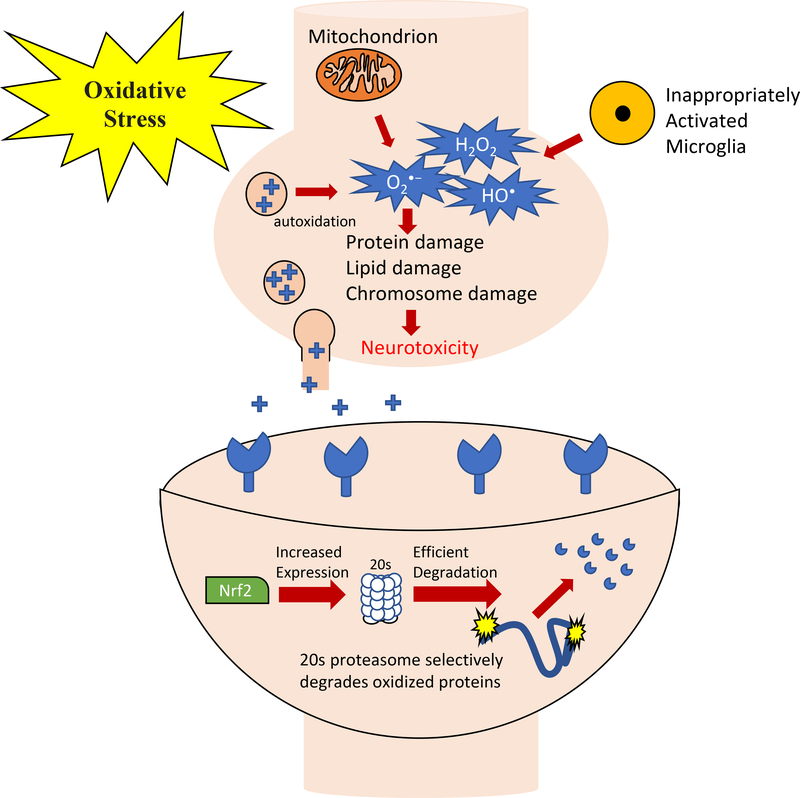
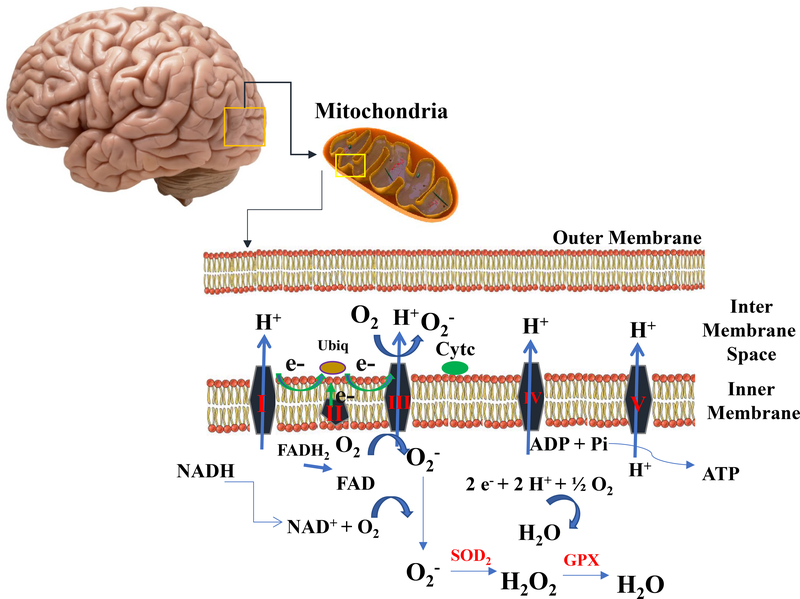
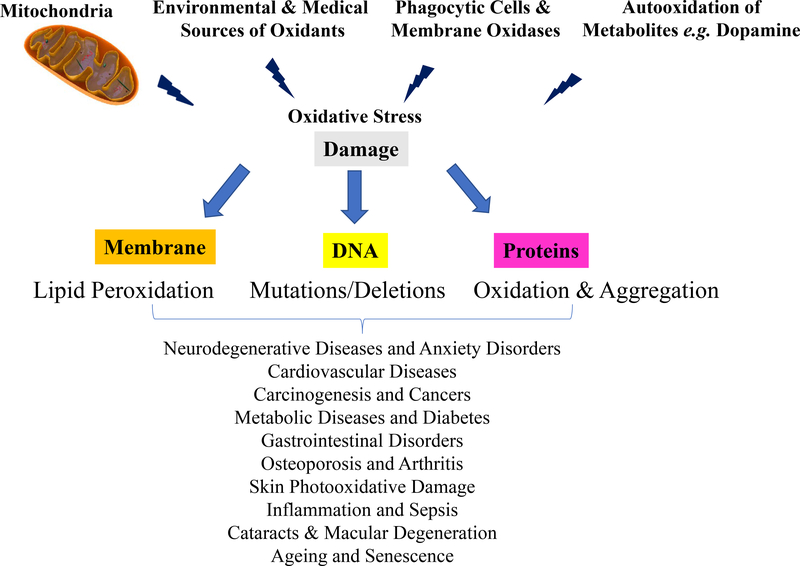
Anxiety disorders are the most common mental illness in the USA affecting 18% of the population. The cause(s) of anxiety disorders is/are not completely clear, and research in the neurobiology of anxiety at the molecular level is still rather limited. Although mounting clinical and preclinical evidence now indicates that oxidative stress may be a major component of anxiety pathology, whether oxidative stress is the cause or consequence remains elusive. Studies conducted over the past few years suggest that anxiety disorders may be characterised by lowered antioxidant defences and increased oxidative damage to proteins, lipids, and nucleic acids. In particular, oxidative modifications to proteins have actually been proposed as a potential factor in the onset and progression of several psychiatric disorders, including anxiety and depressive disorders. Oxidised proteins are normally degraded by the proteasome proteolytic complex in the cell cytoplasm, nucleus, and endoplasmic reticulum. The Lon protease performs a similar protective function inside mitochondria. Impairment of the proteasome and/or the Lon protease results in the accumulation of toxic oxidised proteins in the brain, which can cause severe neuronal trauma. Recent evidence points to possible proteolytic dysfunction and accumulation of damaged, oxidised proteins as factors that may determine the appearance and severity of psychotic symptoms in mood disorders. Thus, critical interactions between oxidative stress, proteasome, and the Lon protease may provide keys to the molecular mechanisms involved in emotional regulation, and may also be of great help in designing and screening novel anxiolytics and antidepressants.
焦虑症是美国最常见的精神疾病,影响了 18%的人口。焦虑症的病因尚不完全清楚,神经生物学领域对焦虑症的分子水平的研究仍然相当有限。尽管越来越多的临床前和临床证据表明,氧化应激可能是焦虑症病理的一个主要组成部分,但氧化应激是原因还是后果仍不清楚。过去几年的研究表明,焦虑症可能表现为抗氧化防御能力降低,蛋白质、脂质和核酸的氧化损伤增加。特别是,蛋白质的氧化修饰实际上被认为是包括焦虑和抑郁障碍在内的几种精神疾病发病和进展的潜在因素。氧化的蛋白质通常会被细胞质、细胞核和内质网中的蛋白酶体蛋白酶复合物降解。Lon 蛋白酶在线粒体中执行类似的保护功能。蛋白酶体和/或 Lon 蛋白酶的损伤会导致大脑中有毒的氧化蛋白积累,从而导致严重的神经元损伤。最近的证据表明,可能存在蛋白酶体功能障碍和受损、氧化蛋白的积累,这可能是决定心境障碍中精神病症状出现和严重程度的因素。因此,氧化应激、蛋白酶体和 Lon 蛋白酶之间的相互作用可能为情绪调节相关的分子机制提供关键线索,也可能有助于设计和筛选新型抗焦虑药和抗抑郁药。