Department of Geology and Geography, Georgia Southern University, 68 Georgia Ave, Herty Bldg 0201, Statesboro, GA, 30460, USA.
Yunnan University of Finance and Economics, Longquan Road 237, Kunming, 650221, Yunnan, China.
Int J Health Geogr. 2018 May 9;17(1):11. doi: 10.1186/s12942-018-0130-3.
Advancement in location-aware technologies, and information and communication technology in the past decades has furthered our knowledge of the interaction between human activities and the built environment. An increasing number of studies have collected data regarding individual activities to better understand how the environment shapes human behavior. Despite this growing interest, some challenges exist in collecting and processing individual's activity data, e.g., capturing people's precise environmental contexts and analyzing data at multiple spatial scales.
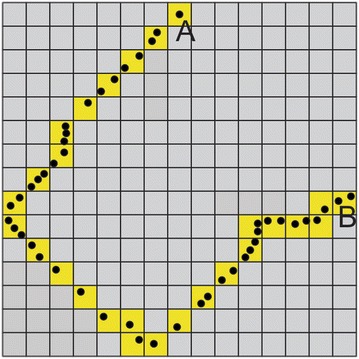
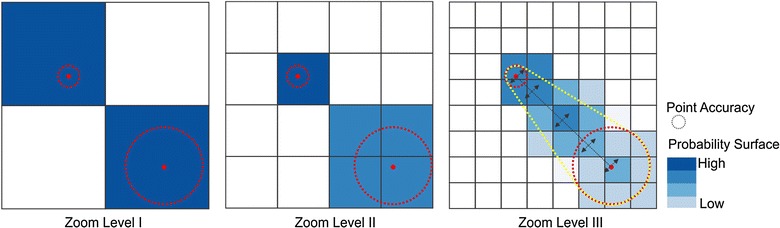
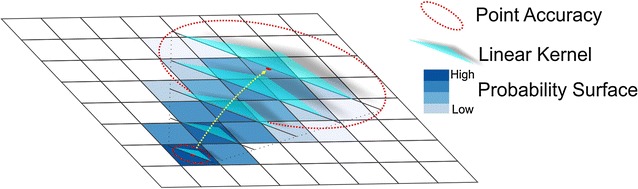
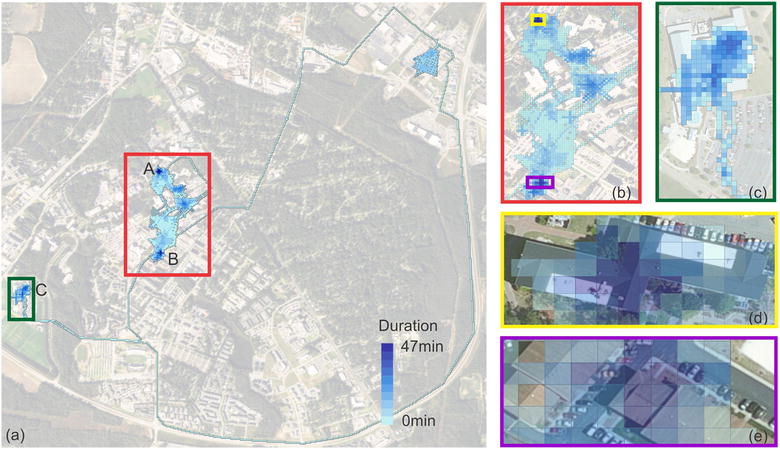
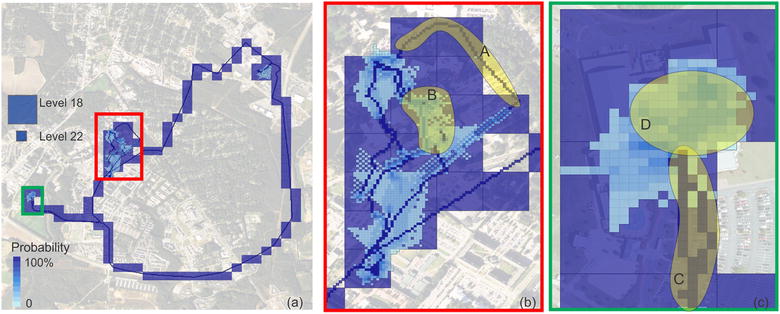
In this study, we propose and implement an innovative system that integrates smartphone-based step tracking with an app and the sequential tile scan techniques to collect and process activity data. We apply the OpenStreetMap tile system to aggregate positioning points at various scales. We also propose duration, step and probability surfaces to quantify the multi-dimensional attributes of activities.
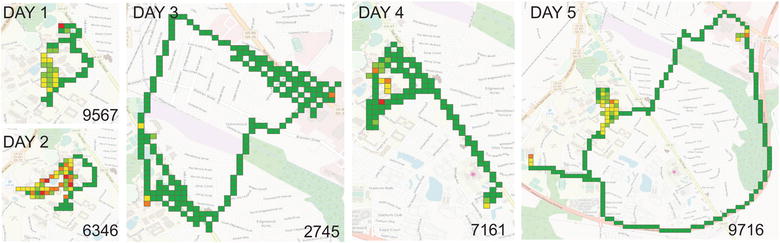
Results show that, by running the app in the background, smartphones can measure multi-dimensional attributes of human activities, including space, duration, step, and location uncertainty at various spatial scales. By coordinating Global Positioning System (GPS) sensor with accelerometer sensor, this app can save battery which otherwise would be drained by GPS sensor quickly. Based on a test dataset, we were able to detect the recreational center and sports center as the space where the user was most active, among other places visited.
The methods provide techniques to address key issues in analyzing human activity data. The system can support future studies on behavioral and health consequences related to individual's environmental exposure.
在过去几十年中,位置感知技术和信息通信技术的进步进一步加深了我们对人类活动与建筑环境之间相互作用的了解。越来越多的研究收集了关于个体活动的数据,以更好地了解环境如何塑造人类行为。尽管人们对此越来越感兴趣,但在收集和处理个体活动数据方面仍存在一些挑战,例如,捕捉人们精确的环境背景和在多个空间尺度上分析数据。
在本研究中,我们提出并实现了一种创新系统,该系统将基于智能手机的计步跟踪与应用程序和顺序瓦片扫描技术相结合,用于收集和处理活动数据。我们应用 OpenStreetMap 瓦片系统在不同尺度上聚合定位点。我们还提出了持续时间、步长和概率曲面来量化活动的多维属性。
结果表明,通过在后台运行应用程序,智能手机可以测量人类活动的多维属性,包括不同空间尺度的空间、持续时间、步长和位置不确定性。通过协调全球定位系统 (GPS) 传感器和加速度计传感器,该应用程序可以节省 GPS 传感器快速消耗的电池电量。基于测试数据集,我们能够检测到用户最活跃的空间,如娱乐中心和体育中心,以及其他访问过的地方。
该方法提供了分析人类活动数据的关键问题的技术。该系统可以支持未来与个体环境暴露相关的行为和健康后果的研究。