Tsai Chi-Lin, Tainer John A
The University of Texas M. D. Anderson Cancer Center, Houston, TX, United States.
The University of Texas M. D. Anderson Cancer Center, Houston, TX, United States; Molecular Biophysics and Integrated Bioimaging, Lawrence Berkeley National Laboratory, Berkeley, CA, United States.
Methods Enzymol. 2018;599:157-196. doi: 10.1016/bs.mie.2017.11.006. Epub 2017 Dec 19.
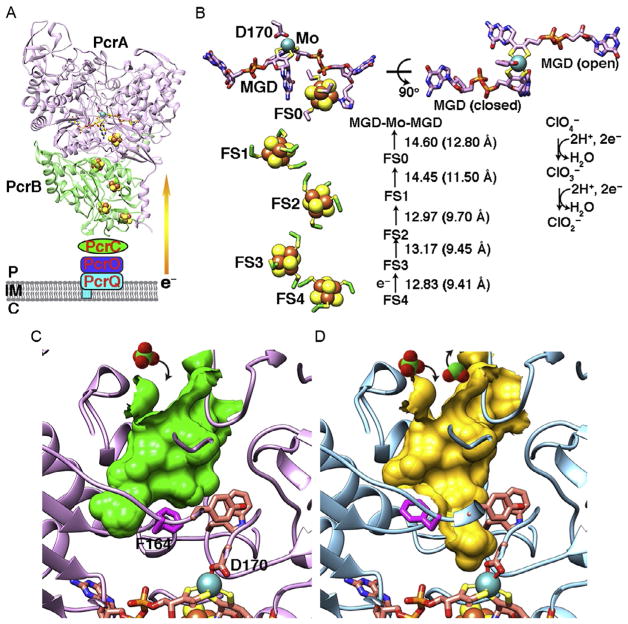
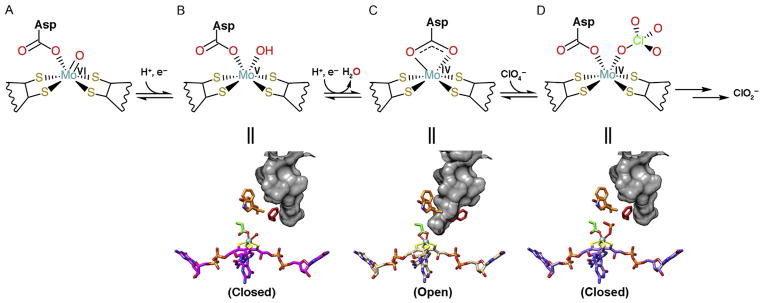
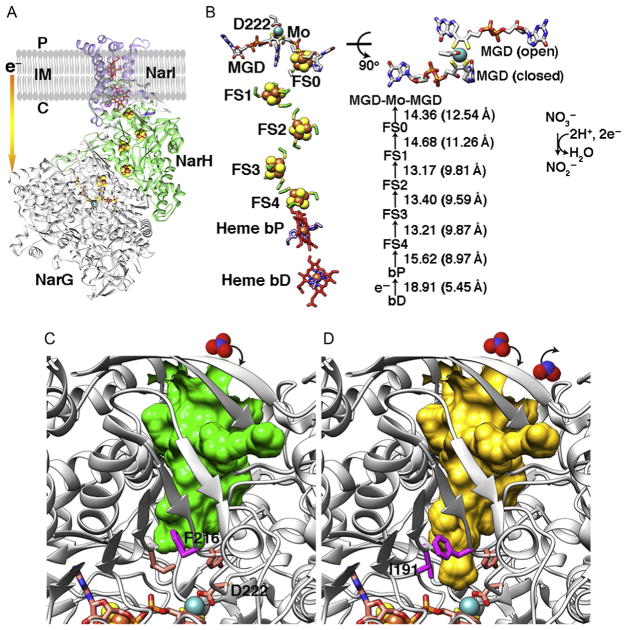
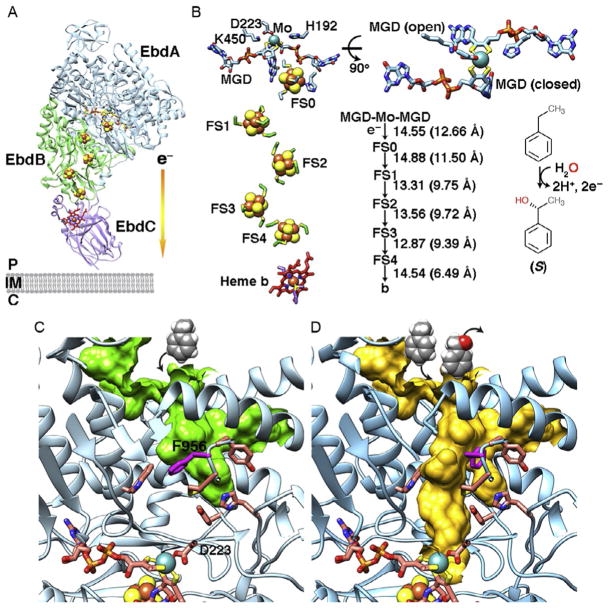
[Fe-S] clusters are essential cofactors in all domains of life. They play many biological roles due to their unique abilities for electron transfer and conformational control. Yet, producing and analyzing Fe-S proteins can be difficult and even misleading if not done anaerobically. Due to unique redox properties of [Fe-S] clusters and their oxygen sensitivity, they pose multiple challenges and can lose enzymatic activity or cause their component proteins to be structurally disordered due to [Fe-S] cluster oxidation and loss in air. Here we highlight tested protocols and strategies enabling efficient and stable [Fe-S] protein production, purification, crystallization, X-ray diffraction data collection, and structure determination. From multiple high-resolution anaerobic crystal structures, we furthermore analyze exemplary data defining [Fe-S] clusters, substrate entry, and product exit for the functional oxidation states of type II molybdo-bis(molybdopterin guanine dinucleotide) (Mo-bisMGD) enzymes. Notably, these enzymes perform electron shuttling between quinone pools and specific substrates to catalyze respiratory metabolism. The identified structure-activity relationships for this enzyme class have broad implications germane to perchlorate environments on Earth and Mars extending to an alternative mechanism underlying metabolic origins for the evolution of the oxygen atmosphere. Integrated structural analyses of type II Mo-bisMGD enzymes unveil novel distinctive shared molecular mechanisms for dynamic control of substrate entry and product release gated by hydrophobic residues. Collective findings support a prototypic model for type II Mo-bisMGD enzymes including insights for a fundamental molecular mechanistic understanding of selectivity and regulation by a conformationally gated channel with general implications for [Fe-S] cluster respiratory enzymes.
[铁硫]簇是生命所有领域中必不可少的辅助因子。由于它们在电子转移和构象控制方面具有独特能力,因而发挥着许多生物学作用。然而,如果不进行厌氧操作,生产和分析铁硫蛋白可能会很困难,甚至会产生误导。由于[铁硫]簇具有独特的氧化还原特性及其对氧的敏感性,它们带来了多重挑战,并且在空气中会因[铁硫]簇氧化和丢失而失去酶活性或导致其组成蛋白结构紊乱。在此,我们重点介绍经过测试的方案和策略,以实现高效稳定的铁硫蛋白生产、纯化、结晶、X射线衍射数据收集及结构测定。通过多个高分辨率厌氧晶体结构,我们还分析了示例性数据,这些数据定义了II型钼双(钼蝶呤鸟嘌呤二核苷酸)(Mo-bisMGD)酶功能氧化态的[铁硫]簇、底物进入和产物输出。值得注意的是,这些酶在醌池和特定底物之间进行电子穿梭以催化呼吸代谢。所确定的这类酶的结构-活性关系对于地球和火星上高氯酸盐环境具有广泛意义,这延伸至氧气大气演化的代谢起源的另一种潜在机制。II型Mo-bisMGD酶的综合结构分析揭示了由疏水残基控制的底物进入和产物释放动态控制的新颖独特共同分子机制。总体研究结果支持II型Mo-bisMGD酶的原型模型,包括对通过构象门控通道进行选择性和调节的基本分子机制理解的见解,这对[铁硫]簇呼吸酶具有普遍意义。