Department of Civil and Environmental Engineering, Massachusetts Institute of Technology, Cambridge, Massachusetts, United States of America.
Rubenstein School of Environment and Natural Resources and Gund Institute for Environment, University of Vermont, Burlington, Vermont, United States of America.
PLoS One. 2018 May 10;13(5):e0197325. doi: 10.1371/journal.pone.0197325. eCollection 2018.
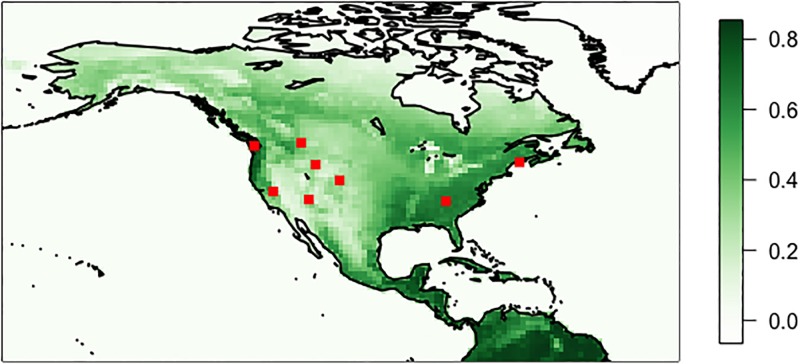
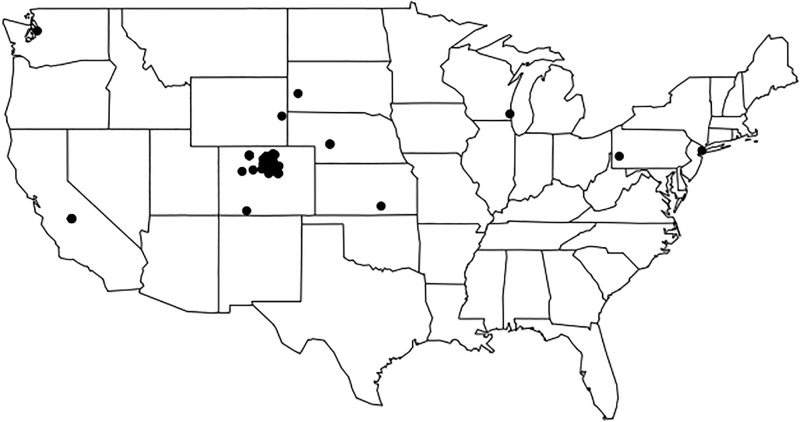
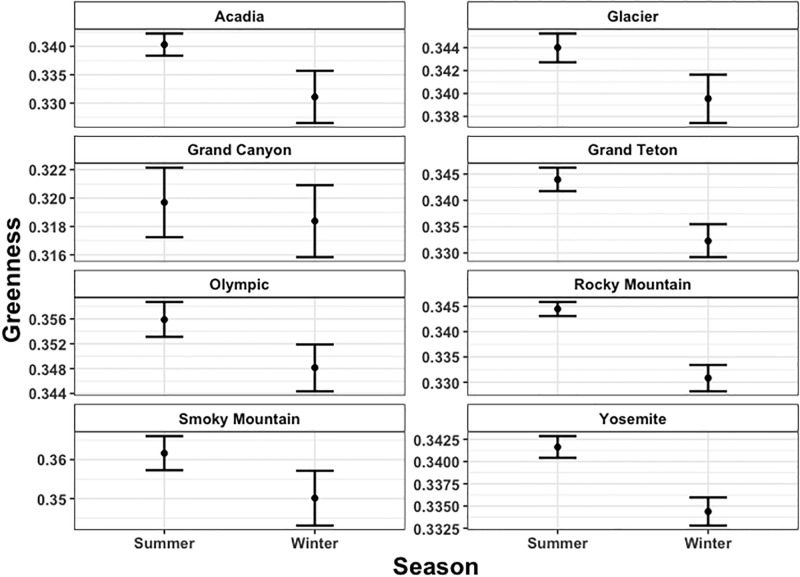
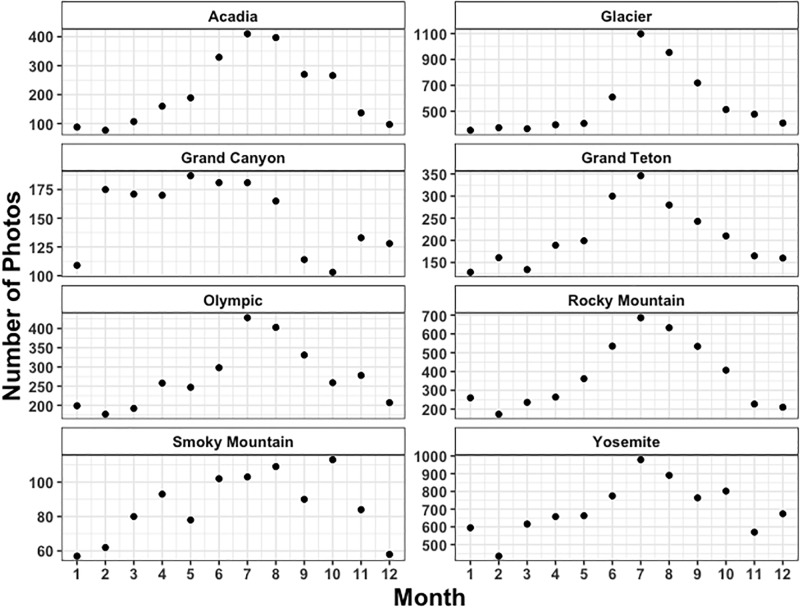
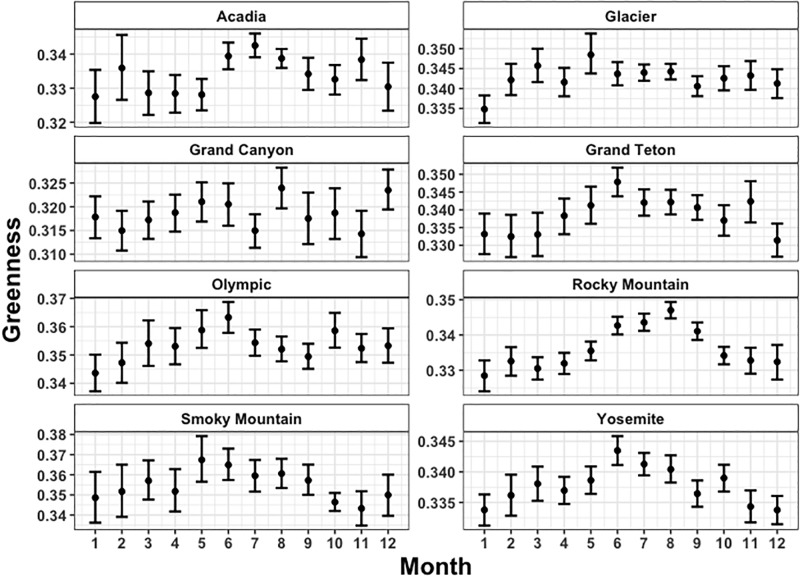
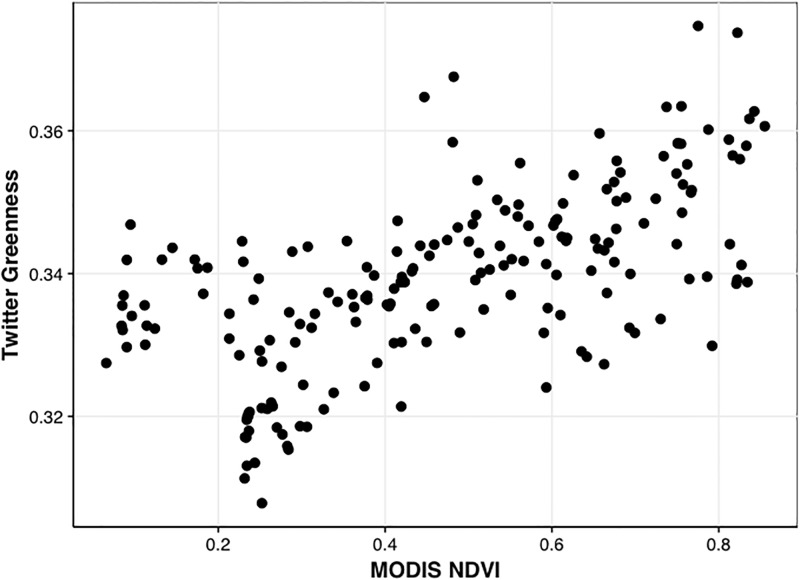
The widespread use of social media has created a valuable but underused source of data for the environmental sciences. We demonstrate the potential for images posted to the website Twitter to capture variability in vegetation phenology across United States National Parks. We process a subset of images posted to Twitter within eight U.S. National Parks, with the aim of understanding the amount of green vegetation in each image. Analysis of the relative greenness of the images show statistically significant seasonal cycles across most National Parks at the 95% confidence level, consistent with springtime green-up and fall senescence. Additionally, these social media-derived greenness indices correlate with monthly mean satellite NDVI (r = 0.62), reinforcing the potential value these data could provide in constraining models and observing regions with limited high quality scientific monitoring.
社交媒体的广泛使用为环境科学创造了一个有价值但未被充分利用的数据来源。我们展示了发布在网站 Twitter 上的图像捕捉美国国家公园植被物候变化的潜力。我们处理了美国八个国家公园内发布的图像子集,目的是了解每张图像中绿色植被的数量。对图像相对绿色度的分析显示,在大多数国家公园,在 95%的置信水平上都呈现出统计学上显著的季节性周期,这与春季返青和秋季衰老一致。此外,这些社交媒体衍生的绿色指数与每月平均卫星 NDVI 相关(r=0.62),这增强了这些数据在约束模型和观测高质量科学监测有限的区域方面可能提供的价值。