Faculty of Health Sciences, University of Brasilia, Brasília 70910-900, Distrito Federal, Brazil.
Department of Health, Feira de Santana State University, Feira de Santana 44036-900, Bahia, Brazil.
Nutrients. 2018 May 12;10(5):601. doi: 10.3390/nu10050601.
To systematically analyze the relationship between maternal anemia and low birth weight.
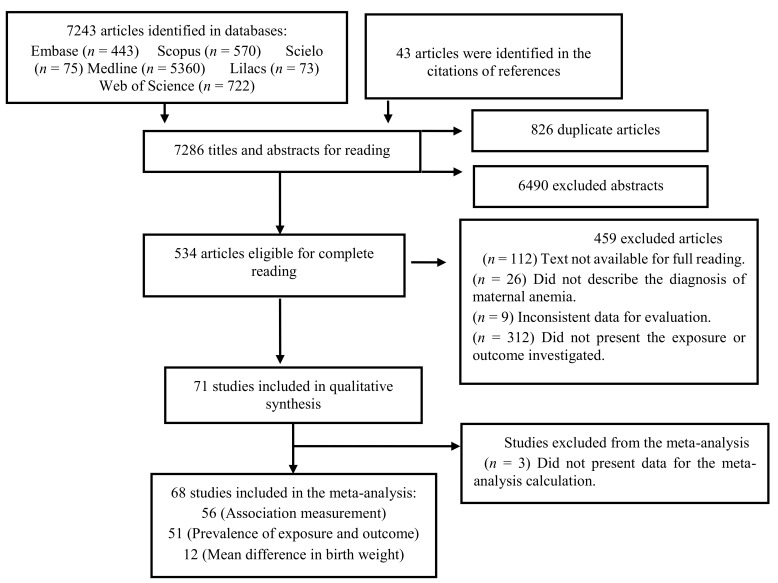
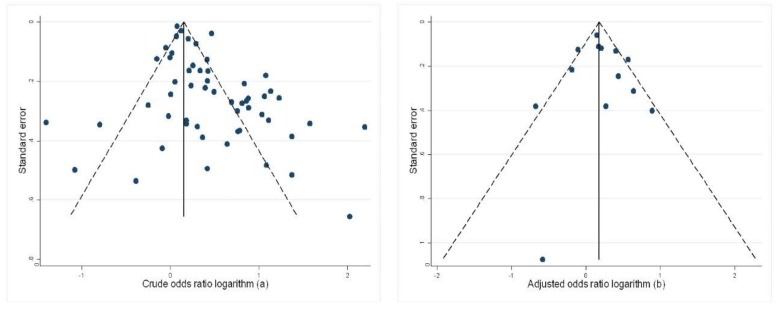
A search of studies was conducted in the main databases (Medline, Embase, Scopus, Web of Science, SciELO, and Lilacs), the gray literature, and the reference lists of selected articles. Cohort and case-control studies that met the eligibility criteria were included in the review. There was no limitation on the language or date of publication. Article selection and data extraction were performed by two independent reviewers. Meta-analyses with random effects, subgroup analyses and meta-regressions were performed. Publication bias was measured using Egger regression and visual funnel plot inspection.
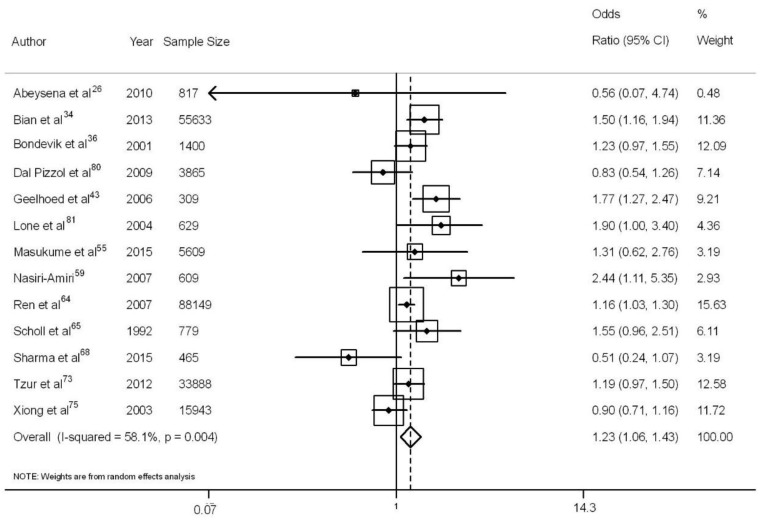
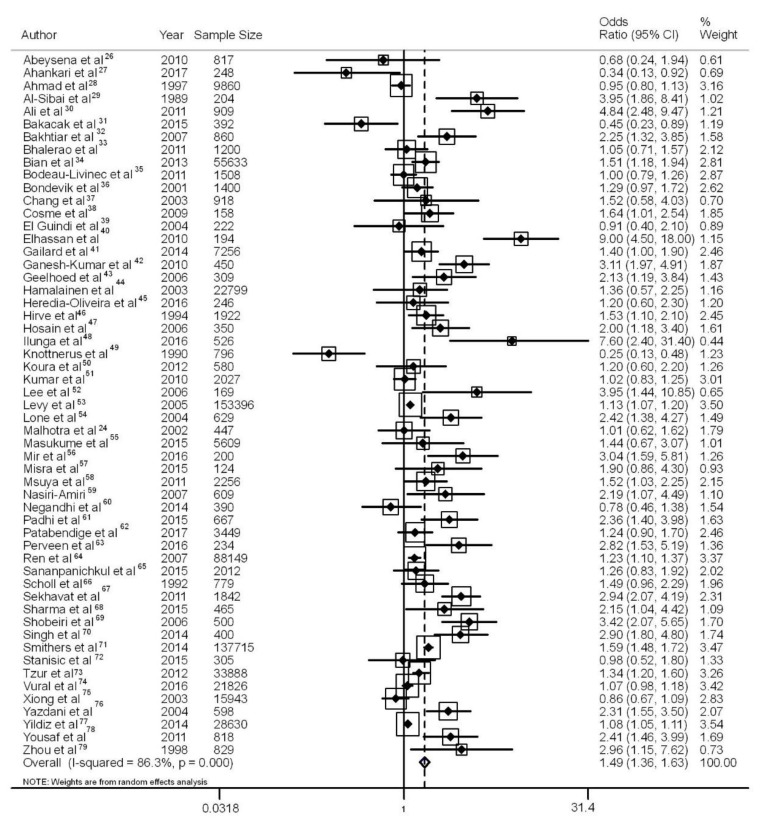
A total of 7243 articles were found, of which 71 comprised the systematic review and 68 were included in the meta-analyses. Maternal anemia was associated with low birth weight with an adjusted OR: 1.23 (95% CI: 1.06⁻1.43) and I²: 58%. The meta-regressions confirmed that the sample size and the methodological quality may partially explain the statistical heterogeneity.
Maternal anemia was considered a risk factor for low birth weight.
系统分析母亲贫血与低出生体重之间的关系。
在主要数据库(Medline、Embase、Scopus、Web of Science、SciELO 和 Lilacs)、灰色文献以及选定文章的参考文献中进行了研究检索。纳入了符合入选标准的队列研究和病例对照研究。不限制语言或出版日期。文章选择和数据提取由两名独立评审员进行。采用随机效应进行荟萃分析、亚组分析和荟萃回归分析。使用 Egger 回归和视觉漏斗图检查评估发表偏倚。
共发现 7243 篇文章,其中 71 篇为系统综述,68 篇纳入荟萃分析。母亲贫血与低出生体重相关,调整后的 OR:1.23(95%CI:1.06⁻1.43),I²:58%。荟萃回归证实,样本量和方法学质量可能部分解释了统计学异质性。
母亲贫血被认为是低出生体重的一个危险因素。