Department of Environmental Systems Science, ETH Zürich, 8092 Zürich, Switzerland.
Behavioural and Chemical Ecology Unit, International Centre of Insect Physiology and Ecology, Nairobi, Kenya.
Proc Natl Acad Sci U S A. 2018 May 29;115(22):5780-5785. doi: 10.1073/pnas.1801512115. Epub 2018 May 14.
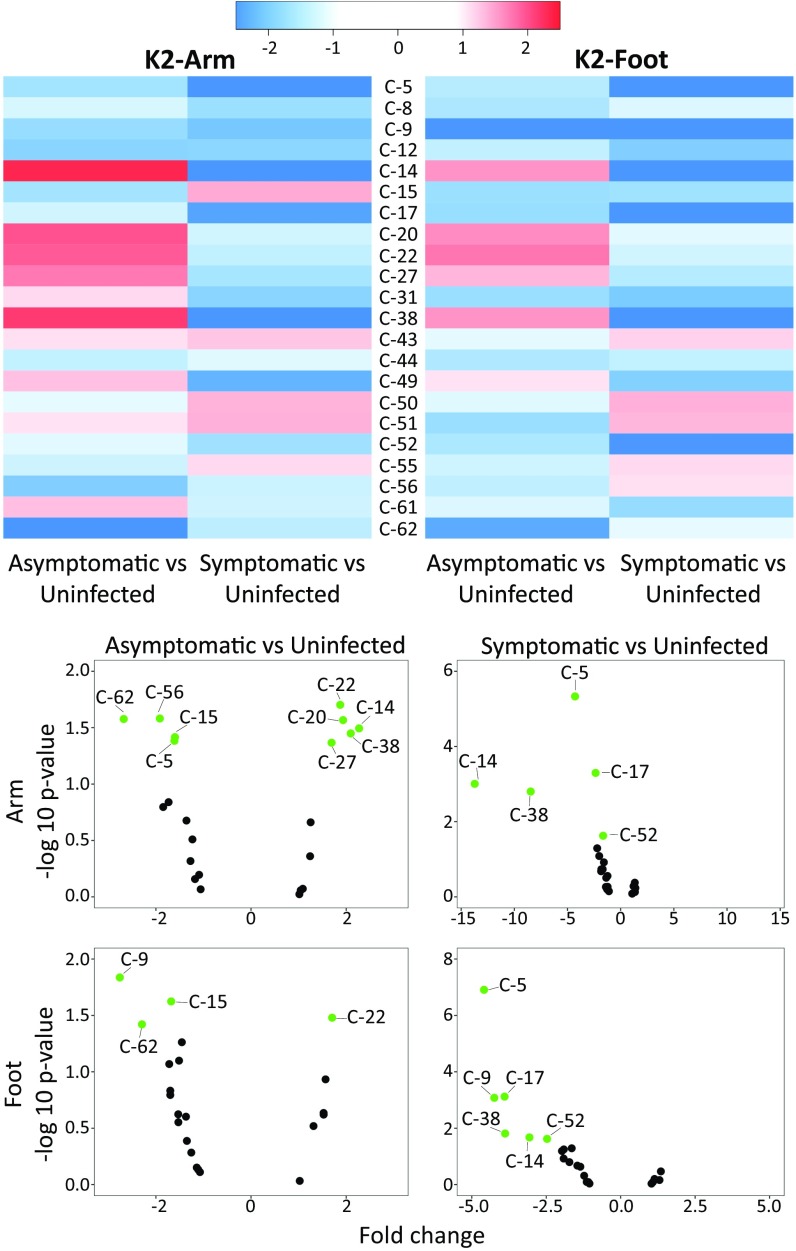
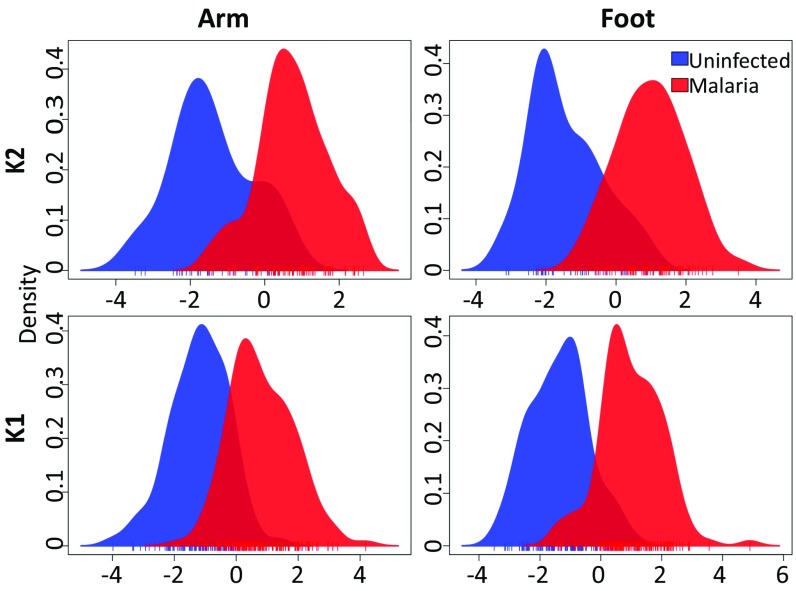
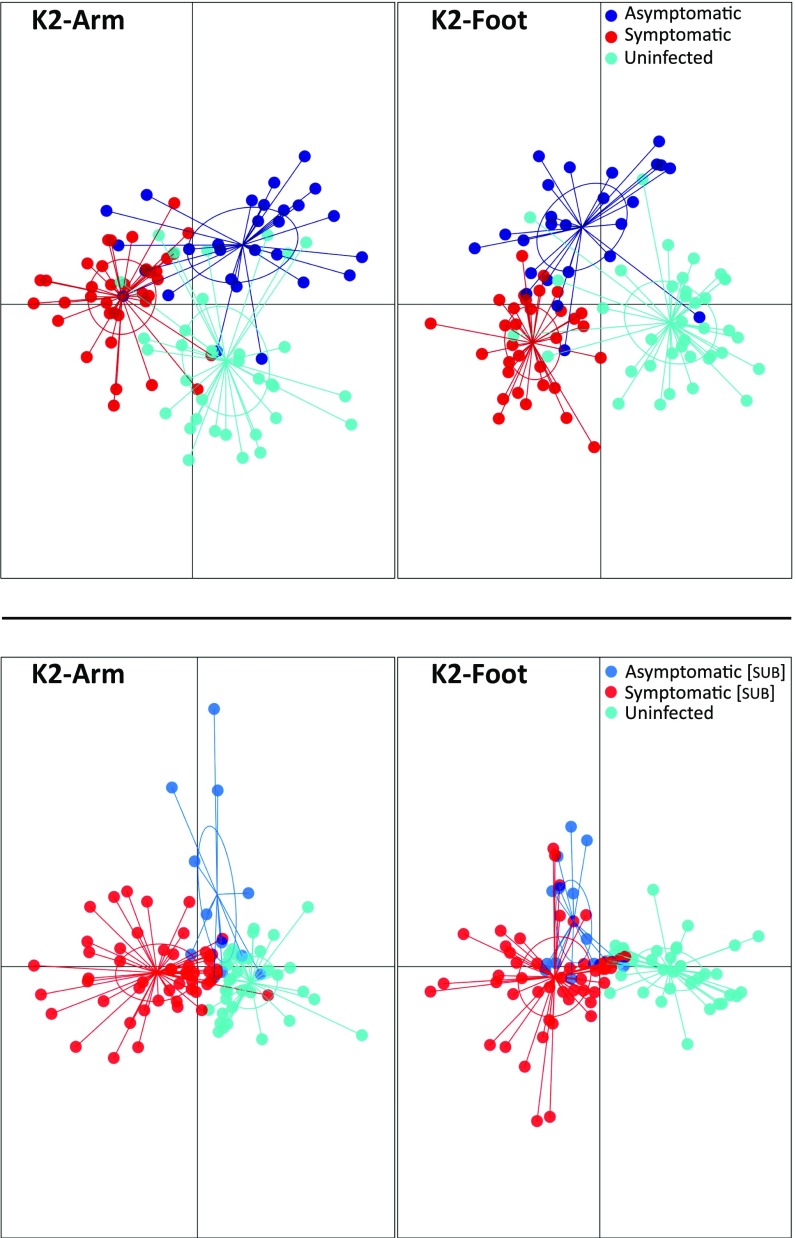
Malaria remains among the world's deadliest diseases, and control efforts depend critically on the availability of effective diagnostic tools, particularly for the identification of asymptomatic infections, which play a key role in disease persistence and may account for most instances of transmission but often evade detection by current screening methods. Research on humans and in animal models has shown that infection by malaria parasites elicits changes in host odors that influence vector attraction, suggesting that such changes might yield robust biomarkers of infection status. Here we present findings based on extensive collections of skin volatiles from human populations with high rates of malaria infection in Kenya. We report broad and consistent effects of malaria infection on human volatile profiles, as well as significant divergence in the effects of symptomatic and asymptomatic infections. Furthermore, predictive models based on machine learning algorithms reliably determined infection status based on volatile biomarkers. Critically, our models identified asymptomatic infections with 100% sensitivity, even in the case of low-level infections not detectable by microscopy, far exceeding the performance of currently available rapid diagnostic tests in this regard. We also identified a set of individual compounds that emerged as consistently important predictors of infection status. These findings suggest that volatile biomarkers may have significant potential for the development of a robust, noninvasive screening method for detecting malaria infections under field conditions.
疟疾仍然是世界上最致命的疾病之一,控制工作严重依赖于有效诊断工具的可用性,特别是用于识别无症状感染的工具,因为无症状感染在疾病持续存在中起着关键作用,可能是大多数传播实例的原因,但通常会逃避当前筛查方法的检测。人类和动物模型的研究表明,疟原虫感染会引起宿主气味的变化,从而影响媒介的吸引力,这表明这些变化可能产生感染状态的强大生物标志物。在这里,我们根据肯尼亚疟疾感染率高的人群的大量皮肤挥发物收集,提出了基于这些研究的发现。我们报告了疟疾感染对人类挥发性特征的广泛而一致的影响,以及有症状和无症状感染的影响的显著差异。此外,基于机器学习算法的预测模型能够可靠地根据挥发性生物标志物来确定感染状态。至关重要的是,我们的模型能够以 100%的灵敏度识别无症状感染,即使是在显微镜无法检测到的低水平感染的情况下,远远超过了目前在这方面可用的快速诊断测试的性能。我们还确定了一组个体化合物,这些化合物作为感染状态的一致重要预测因子出现。这些发现表明,挥发性生物标志物可能具有很大的潜力,可用于开发一种稳健、非侵入性的筛查方法,以便在现场条件下检测疟疾感染。