Jälevik B, Szigyarto-Matei A, Robertson A
Department of Pediatric Dentistry, Institute of Odontology at the Sahlgrenska Academy, University of Gothenburg, Gothenburg, Sweden.
Clinic of Pediatric Dentistry, Public Dental Service, VGR, Uddevalla, Sweden.
Eur Arch Paediatr Dent. 2018 Jun;19(3):187-195. doi: 10.1007/s40368-018-0347-7. Epub 2018 May 14.
To describe the prevalence of different types of developmental defects of the enamel (DDE) in varying age-cohorts and habitations, and to analyse if early trauma to the primary teeth and early subsequent serious health problems were related to DDE in the permanent dentition. Dental fear and anxiety, and aesthetic problems as a consequence of DDE were also investigated.
DDE was registered over 5 years annually in three age cohorts (796 children). The DDE index (FDI Commision on Oral Health, Research and Epidemiology, Int Dent J 42:411-426, 1992) was used. Information on diseases in early childhood, trauma to the primary teeth, and dental fear and anxiety were collected.
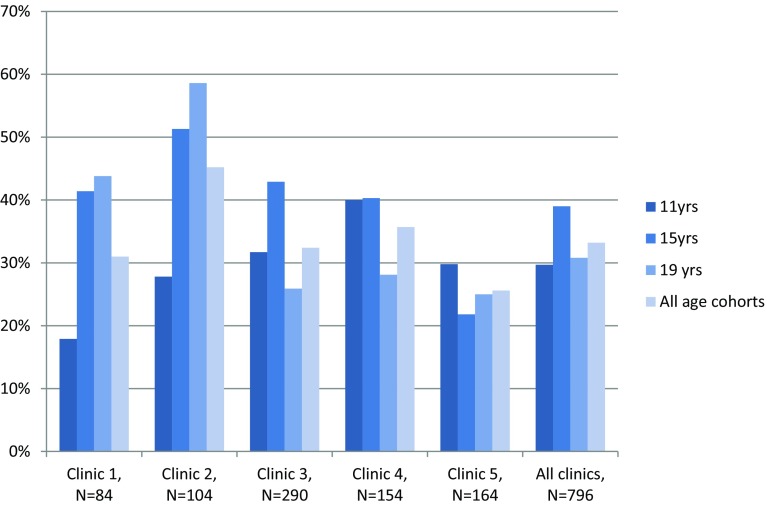
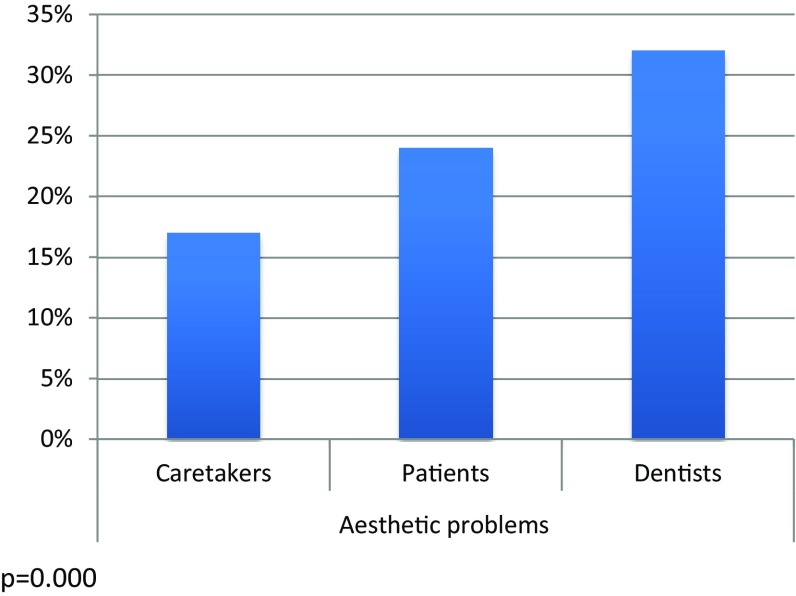
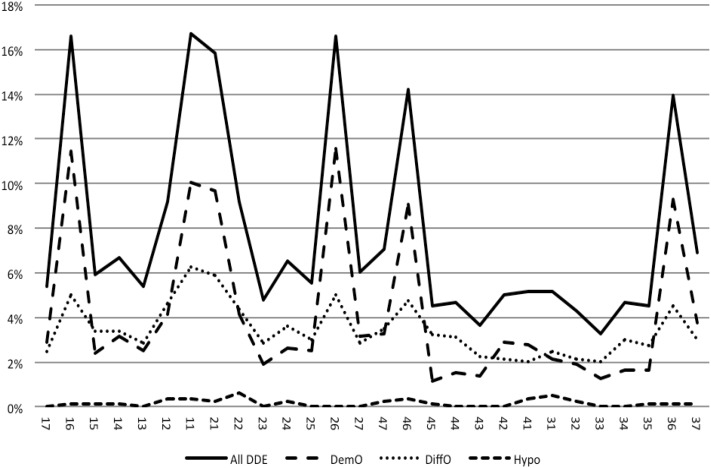
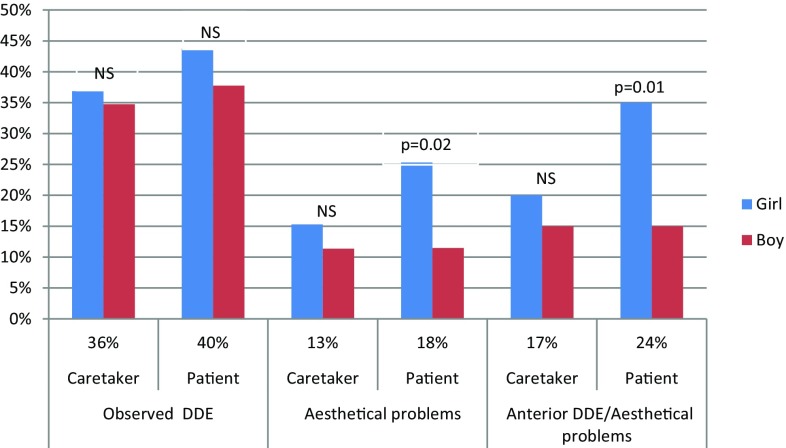
The prevalence of DDE was 33.2% (boys 37.1%, girls 29.3%, p = 0.02). Demarcated opacities (DEO), solely, were the most frequent kind of defect, affecting 18%. Five percent (5%) had diffuse opacities (DIO) and 1% had hypoplasias, whereas 7% had teeth with both DEO and DIO. The most frequently affected teeth of DEO, as well as of DIO, were the first permanent molars and maxillary central incisors. Dental injuries to the primary anterior teeth raised the risk for DDE in the permanent teeth, but early serious health problems did not. Generalised DDE was common (8.4%). The paediatric dentists assessed the DDE in the maxillary anterior teeth as more serious than did the affected children and their parents.
Generalised DDE was more frequent than expected, as well as the occurrence of both DEO and DIO in the same individual. The first permanent molars and the upper central incisors were the most affected teeth.
描述不同年龄组和居住地区各种类型牙釉质发育缺陷(DDE)的患病率,并分析乳牙早期创伤及随后早期出现的严重健康问题是否与恒牙列中的DDE有关。同时还调查了牙科恐惧和焦虑以及DDE导致的美学问题。
在5年时间里,每年对三个年龄组(共796名儿童)进行DDE登记。采用DDE指数(国际牙科联合会口腔健康、研究与流行病学委员会,《国际牙科杂志》42:411 - 426,1992)。收集了儿童早期疾病、乳牙创伤以及牙科恐惧和焦虑方面的信息。
DDE的患病率为33.2%(男孩37.1%,女孩29.3%,p = 0.02)。仅边界性不透明(DEO)是最常见的缺陷类型,占18%。5%有弥漫性不透明(DIO),1%有发育不全,而7%的牙齿同时有DEO和DIO。DEO以及DIO最常受累的牙齿是第一恒磨牙和上颌中切牙。乳牙前牙的损伤增加了恒牙出现DDE的风险,但早期严重健康问题并未增加。广泛性DDE很常见(8.4%)。儿童牙医评估上颌前牙的DDE比受影响儿童及其父母认为的更严重。
广泛性DDE比预期更常见,同一个体同时出现DEO和DIO的情况也较多。第一恒磨牙和上颌中切牙是受累最严重的牙齿。