INSERM U-1084, Experimental and Clinical Neurosciences Laboratory, University of Poitiers, Poitiers, France.
CHU Poitiers, Poitiers, France.
Int J Neuropsychopharmacol. 2018 Sep 1;21(9):871-882. doi: 10.1093/ijnp/pyy043.
Motor impairments are amongst the earliest and most consistent signs of autism spectrum disorders but are not used as diagnostic criteria. In addition, the relationship between motor and cognitive impairments and their respective neural substrates remain unknown.
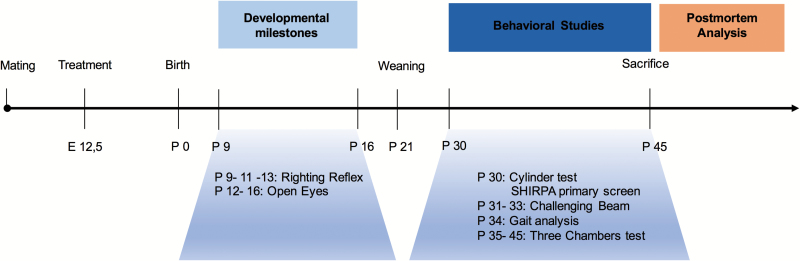
Here, we aimed at determining whether a well-acknowledged animal model of autism spectrum disorders, the valproic acid model, displays motor impairments and whether they may correlate with social deficits and neuronal loss within motor brain areas. For this, pregnant female mice (C57BL/6J) received valproic acid (450 mg/kg) at embryonic day 12.5 and offspring underwent a battery of behavioral analyses before being killed for histological correlates in motor cortex, nigrostriatal pathway, and cerebellum.
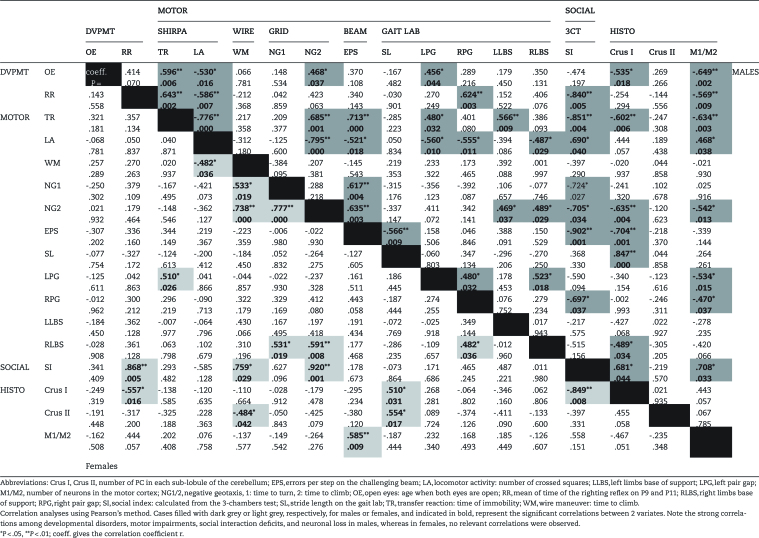
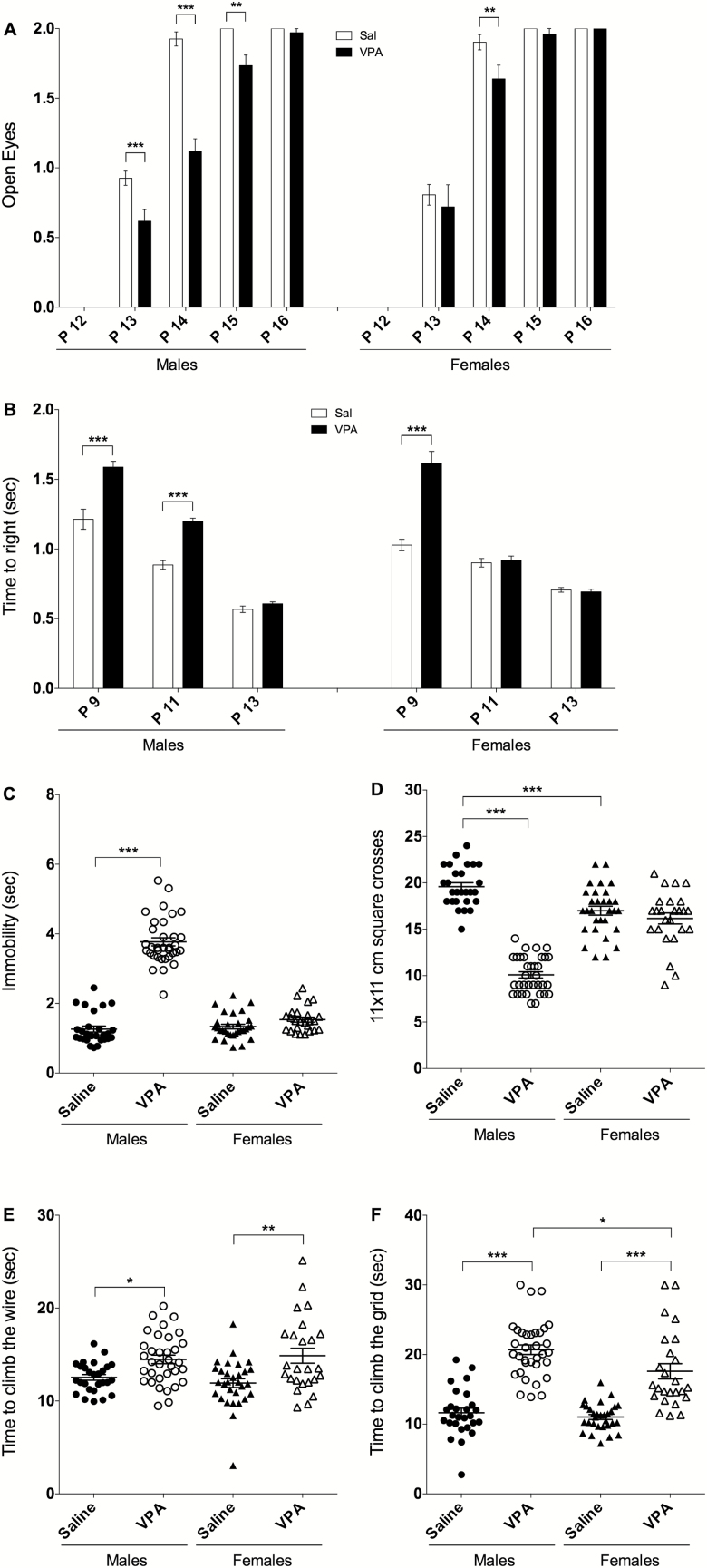
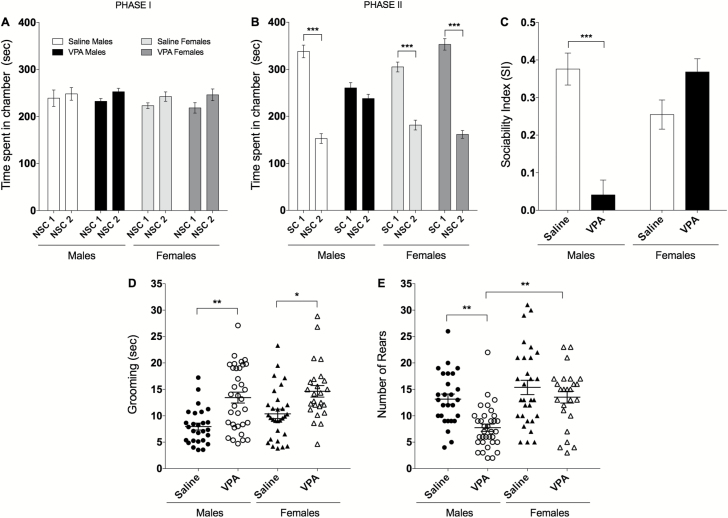
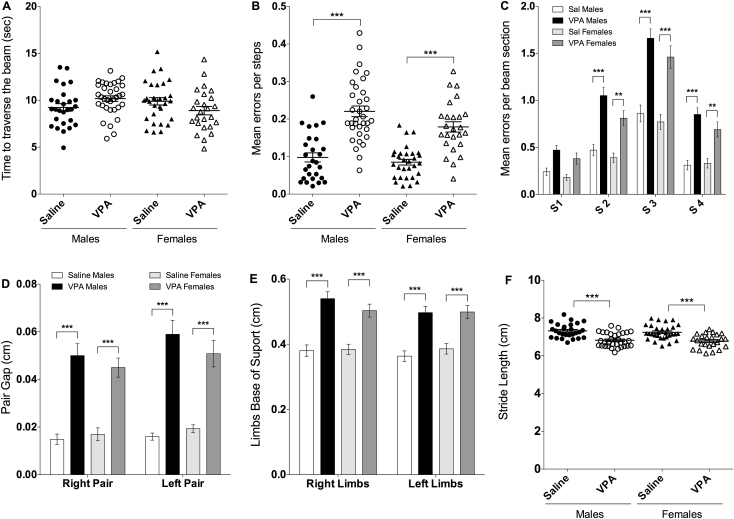
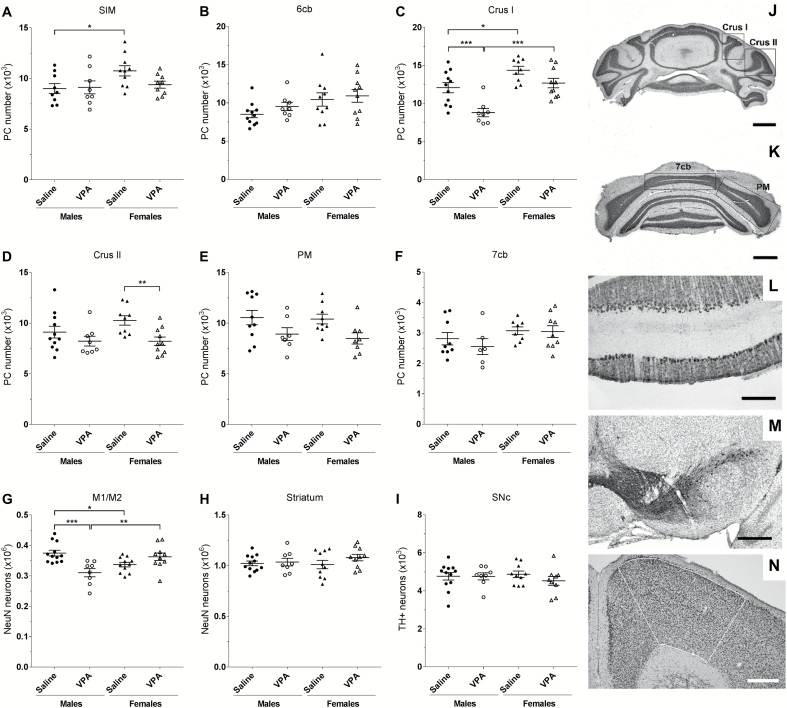
We show that while valproic acid male mice show both social and motor impairments, female mice only show motor impairments. Prenatal valproic acid exposure induces specific cell loss within the motor cortex and cerebellum and that is of higher magnitude in males than in females. Finally, we demonstrate that motor dysfunction correlates with reduced social behavior and that motor and social deficits both correlate with a loss of Purkinje cells within the Crus I cerebellar area.
Our results suggest that motor dysfunction could contribute to social and communication deficits in autism spectrum disorders and that motor and social deficits may share common neuronal substrates in the cerebellum. A systematic assessment of motor function in autism spectrum disorders may potentially help the quantitative diagnosis of autism spectrum disorders and strategies aimed at improving motor behavior may provide a global therapeutic benefit.
运动障碍是自闭症谱系障碍最早和最一致的迹象之一,但不作为诊断标准。此外,运动和认知障碍及其各自的神经基础之间的关系仍不清楚。
在这里,我们旨在确定自闭症谱系障碍的一种公认的动物模型——丙戊酸钠模型是否存在运动障碍,以及它们是否与运动脑区的社交缺陷和神经元丢失有关。为此,怀孕的雌性小鼠(C57BL/6J)在胚胎第 12.5 天接受丙戊酸钠(450mg/kg),并在进行组织学相关性分析之前对后代进行了一系列行为分析,这些分析涉及运动皮层、黑质纹状体通路和小脑。
我们发现,丙戊酸钠雄性小鼠表现出社交和运动障碍,而雌性小鼠仅表现出运动障碍。产前丙戊酸钠暴露会导致运动皮层和小脑内特定的细胞丢失,而且雄性的丢失程度比雌性更严重。最后,我们证明运动功能障碍与社交行为减少有关,运动和社交缺陷都与 Crus I 小脑区域的浦肯野细胞丢失有关。
我们的结果表明,运动功能障碍可能导致自闭症谱系障碍的社交和沟通障碍,运动和社交缺陷可能在小脑中有共同的神经基础。自闭症谱系障碍中运动功能的系统评估可能有助于自闭症谱系障碍的定量诊断,而改善运动行为的策略可能提供整体治疗益处。