Department of Anatomy and Cell Biology, University of Kansas Medical Center, Kansas City, KS 66160, United States.
Department of Integrative and Molecular Physiology, University of Kansas Medical Center, Kansas City, KS 66160, United States.
Exp Neurol. 2018 Aug;306:149-157. doi: 10.1016/j.expneurol.2018.05.011. Epub 2018 May 17.
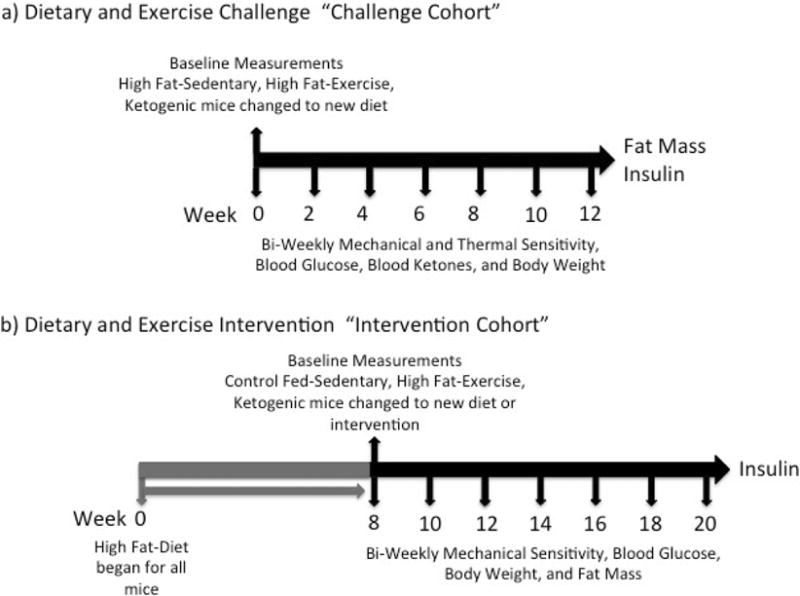
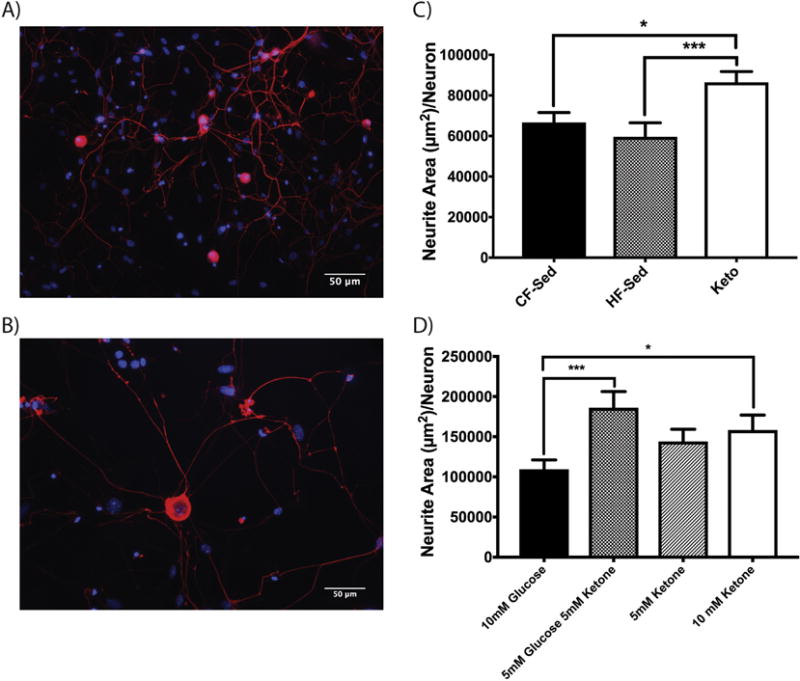
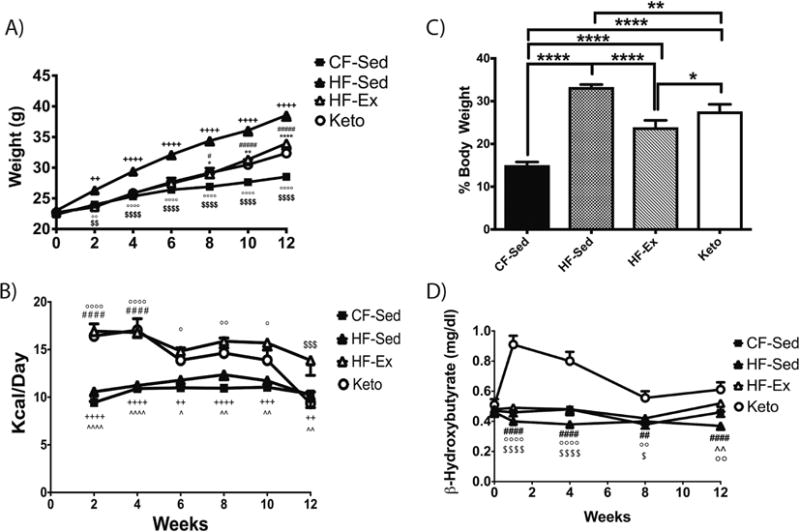
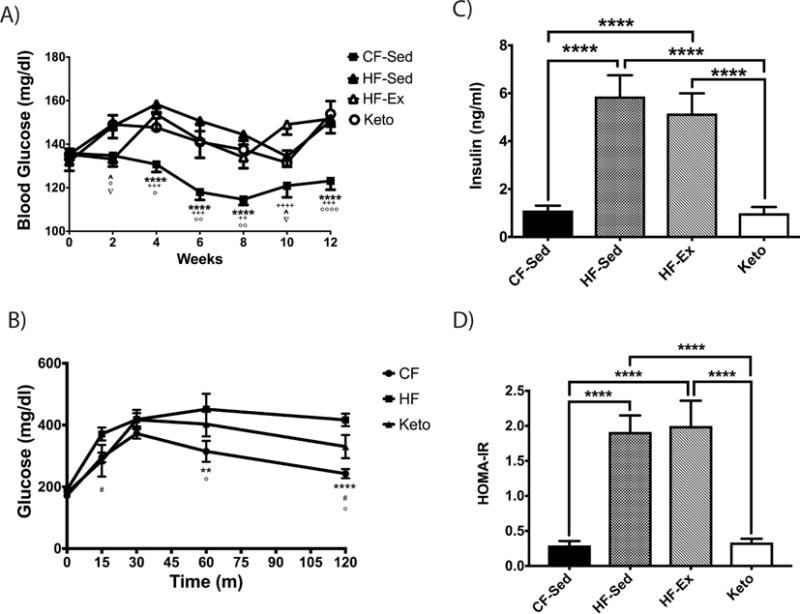
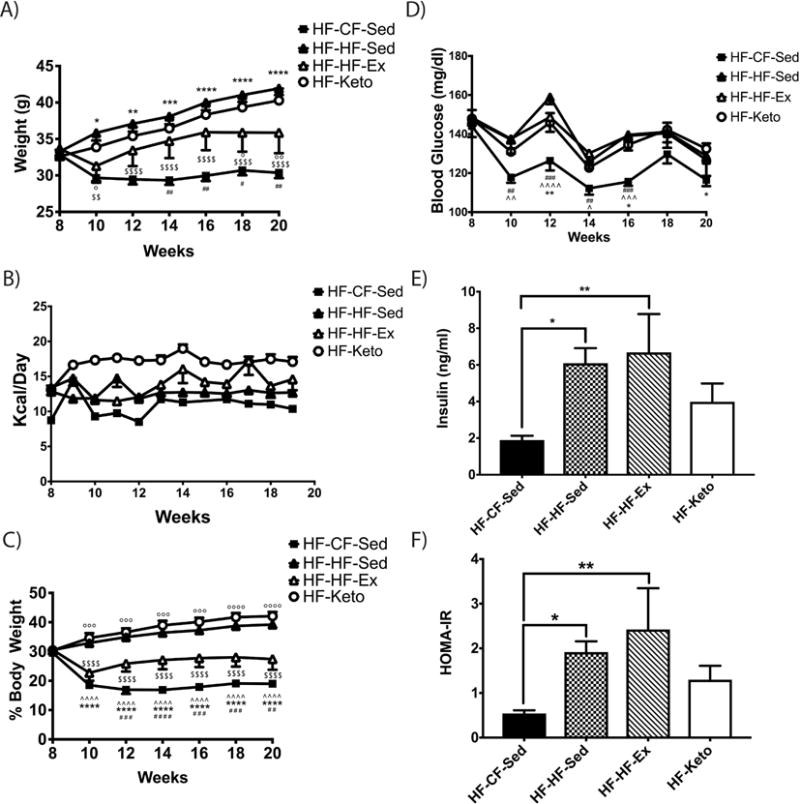
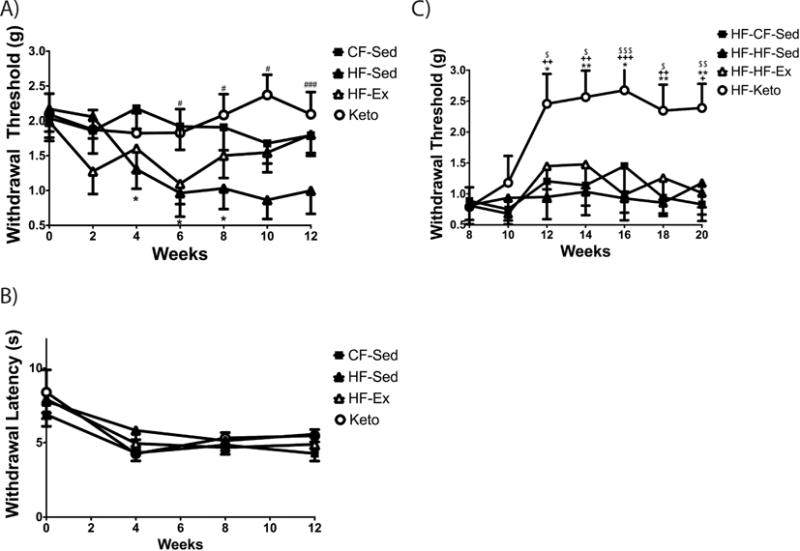
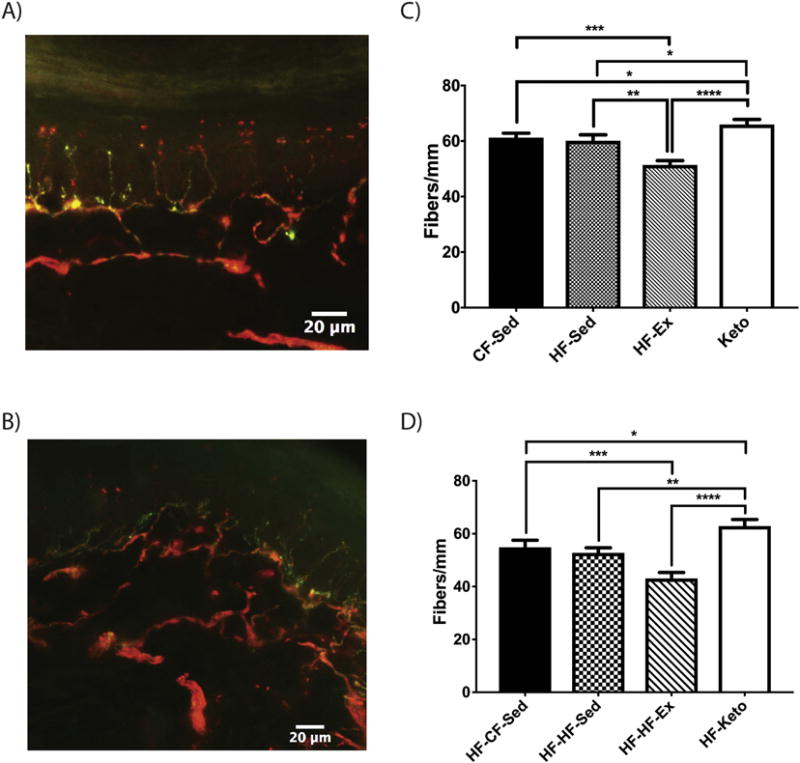
Current experiments investigated whether a ketogenic diet impacts neuropathy associated with obesity and prediabetes. Mice challenged with a ketogenic diet were compared to mice fed a high-fat diet or a high-fat diet plus exercise. Additionally, an intervention switching to a ketogenic diet following 8 weeks of high-fat diet was performed to compare how a control diet, exercise, or a ketogenic diet affects metabolic syndrome-induced neural complications. When challenged with a ketogenic diet, mice had reduced bodyweight and fat mass compared to high-fat-fed mice, and were similar to exercised, high-fat-fed mice. High-fat-fed, exercised and ketogenic-fed mice had mildly elevated blood glucose; conversely, ketogenic diet-fed mice were unique in having reduced serum insulin levels. Ketogenic diet-fed mice never developed mechanical allodynia contrary to mice fed a high-fat diet. Ketogenic diet fed mice also had increased epidermal axon density compared all other groups. When a ketogenic diet was used as an intervention, a ketogenic diet was unable to reverse high-fat fed-induced metabolic changes but was able to significantly reverse a high-fat diet-induced mechanical allodynia. As an intervention, a ketogenic diet also increased epidermal axon density. In vitro studies revealed increased neurite outgrowth in sensory neurons from mice fed a ketogenic diet and in neurons from normal diet-fed mice given ketone bodies in the culture medium. These results suggest a ketogenic diet can prevent certain complications of prediabetes and provides significant benefits to peripheral axons and sensory dysfunction.
目前的实验研究了生酮饮食是否会影响与肥胖和糖尿病前期相关的神经病变。将接受生酮饮食挑战的小鼠与高脂肪饮食或高脂肪饮食加运动的小鼠进行比较。此外,还进行了一项干预措施,即在高脂肪饮食 8 周后切换为生酮饮食,以比较对照饮食、运动或生酮饮食如何影响代谢综合征引起的神经并发症。当接受生酮饮食时,与高脂肪饮食喂养的小鼠相比,小鼠的体重和脂肪量减少,与运动的高脂肪饮食喂养的小鼠相似。高脂肪饮食喂养、运动和生酮饮食喂养的小鼠血糖略有升高;相反,生酮饮食喂养的小鼠的血清胰岛素水平降低。与高脂肪饮食喂养的小鼠不同,生酮饮食喂养的小鼠从未出现机械性痛觉过敏。生酮饮食喂养的小鼠的表皮轴突密度也高于所有其他组。当生酮饮食作为干预措施时,生酮饮食不能逆转高脂肪饮食引起的代谢变化,但能显著逆转高脂肪饮食引起的机械性痛觉过敏。作为一种干预措施,生酮饮食还增加了表皮轴突密度。体外研究表明,高脂肪饮食喂养的小鼠的感觉神经元和正常饮食喂养的小鼠的神经元在培养基中给予酮体后,神经突生长增加。这些结果表明,生酮饮食可以预防糖尿病前期的某些并发症,并为周围轴突和感觉功能障碍提供显著益处。