Chukkapalli Vineela, Gordon Leo I, Venugopal Parameswaran, Borgia Jeffrey A, Karmali Reem
Departments of Hematology, Oncology and Stem Cell Therapy, Rush University Medical Center, Chicago, IL, USA.
Division of Hematology/Oncology, Northwestern University Feinberg School of Medicine, Chicago, IL, USA.
Oncotarget. 2018 Apr 20;9(30):21166-21181. doi: 10.18632/oncotarget.24989.
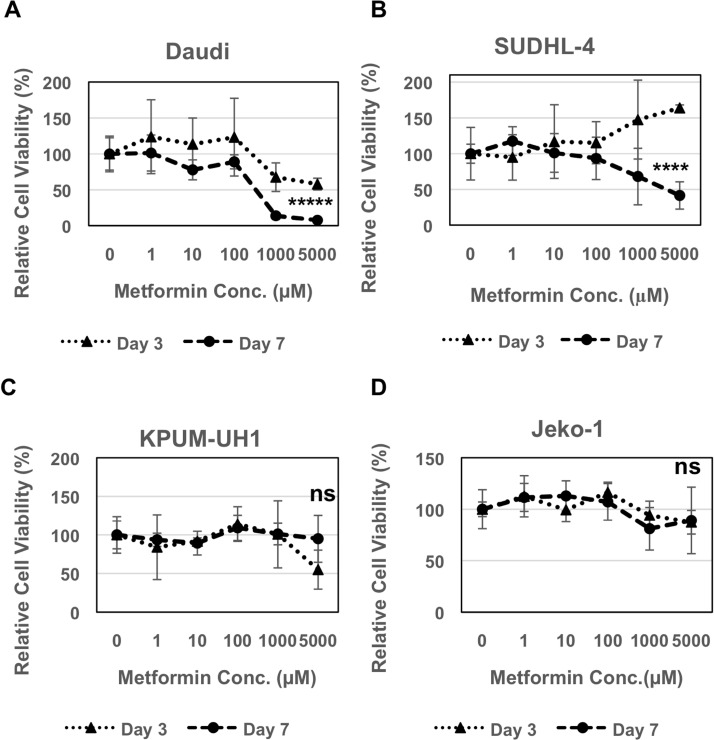
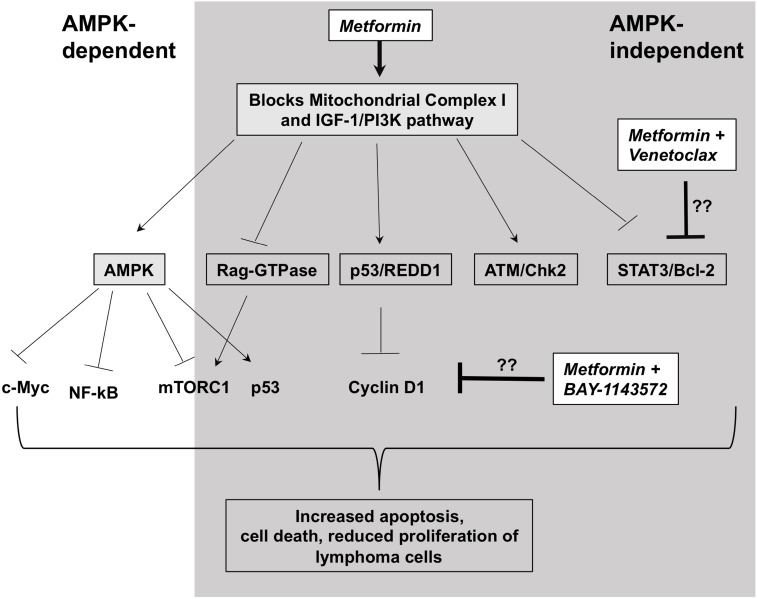
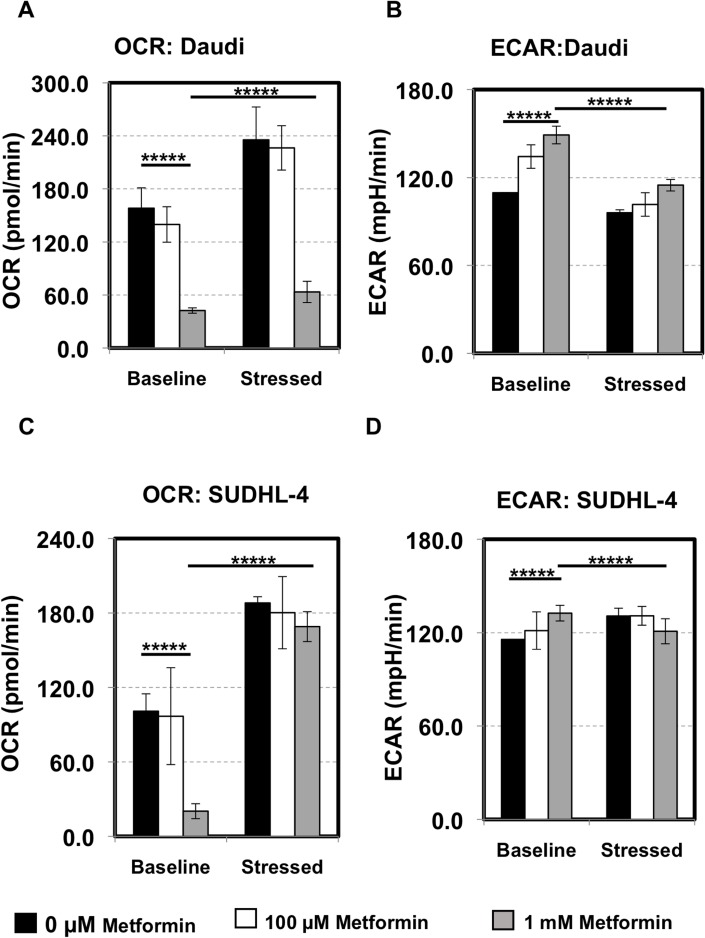
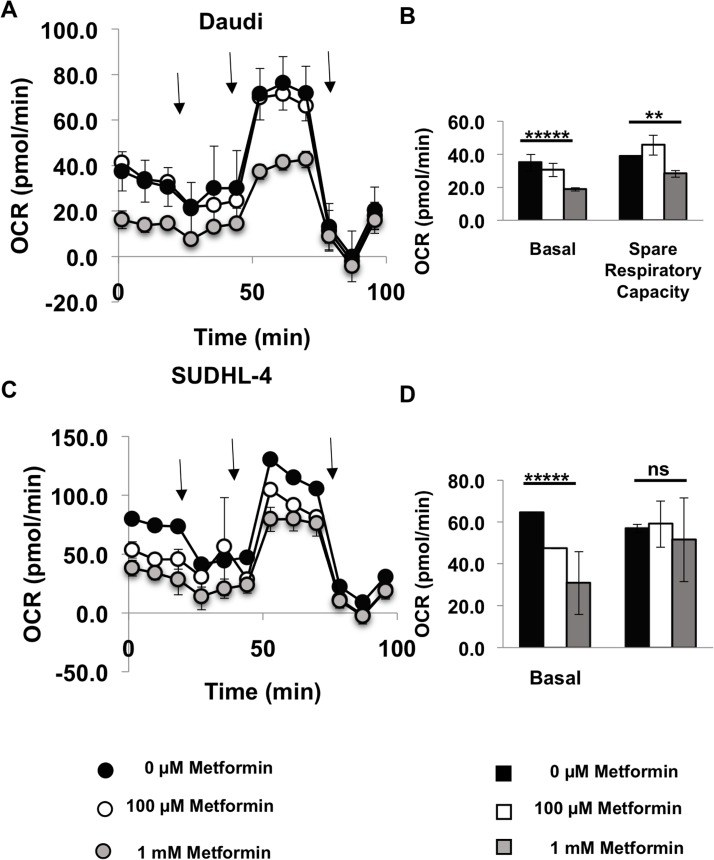
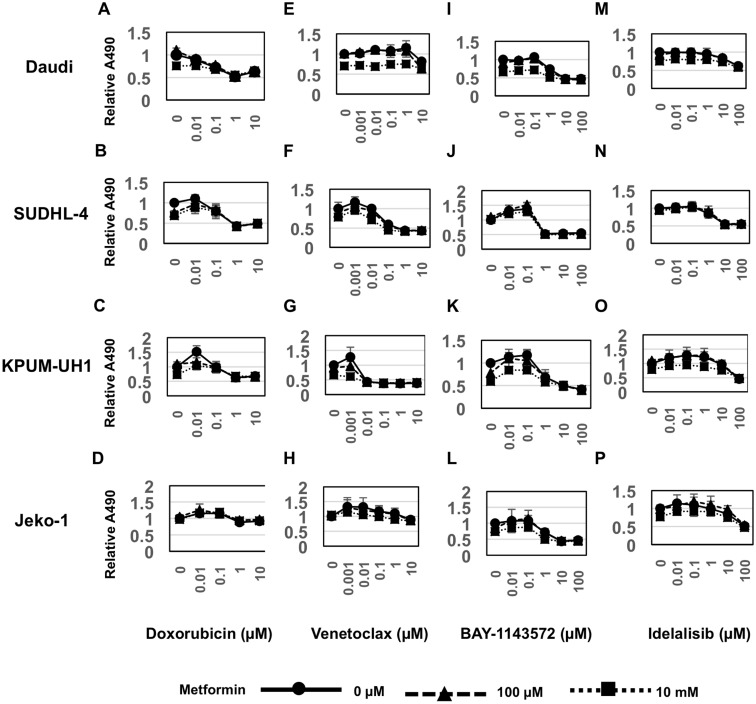
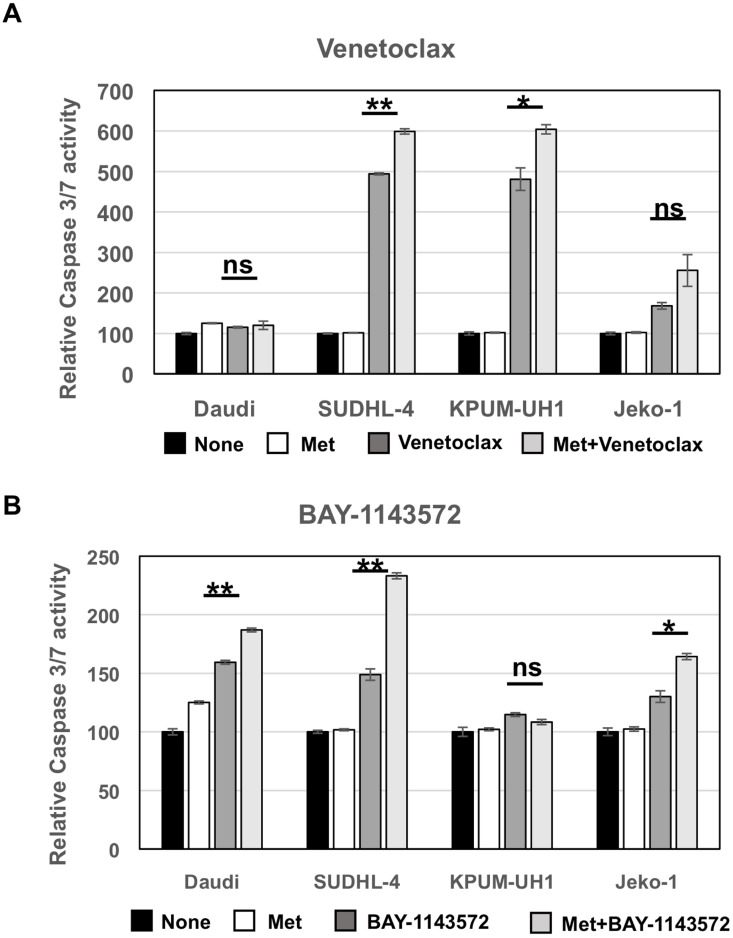
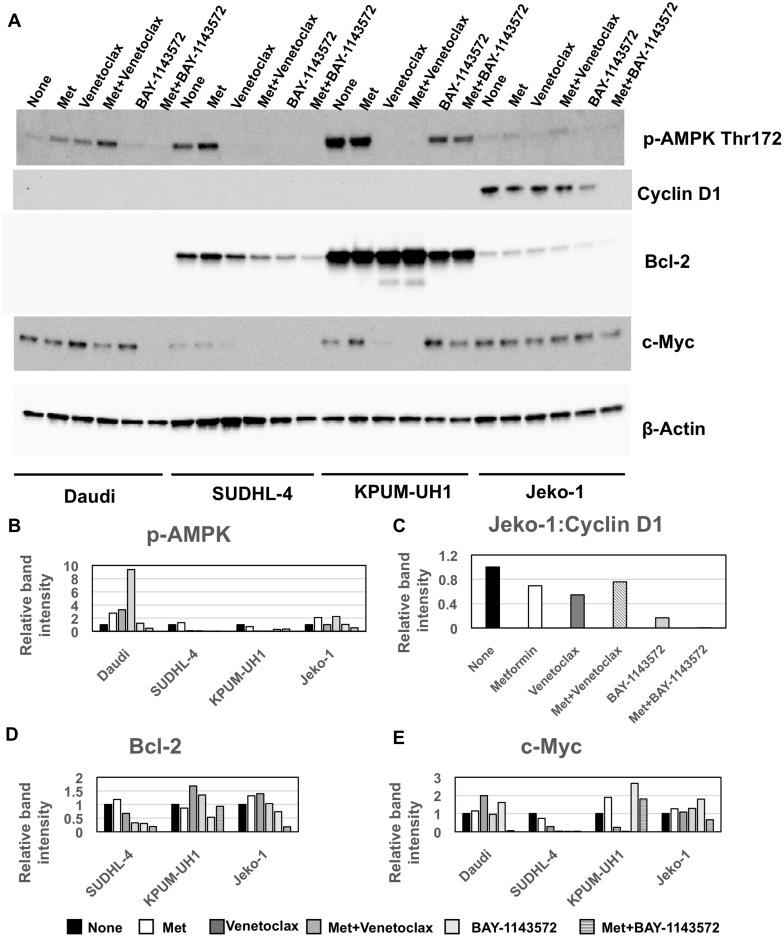
Metformin exerts direct anti-tumor effects by activating AMP-activated protein kinase (AMPK), a major sensor of cellular metabolism in cancer cells. This, in turn, inhibits pro-survival mTOR signaling. Metformin has also been shown to disrupt complex 1 of the mitochondrial electron transport chain. Here, we explored the lymphoma specific anti-tumor effects of metformin using Daudi (Burkitt), SUDHL-4 (germinal center diffuse large B-cell lymphoma; GC DLBCL), Jeko-1 (Mantle-cell lymphoma; MCL) and KPUM-UH1 (double hit DLBCL) cell lines. We demonstrated that metformin as a single agent, especially at high concentrations produced significant reductions in viability and proliferation only in Daudi and SUDHL-4 cell lines with associated alterations in mitochondrial oxidative and glycolytic metabolism. As bcl-2 proteins, cyclin dependent kinases (CDK) and phosphoinositol-3- kinase (PI3K) also influence mitochondrial physiology and metabolism with clear relevance to the pathogenesis of lymphoma, we investigated the potentiating effects of metformin when combined with novel agents Venetoclax (bcl-2 inhibitor), BAY-1143572 (CDK9 inhibitor) and Idelalisib (p110δ- PI3K inhibitor). Co-treating KPUM-UH1 and SUDHL-4 cells with 10 mM of metformin resulted in 1.4 fold and 8.8 fold decreases, respectively, in IC-50 values of Venetoclax. By contrast, 3-fold and 10 fold reduction in IC-50 values of BAY-1143572 in Daudi and Jeko-1 cells respectively was seen in the presence of 10 mM of metformin. No change in IC-50 value for Idelalisib was observed across cell lines. These data suggest that although metformin is not a potent single agent, targeting cancer metabolism with similar but more effective drugs in novel combination with either bcl-2 or CDK9 inhibitors warrants further exploration.
二甲双胍通过激活AMP活化蛋白激酶(AMPK)发挥直接抗肿瘤作用,AMPK是癌细胞中细胞代谢的主要传感器。这反过来又抑制了促生存的mTOR信号传导。二甲双胍还被证明会破坏线粒体电子传递链的复合物1。在这里,我们使用Daudi(伯基特淋巴瘤)、SUDHL-4(生发中心弥漫性大B细胞淋巴瘤;GC DLBCL)、Jeko-1(套细胞淋巴瘤;MCL)和KPUM-UH1(双打击DLBCL)细胞系探索了二甲双胍对淋巴瘤的特异性抗肿瘤作用。我们证明,二甲双胍作为单一药物,尤其是高浓度时,仅在Daudi和SUDHL-4细胞系中显著降低了活力和增殖,并伴有线粒体氧化和糖酵解代谢的改变。由于bcl-2蛋白、细胞周期蛋白依赖性激酶(CDK)和磷酸肌醇-3激酶(PI3K)也影响线粒体生理和代谢,且与淋巴瘤的发病机制明显相关,我们研究了二甲双胍与新型药物维奈克拉(bcl-2抑制剂)、BAY-1143572(CDK9抑制剂)和idelalisib(p110δ-PI3K抑制剂)联合使用时的增效作用。用10 mM二甲双胍共同处理KPUM-UH1和SUDHL-4细胞,维奈克拉的IC-50值分别降低了1.4倍和8.8倍。相比之下,在存在10 mM二甲双胍的情况下,Daudi和Jeko-1细胞中BAY-1143572的IC-50值分别降低了3倍和10倍。在所有细胞系中均未观察到idelalisib的IC-50值发生变化。这些数据表明,尽管二甲双胍不是一种有效的单一药物,但将其与bcl-2或CDK9抑制剂联合使用,以类似但更有效的药物靶向癌症代谢值得进一步探索。