Department of Neurology, Innsbruck Medical University, Anichstraße 35, 6020, Innsbruck, Austria.
German Aerospace Center and Chair of Aerospace Medicine, Institute of Aerospace Medicine, University of Cologne, Cologne, Germany.
Clin Auton Res. 2018 Aug;28(4):355-362. doi: 10.1007/s10286-018-0529-8. Epub 2018 May 15.
Patients suffering from cardiovascular autonomic failure often develop neurogenic supine hypertension (nSH), i.e., high blood pressure (BP) in the supine position, which falls in the upright position owing to impaired autonomic regulation. A committee was formed to reach consensus among experts on the definition and diagnosis of nSH in the context of cardiovascular autonomic failure.
As a first and preparatory step, a systematic search of PubMed-indexed literature on nSH up to January 2017 was performed. Available evidence derived from this search was discussed in a consensus expert round table meeting in Innsbruck on February 16, 2017. Statements originating from this meeting were further discussed by representatives of the American Autonomic Society and the European Federation of Autonomic Societies and are summarized in the document presented here. The final version received the endorsement of the European Academy of Neurology and the European Society of Hypertension.
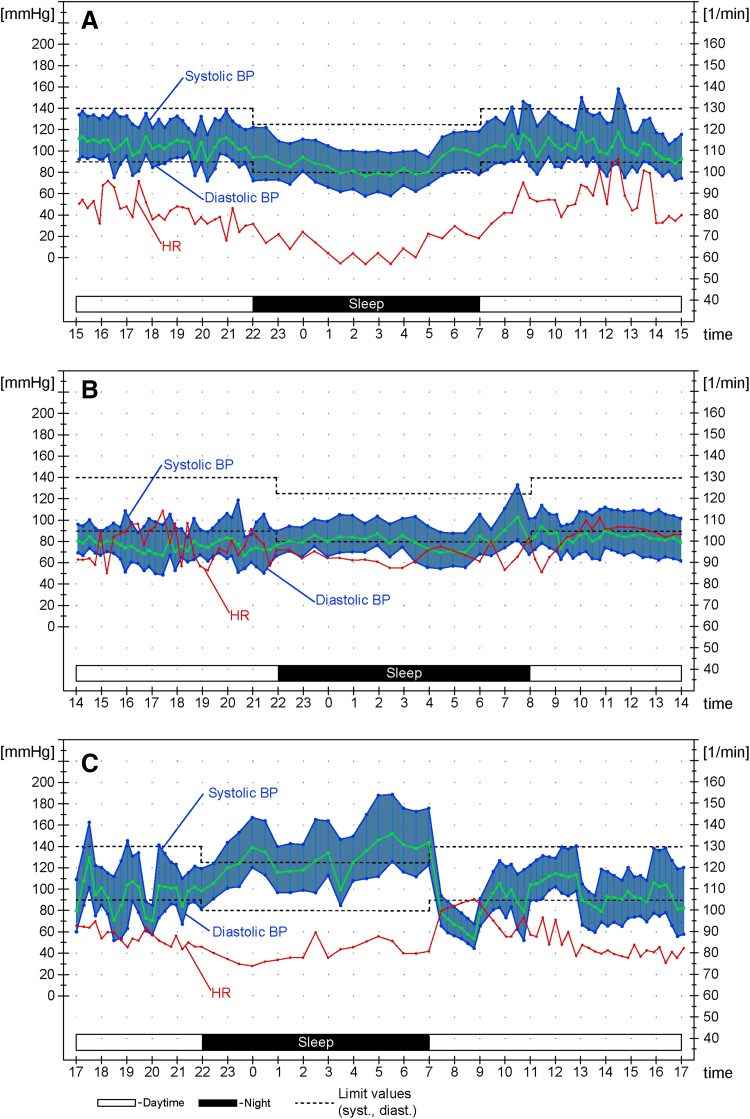
In patients with neurogenic orthostatic hypotension, nSH is defined as systolic BP ≥ 140 mmHg and/or diastolic BP ≥ 90 mmHg, measured after at least 5 min of rest in the supine position. Three severity degrees are recommended: mild, moderate and severe. nSH may also be present during nocturnal sleep, with reduced-dipping, non-dipping or rising nocturnal BP profiles with respect to mean daytime BP values. Home BP monitoring and 24-h-ambulatory BP monitoring provide relevant information for a customized clinical management.
The establishment of expert-based criteria to define nSH should standardize diagnosis and allow a better understanding of its epidemiology, prognosis and, ultimately, treatment.
患有心血管自主神经衰竭的患者常出现神经性卧位高血压(nSH),即卧位时血压升高,由于自主神经调节受损,在直立位时血压下降。一个委员会成立,旨在就心血管自主神经衰竭背景下 nSH 的定义和诊断达成专家共识。
作为第一步和预备步骤,对截至 2017 年 1 月的 nSH 相关 Pubmed 索引文献进行了系统检索。对此次检索获得的可用证据,在 2017 年 2 月 16 日于因斯布鲁克举行的共识专家圆桌会议上进行了讨论。本次会议产生的陈述由美国自主神经学会和欧洲自主神经学会的代表进一步讨论,并在本文档中进行了总结。最终版本得到了欧洲神经病学学会和欧洲高血压学会的认可。
在患有神经性直立性低血压的患者中,nSH 的定义为卧位至少休息 5 分钟后测量的收缩压≥140mmHg 和/或舒张压≥90mmHg。建议分为三个严重程度等级:轻度、中度和重度。nSH 也可能在夜间睡眠期间出现,与白天平均血压值相比,夜间血压呈降低、非降低或升高的夜间血压模式。家庭血压监测和 24 小时动态血压监测可提供与个体化临床管理相关的信息。
建立基于专家的 nSH 定义标准,应标准化诊断,并有助于更好地了解其流行病学、预后,最终有助于治疗。