MMWR Morb Mortal Wkly Rep. 2018 May 18;67(19):552-555. doi: 10.15585/mmwr.mm6719a4.
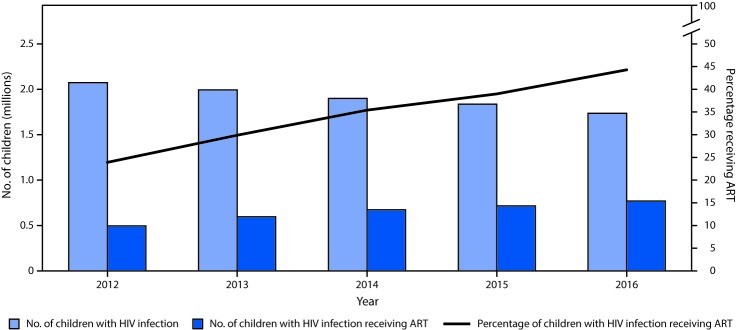
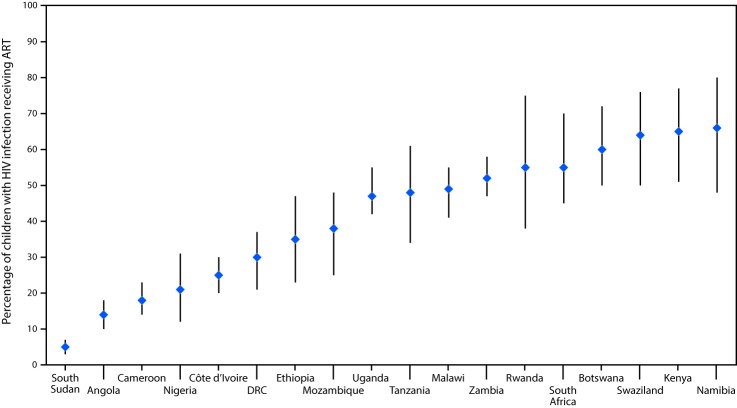
Rapid disease progression and associated opportunistic infections contribute to high mortality rates among children aged <15 years with human immunodeficiency virus (HIV) infection (1). Antiretroviral therapy (ART) has decreased childhood HIV-associated morbidity and mortality rates over the past decade (2). As accumulating evidence revealed lower HIV-associated mortality with early ART initiation, the World Health Organization (WHO) guidelines broadened ART eligibility for children with HIV infection (2). Age at ART initiation for children with HIV infection expanded sequentially in the 2010, 2013, and 2016 WHO guidelines to include children aged <2, <5, and <15 years, respectively, regardless of clinical or immunologic status (3-5). The United States President's Emergency Plan for AIDS Relief (PEPFAR) has supported ART for children with HIV infection since 2003 and, informed by the WHO guidelines and a growing evidence base, PEPFAR-supported countries have adjusted their national pediatric guidelines. To understand the lag between guideline development and implementation, as well as the ART coverage gap, CDC assessed national pediatric HIV guidelines and analyzed Joint United Nations Programme on HIV and AIDS (acquired immunodeficiency syndrome; UNAIDS) data on children aged <15 years with HIV infection and the numbers of these children on ART. Timeliness of WHO pediatric ART guideline adoption varied by country; >50% of children with HIV infection are not receiving ART, underscoring the importance of strengthening case finding and linkage to HIV treatment in pediatric ART programs.
快速的疾病进展和相关的机会性感染导致 <15 岁的艾滋病毒(HIV)感染儿童的死亡率居高不下(1)。在过去十年中,抗逆转录病毒疗法(ART)降低了儿童与 HIV 相关的发病率和死亡率(2)。随着越来越多的证据表明早期开始 ART 可以降低 HIV 相关死亡率,世界卫生组织(WHO)指南扩大了对 HIV 感染儿童开始 ART 的资格(2)。在 2010 年、2013 年和 2016 年的 WHO 指南中,HIV 感染儿童开始 ART 的年龄逐渐扩大,分别包括 <2 岁、<5 岁和 <15 岁的儿童,无论其临床或免疫状况如何(3-5)。美国艾滋病救援总统紧急计划(PEPFAR)自 2003 年以来一直支持 HIV 感染儿童的 ART,并且根据 WHO 指南和不断增长的证据基础,PEPFAR 支持的国家已经调整了其国家儿科指南。为了了解指南制定和实施之间的差距,以及 ART 覆盖差距,CDC 评估了国家儿科 HIV 指南,并分析了联合联合国艾滋病毒和艾滋病规划署(后天免疫缺陷综合征;艾滋病署)关于 <15 岁的 HIV 感染儿童的数据,以及这些儿童接受 ART 的人数。WHO 儿科 ART 指南采用的及时性因国家而异;超过 50%的 HIV 感染儿童未接受 ART,这突显了在儿科 ART 计划中加强病例发现和与 HIV 治疗联系的重要性。