Courtial Julia, Hamama Latifa, Helesbeux Jean-Jacques, Lecomte Mickaël, Renaux Yann, Guichard Esteban, Voisine Linda, Yovanopoulos Claire, Hamon Bruno, Ogé Laurent, Richomme Pascal, Briard Mathilde, Boureau Tristan, Gagné Séverine, Poupard Pascal, Berruyer Romain
IRHS, INRA, AGROCAMPUS-Ouest, Université d'Angers, SFR 4207 QUASAV, Beaucouzé, France.
Substances d'Origine Naturelle et Analogues Structuraux, SFR4207 QUASAV, UNIV Angers, Université Bretagne Loire, Beaucouzé, France.
Front Plant Sci. 2018 May 3;9:502. doi: 10.3389/fpls.2018.00502. eCollection 2018.
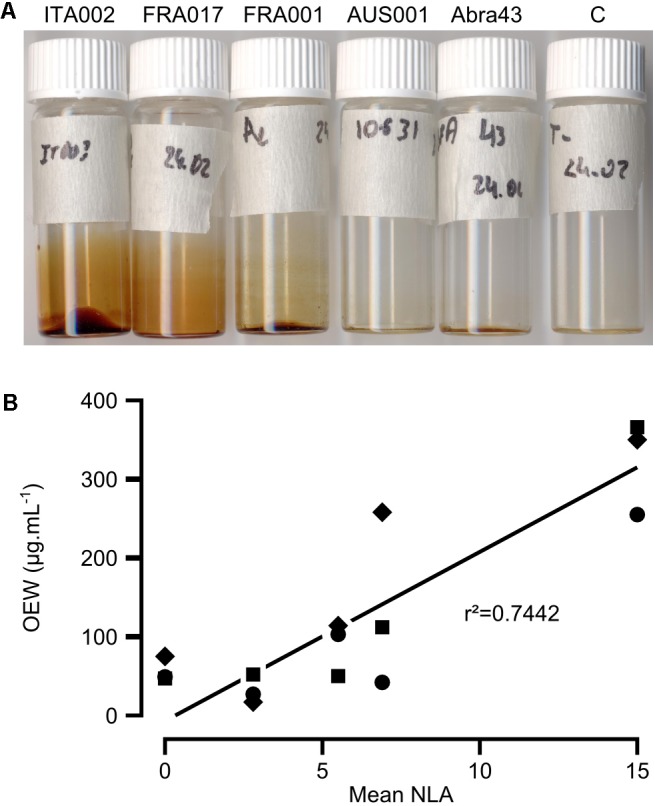
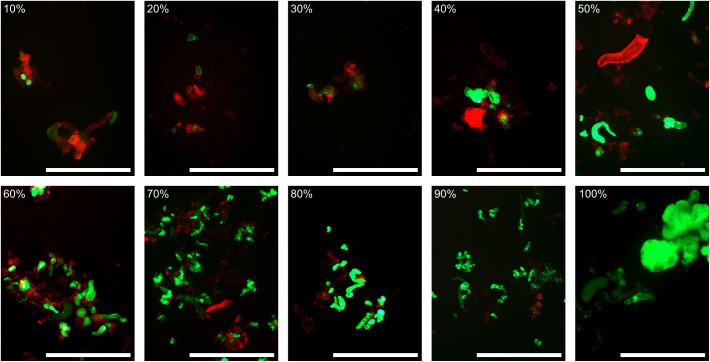
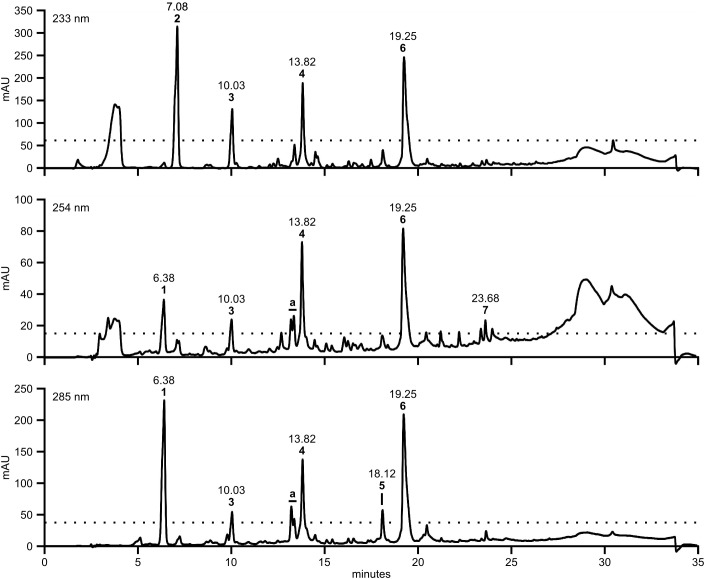
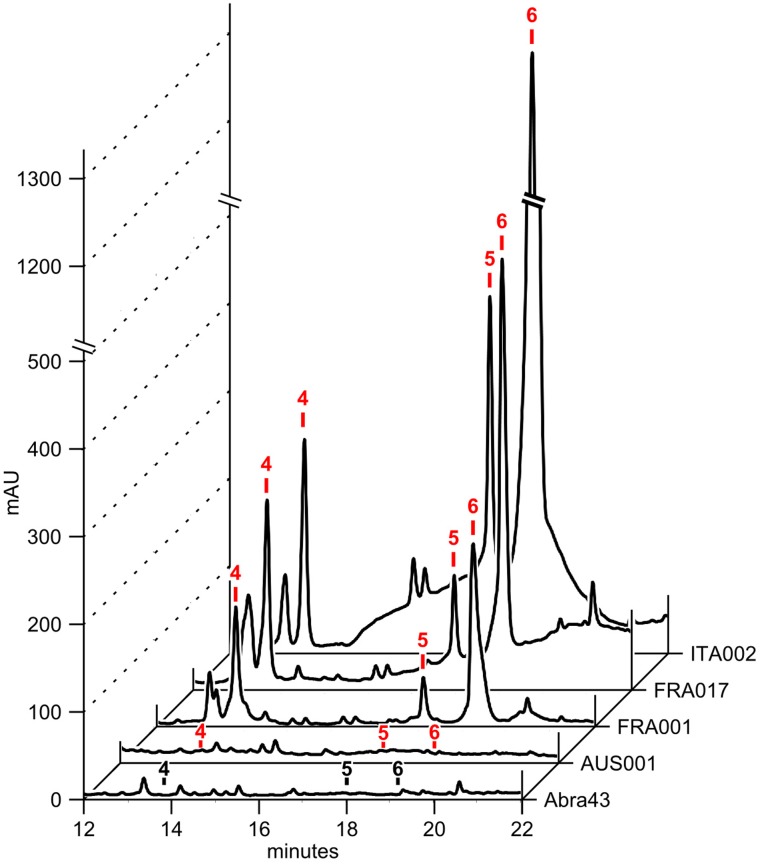
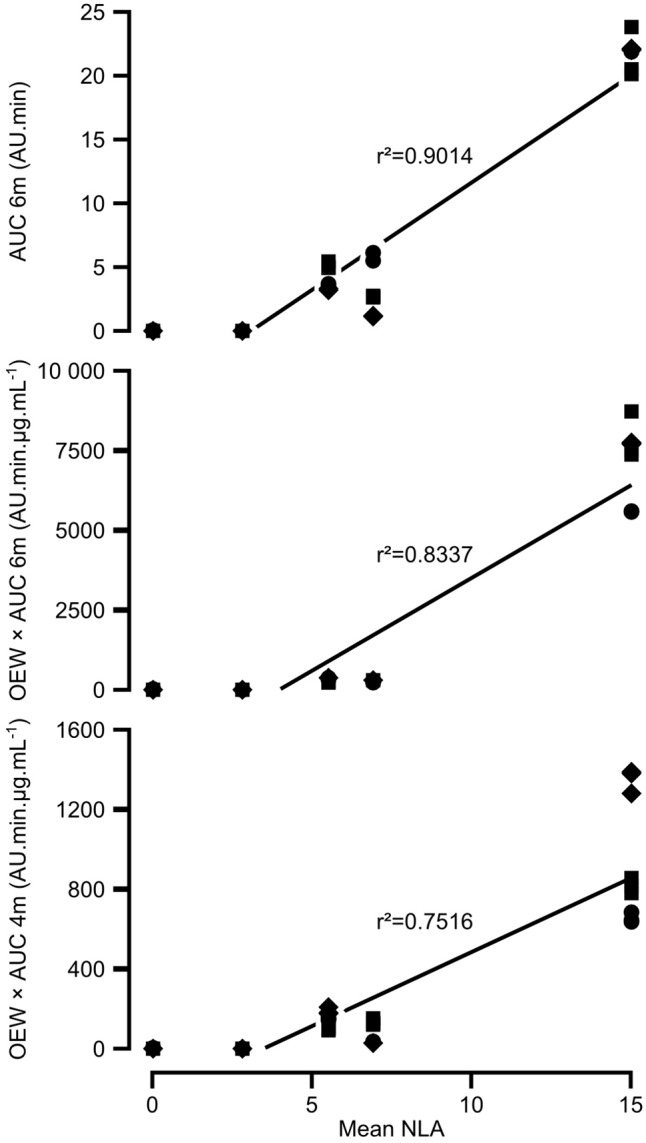
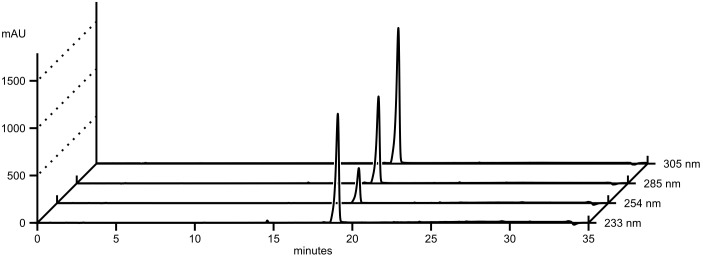
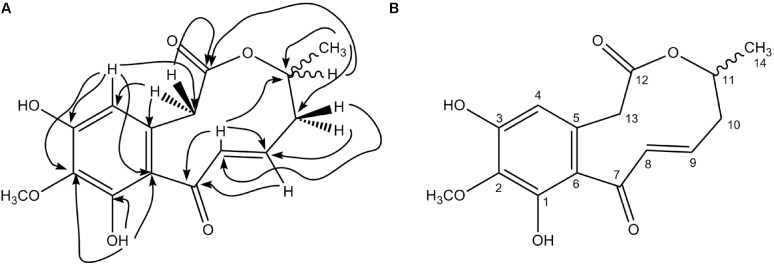
Qualitative plant resistance mechanisms and pathogen virulence have been extensively studied since the formulation of the gene-for-gene hypothesis. The mechanisms involved in the quantitative traits of aggressiveness and plant partial resistance are less well-known. Nevertheless, they are prevalent in most plant-necrotrophic pathogen interactions, including the - interaction. Phytotoxic metabolite production by the pathogen plays a key role in aggressiveness in these interactions. The aim of the present study was to explore the link between aggressiveness and toxin production. We challenged carrot embryogenic cell cultures from a susceptible genotype (H1) and two partially resistant genotypes (I2 and K3) with exudates from strains with various aggressiveness levels. Interestingly, -resistant carrot genotypes were only affected by exudates from the most aggressive strain in our study (ITA002). Our results highlight a positive link between aggressiveness and the fungal exudate cell toxicity. We hypothesize that the fungal exudate toxicity was linked with the amount of toxic compounds produced by the fungus. Interestingly, organic exudate production by the fungus was correlated with aggressiveness. Hence, we further analyzed the fungal organic extract using HPLC, and correlations between the observed peak intensities and fungal aggressiveness were measured. One observed peak was closely correlated with fungal aggressiveness. We succeeded in purifying this peak and NMR analysis revealed that the purified compound was a novel 10-membered benzenediol lactone, a polyketid that we named 'aldaulactone'. We used a new automated image analysis method and found that aldaulactone was toxic to cultured plant cells at those concentrations. The effects of both aldaulactone and fungal organic extracts were weaker on I2-resistant carrot cells compared to H1 carrot cells. Taken together, our results suggest that: (i) aldaulactone is a new phytotoxin, (ii) there is a relationship between the amount of aldaulactone produced and fungal aggressiveness, and (iii) carrot resistance to involves mechanisms of resistance to aldaulactone.
自从基因对基因假说来提出以来,植物的定性抗性机制和病原体毒力就得到了广泛研究。而与侵袭性和植物部分抗性这些数量性状相关的机制则鲜为人知。然而,它们在大多数植物与坏死营养型病原体的相互作用中普遍存在,包括 - 相互作用。病原体产生的植物毒性代谢物在这些相互作用的侵袭性中起着关键作用。本研究的目的是探索侵袭性与毒素产生之间的联系。我们用来自不同侵袭性水平的 菌株的分泌物挑战了易感基因型(H1)以及两个部分抗性基因型(I2和K3)的胡萝卜胚性细胞培养物。有趣的是,在我们的研究中,抗性胡萝卜基因型仅受到最具侵袭性的菌株(ITA002)的分泌物的影响。我们的结果突出了 侵袭性与真菌分泌物细胞毒性之间的正向联系。我们推测真菌分泌物毒性与真菌产生的有毒化合物的量有关。有趣的是,真菌的有机分泌物产生与侵袭性相关。因此,我们使用高效液相色谱法进一步分析了真菌有机提取物,并测量了观察到的峰强度与真菌侵袭性之间的相关性。一个观察到的峰与真菌侵袭性密切相关。我们成功地纯化了这个峰,核磁共振分析表明纯化的化合物是一种新型的十元苯二酚内酯,一种聚酮化合物,我们将其命名为“aldaulactone”。我们使用一种新的自动图像分析方法,发现aldaulactone在这些浓度下对培养的植物细胞有毒。与H1胡萝卜细胞相比,aldaulactone和真菌有机提取物对I2抗性胡萝卜细胞的影响较弱。综上所述,我们的结果表明:(i)aldaulactone是一种新的植物毒素,(ii)aldaulactone的产生量与真菌侵袭性之间存在关系,以及(iii)胡萝卜对 的抗性涉及对aldaulactone的抗性机制。