Suzuki Marina, Shinozuka Nanae, Hirakata Tomohiro, Nakata Miyuki T, Demura Taku, Tsukaya Hirokazu, Horiguchi Gorou
Department of Life Science, College of Science, Rikkyo University, Tokyo, Japan.
Research Center for Life Science, College of Science, Rikkyo University, Tokyo, Japan.
Front Plant Sci. 2018 May 3;9:580. doi: 10.3389/fpls.2018.00580. eCollection 2018.
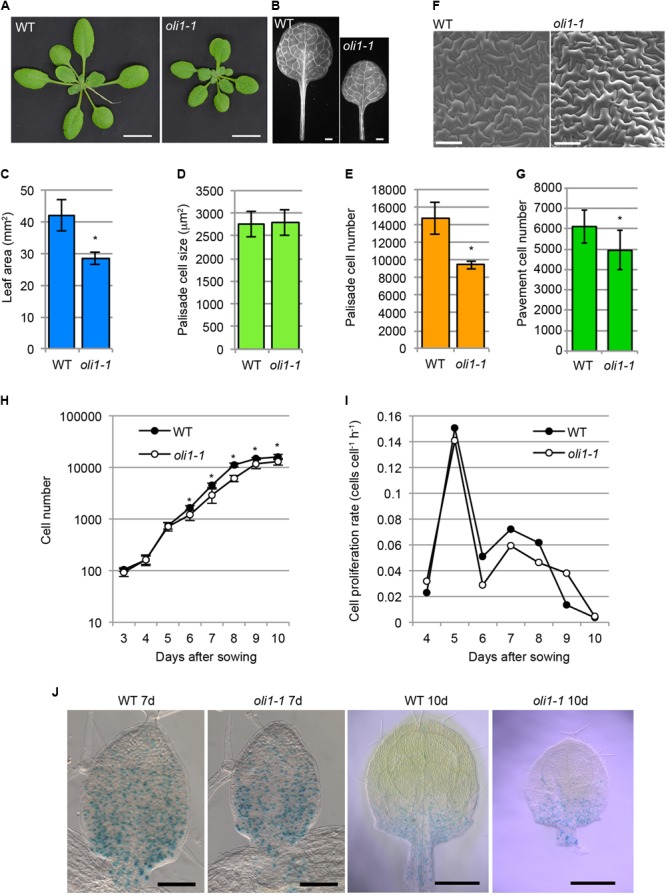
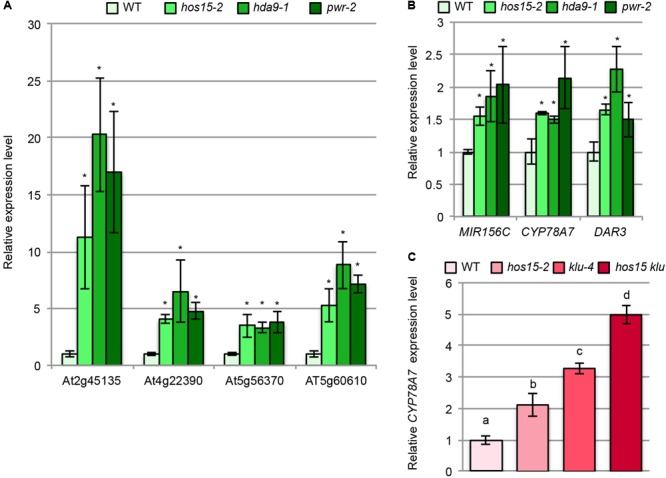
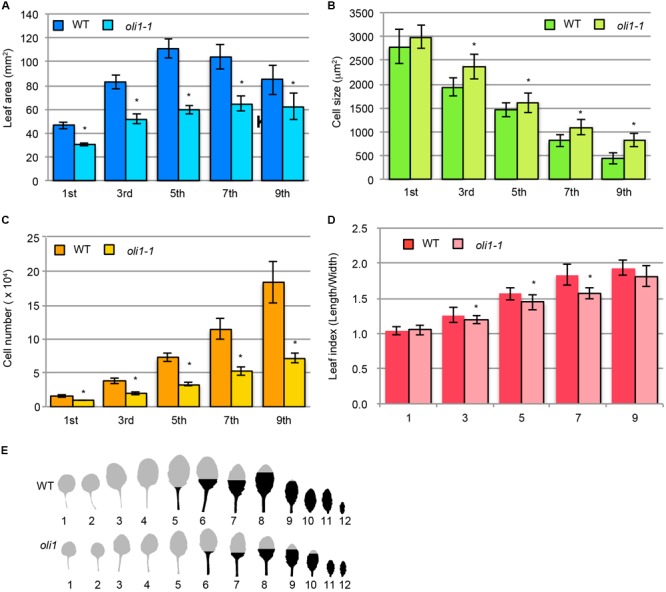
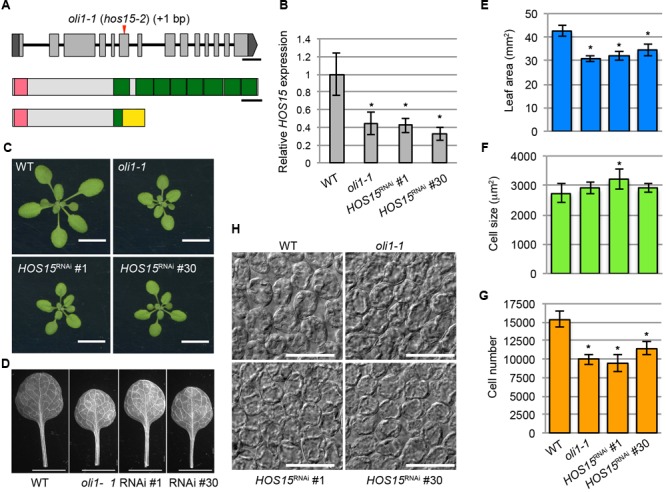
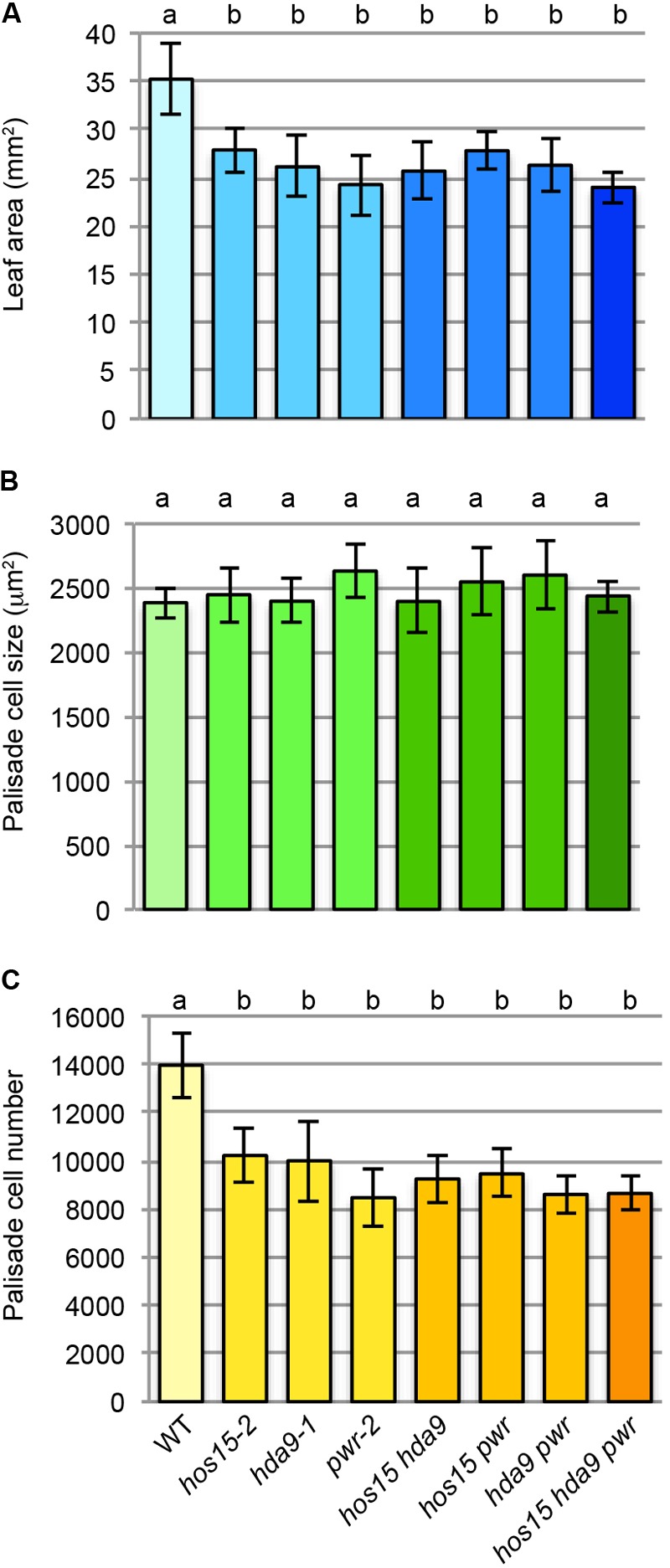
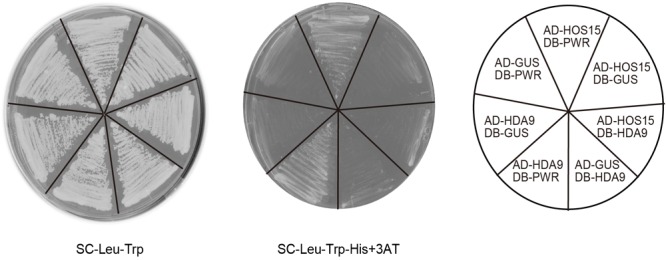
Organ size regulation is dependent on the precise spatial and temporal regulation of cell proliferation and cell expansion. A number of transcription factors have been identified that play a key role in the determination of aerial lateral organ size, but their functional relationship to various chromatin modifiers has not been well understood. To understand how leaf size is regulated, we previously isolated the () mutant of that develops smaller first leaves than the wild type (WT) mainly due to a reduction in the cell number. In this study, we further characterized leaf phenotypes and identified the gene as well as interaction partners of OLI1. Detailed characterizations of leaf development suggested that the cell proliferation rate in leaf primordia is lower than that in the WT. In addition, was associated with a slight delay of the progression from the juvenile to adult phases of leaf traits. A classical map-based approach demonstrated that is identical to (). / encodes a homolog of human transducin β-like protein1 (TBL1). TBL1 forms a transcriptional repression complex with the histone deacetylase (HDAC) HDAC3 and either nuclear receptor co-repressor (N-CoR) or silencing mediator for retinoic acid and thyroid receptor (SMRT). We found that mutations in () and a switching-defective protein 3, adaptor 2, N-CoR, and transcription factor IIIB-domain protein gene, (), showed a small-leaf phenotype similar to . In addition, and did not further enhance the small-leaf phenotype, suggesting that these three genes act in the same pathway. Yeast two-hybrid assays suggested physical interactions, wherein PWR probably bridges HOS15/OLI1 and HDA9. Earlier studies suggested the roles of HOS15, HDA9, and PWR in transcriptional repression. Consistently, transcriptome analyses showed several genes commonly upregulated in the three mutants. From these findings, we propose a possibility that HOS15/OLI1, PWR, and HDA9 form an evolutionary conserved transcription repression complex that plays a positive role in the regulation of final leaf size.
器官大小调控依赖于细胞增殖和细胞扩张精确的空间和时间调控。已鉴定出一些转录因子,它们在地上侧生器官大小的决定中起关键作用,但其与各种染色质修饰因子的功能关系尚未得到很好的理解。为了了解叶片大小是如何调控的,我们之前分离出了()突变体,其第一片叶子比野生型(WT)小,主要是由于细胞数量减少。在本研究中,我们进一步对()叶片表型进行了表征,并鉴定了()基因以及OLI1的相互作用伙伴。对叶片发育的详细表征表明,()叶片原基中的细胞增殖速率低于野生型。此外,()与叶片性状从幼年期到成年期的进程稍有延迟有关。一种经典的图位克隆方法表明,()与()相同。()编码人转导素β样蛋白1(TBL1)的同源物。TBL1与组蛋白去乙酰化酶(HDAC)HDAC3以及核受体共抑制因子(N-CoR)或视黄酸和甲状腺受体沉默介质(SMRT)形成转录抑制复合物。我们发现,()和一个开关缺陷蛋白3、衔接蛋白2、N-CoR以及转录因子IIIB结构域蛋白基因()中的突变表现出与()相似的小叶表型。此外,()和()并没有进一步增强()的小叶表型,这表明这三个基因在同一途径中起作用。酵母双杂交试验表明存在物理相互作用,其中PWR可能在HOS15/OLI1和HDA9之间起桥梁作用。早期研究表明HOS15、HDA9和PWR在转录抑制中发挥作用。一致地,转录组分析显示在这三个突变体中有几个基因共同上调。基于这些发现,我们提出一种可能性,即HOS15/OLI1、PWR和HDA9形成一个进化保守的转录抑制复合物,该复合物在最终叶片大小的调控中起积极作用。