Nuclear Medicine and Molecular Imaging, Department of Imaging and Pathology, KU Leuven, Belgium.
Stem Cell Institute Leuven, Department of development and regeneration, KU Leuven, Belgium.
Theranostics. 2018 Apr 14;8(10):2799-2813. doi: 10.7150/thno.22980. eCollection 2018.
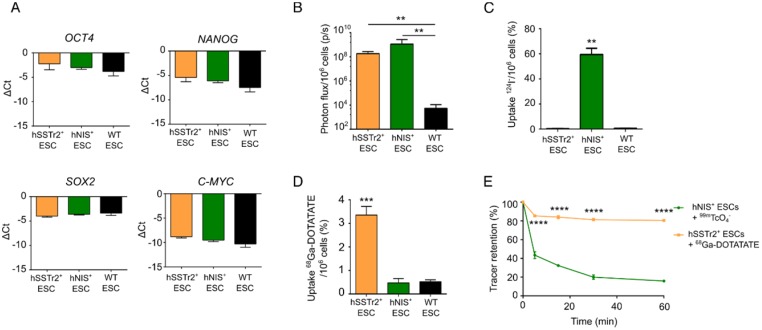
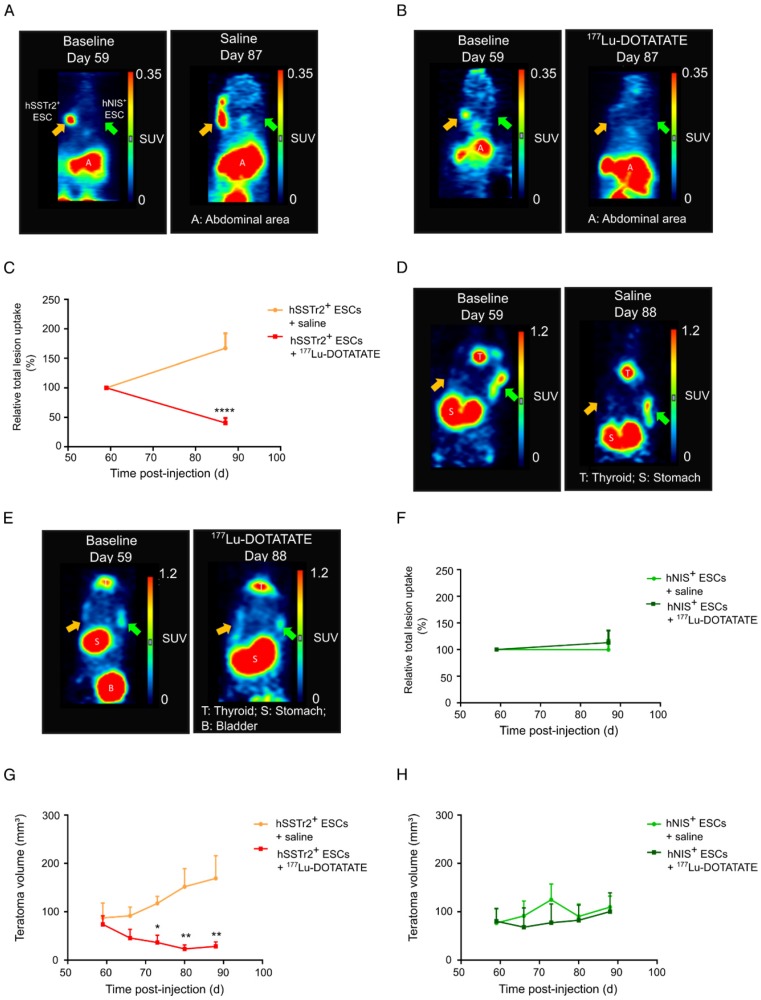
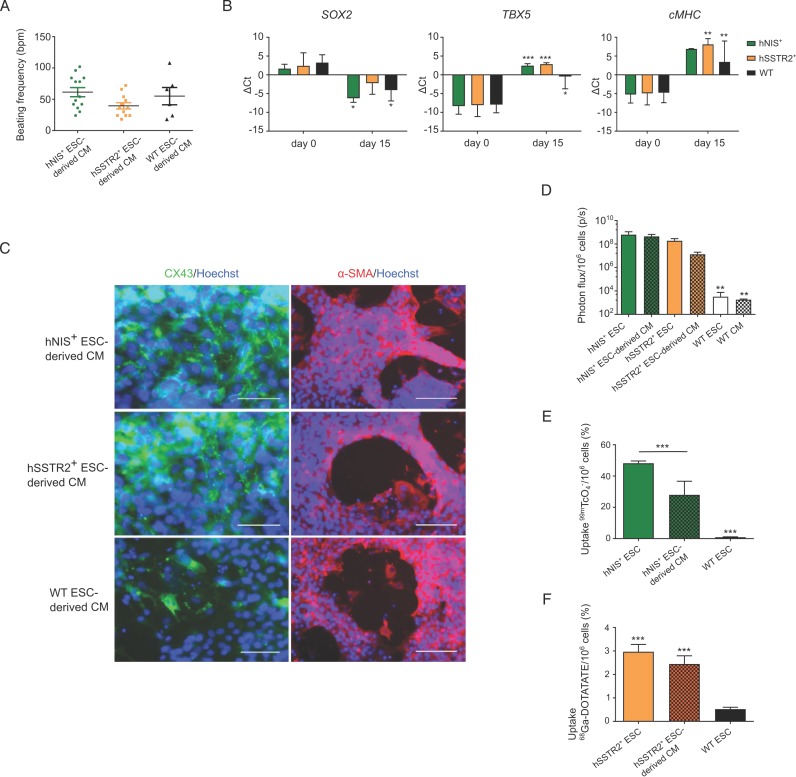
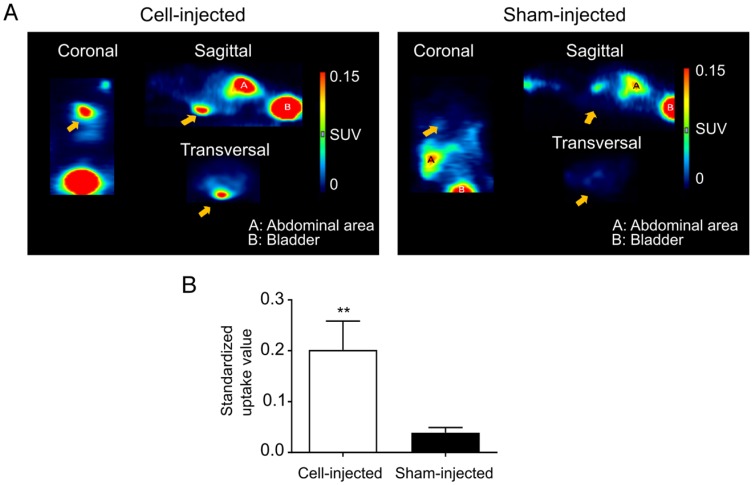
Pluripotent stem cells (PSCs) are being investigated as a cell source for regenerative medicine since they provide an infinitive pool of cells that are able to differentiate towards every cell type of the body. One possible therapeutic application involves the use of these cells to treat myocardial infarction (MI), a condition where billions of cardiomyocytes (CMs) are lost. Although several protocols have been developed to differentiate PSCs towards CMs, none of these provide a completely pure population, thereby still posing a risk for neoplastic teratoma formation. Therefore, we developed a strategy to (i) monitor cell behavior noninvasively via site-specific integration of firefly luciferase (Fluc) and the human positron emission tomography (PET) imaging reporter genes, sodium iodide symporter (hNIS) and somatostatin receptor type 2 (hSSTr2), and (ii) perform hSSTr2-mediated suicide gene therapy via the clinically used radiopharmacon Lu-DOTATATE. Human embryonic stem cells (ESCs) were gene-edited via zinc finger nucleases to express Fluc and either hNIS or hSSTr2 in the safe harbor locus, adeno-associated virus integration site 1. Firstly, these cells were exposed to 4.8 MBq Lu-DOTATATE and cell survival was monitored via bioluminescence imaging (BLI). Afterwards, hNIS and hSSTr2 ESCs were transplanted subcutaneously and teratomas were allowed to form. At day 59, baseline I and Ga-DOTATATE PET and BLI scans were performed. The day after, animals received either saline or 55 MBq Lu-DOTATATE. Weekly BLI scans were performed, accompanied by I and Ga-DOTATATE PET scans at days 87 and 88, respectively. Finally, hSSTr2 ESCs were differentiated towards CMs and transplanted intramyocardially in the border zone of an infarct that was induced by left anterior descending coronary artery ligation. After transplantation, the animals were monitored via BLI and PET, while global cardiac function was evaluated using cardiac magnetic resonance imaging. Teratoma growth of both hNIS and hSSTr2 ESCs could be followed noninvasively over time by both PET and BLI. After Lu-DOTATATE administration, successful cell killing of the hSSTr2 ESCs was achieved both and , indicated by reductions in total tracer lesion uptake, BLI signal and teratoma volume. As undifferentiated hSSTr2 ESCs are not therapeutically relevant, they were differentiated towards CMs and injected in immune-deficient mice with a MI. Long-term cell survival could be monitored without uncontrolled cell proliferation. However, no improvement in the left ventricular ejection fraction was observed. We developed isogenic hSSTr2-expressing ESCs that allow noninvasive cell monitoring in the context of PSC-derived regenerative therapy. Furthermore, we are the first to use the hSSTr2 not only as an imaging reporter gene, but also as a suicide mechanism for radionuclide therapy in the setting of PSC-derived cell treatment.
多能干细胞(PSCs)作为再生医学的细胞来源正在被研究,因为它们提供了一个无限的细胞池,能够分化为身体的每一种细胞类型。一种可能的治疗应用涉及使用这些细胞来治疗心肌梗死(MI),在这种情况下,数十亿个心肌细胞(CMs)丢失。尽管已经开发了几种将 PSCs 分化为 CMs 的方案,但没有一种方案能提供完全纯净的细胞群体,因此仍然存在形成肿瘤性畸胎瘤的风险。因此,我们开发了一种策略,(i)通过萤火虫荧光素酶(Fluc)和人正电子发射断层扫描(PET)成像报告基因、钠碘转运体(hNIS)和生长抑素受体 2(hSSTr2)的特异性整合,非侵入性地监测细胞行为,(ii)通过临床使用的放射性药物 Lu-DOTATATE 进行 hSSTr2 介导的自杀基因治疗。人胚胎干细胞(ESCs)通过锌指核酸酶进行基因编辑,在腺相关病毒整合位点 1 的安全港基因座中表达 Fluc 和 hNIS 或 hSSTr2。首先,这些细胞暴露于 4.8 MBq Lu-DOTATATE,并通过生物发光成像(BLI)监测细胞存活。然后,将 hNIS 和 hSSTr2 ESCs 皮下移植,允许形成畸胎瘤。在第 59 天,进行基线 I 和 Ga-DOTATATE PET 和 BLI 扫描。第二天,动物接受生理盐水或 55 MBq Lu-DOTATATE。每周进行 BLI 扫描,并在第 87 天和第 88 天分别进行 I 和 Ga-DOTATATE PET 扫描。最后,将 hSSTr2 ESCs 分化为 CMs,并将其移植到左前降支冠状动脉结扎诱导的梗死区的心肌内。移植后,通过 BLI 和 PET 监测动物,同时使用心脏磁共振成像评估整体心脏功能。通过 PET 和 BLI 可以在时间上非侵入性地跟踪 hNIS 和 hSSTr2 ESCs 的畸胎瘤生长。给予 Lu-DOTATATE 后,hSSTr2 ESCs 的细胞杀伤成功,通过减少总示踪剂摄取、BLI 信号和畸胎瘤体积来实现。由于未分化的 hSSTr2 ESCs 与治疗无关,因此将其分化为 CMs,并注射到患有 MI 的免疫缺陷小鼠体内。可以在没有不受控制的细胞增殖的情况下监测长期的细胞存活。然而,没有观察到左心室射血分数的改善。我们开发了同源性 hSSTr2 表达的 ESCs,允许在 PSC 衍生的再生治疗的背景下进行非侵入性细胞监测。此外,我们是第一个不仅将 hSSTr2 用作成像报告基因,而且还用作 PSC 衍生细胞治疗中放射性核素治疗的自杀机制。