Gelfond Jonathan, Al-Bayati Osamah, Kabra Aashish, Iffrig Kevan, Kaushik Dharam, Liss Michael A
Department of Biostatistics, University of Texas Health Science Center San Antonio, San Antonio, TX.
Department of Urology, University of Texas Health Science Center San Antonio, San Antonio, TX.
Urol Oncol. 2018 Jul;36(7):340.e1-340.e6. doi: 10.1016/j.urolonc.2018.04.011. Epub 2018 May 17.
Identify modifiable factors contributing to renal cell carcinoma in the PCLO to target disease prevention and reduce health care costs.
The prostate, lung, colorectal, and ovarian database were queried for the primary outcome of kidney cancer. Demographics were investigated, specifically focusing on modifiable risk factors. Statistical analysis includes the Student t-test for continuous variables, chi-squared or Fisher's exact tests for dichotomous and categorical variables for bivariate analysis. The Cox proportional hazards model was used in a multivariate time-to-event analysis.
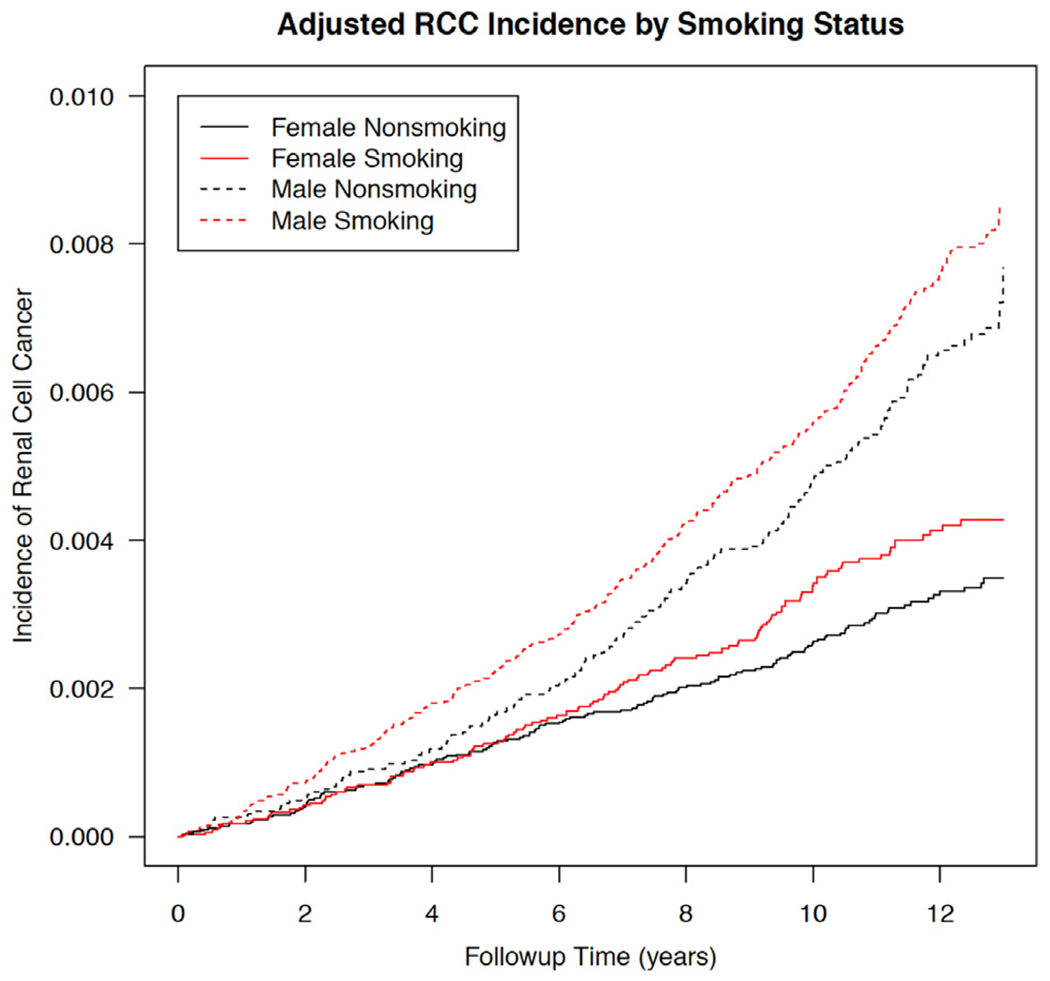
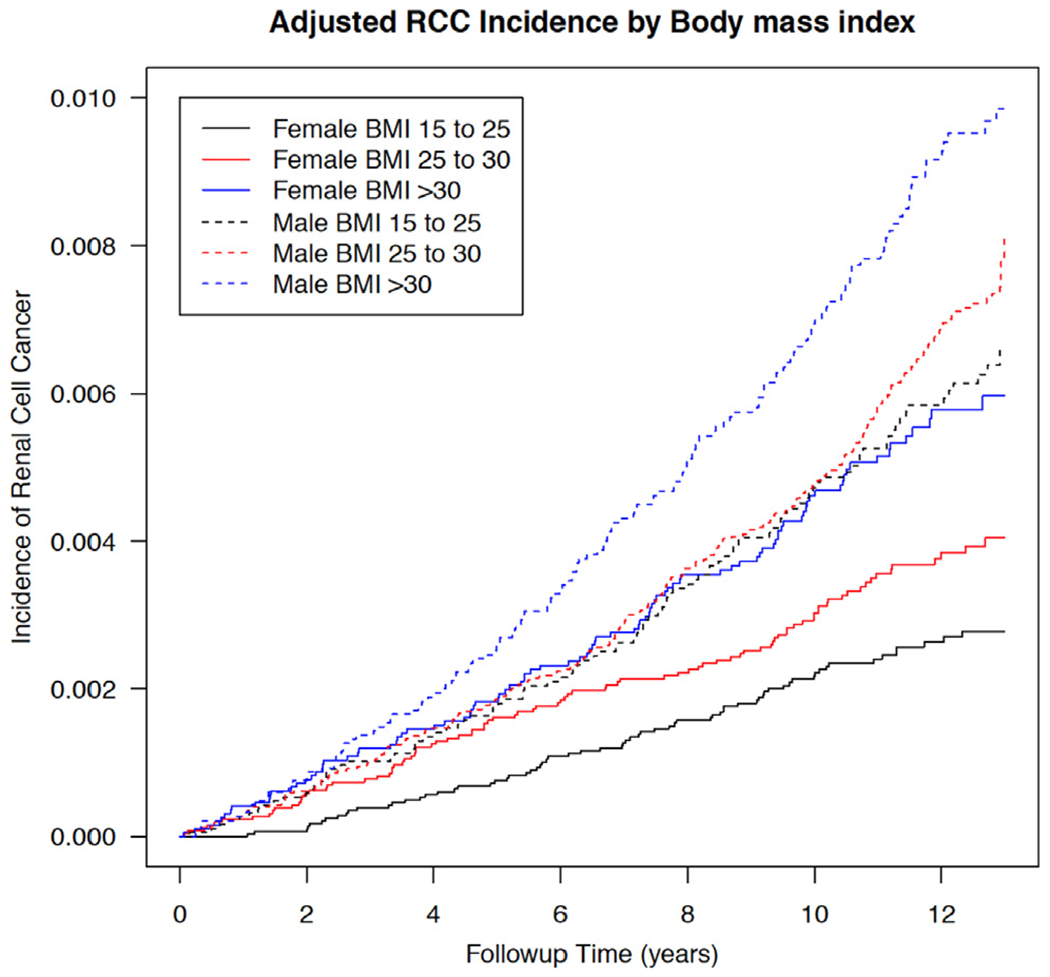
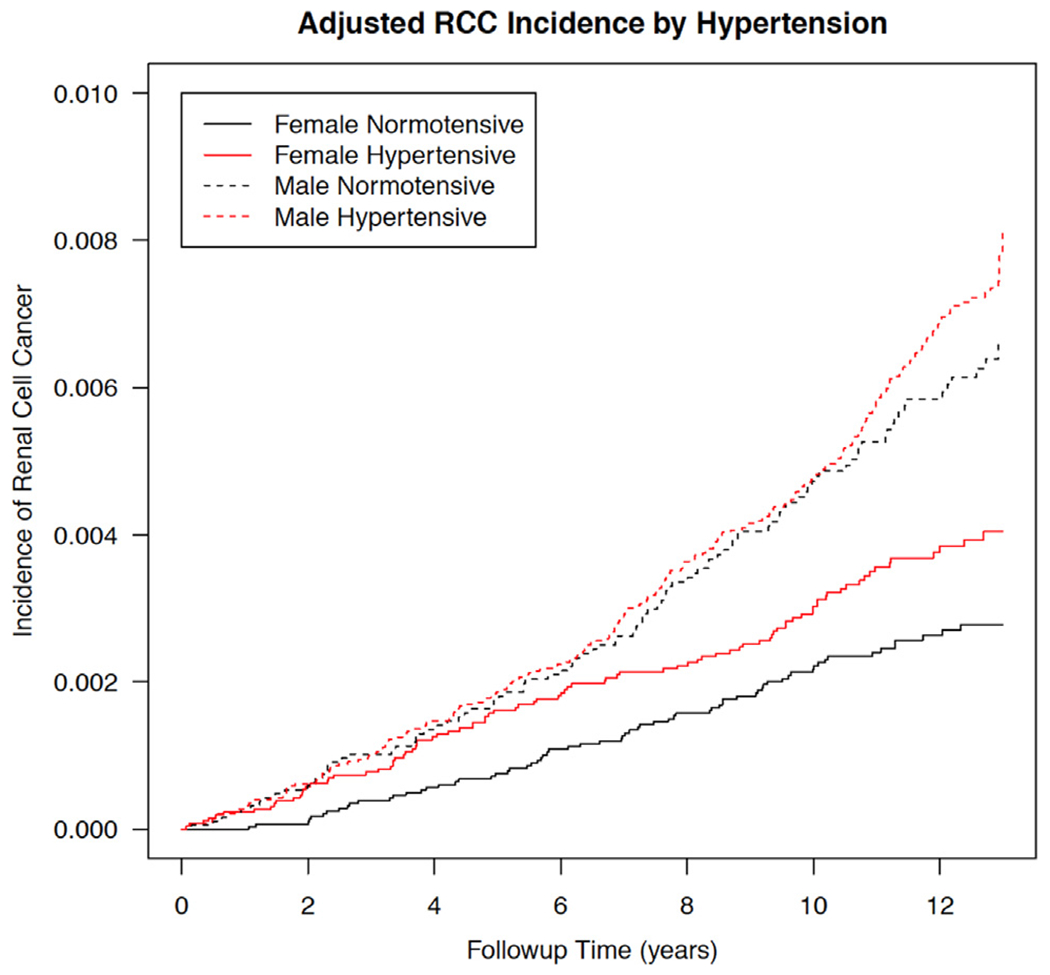
We investigate existing data relating specifically to renal cancer. After missing data were excluded, we analyzed 149,683 subjects enrolled in the prostate, lung, colorectal, and ovarian trial and noted 0.5% (n = 748) subjects developed renal cancer. Age, male gender, body mass index, diabetes, and hypertension were all significant associated with renal cancer in bivariate analysis (P<0.05). Men have a significant increased risk of kidney cancer over women (hazard ratio [HR] = 1.85; 95% CI: 1.58-2.16; P<0.0001). Nonmodifiable risk factors that are associated with kidney cancer include age (HR = 1.05; 95% CI: 1.01; 1.05, P = 0.001). Modifiable risk factors include obesity measured by body mass index (HR = 1.05; 95% CI: 1.02-1.07; P<0.0001), hypertension (HR = 1.32; 95% CI: 1.13-1.54; P = 0.0004), and smoking in pack-years (HR = 1.04; 95% CI: 1.02-1.07; P = 0.0002).
Obesity, hypertension, and smoking are the 3 modifiable risk factors that could aggressively be targeted to reduce renal cell carcinoma.
确定导致PCLO中肾细胞癌的可改变因素,以针对疾病预防并降低医疗成本。
查询前列腺、肺、结肠直肠和卵巢数据库中的肾癌主要结局。对人口统计学进行调查,特别关注可改变的风险因素。统计分析包括对连续变量进行Student t检验,对二元和分类变量进行卡方检验或Fisher精确检验以进行双变量分析。在多变量事件发生时间分析中使用Cox比例风险模型。
我们研究了专门与肾癌相关的现有数据。排除缺失数据后,我们分析了149,683名参加前列腺、肺、结肠直肠和卵巢试验的受试者,发现0.5%(n = 748)的受试者患了肾癌。在双变量分析中,年龄、男性性别、体重指数、糖尿病和高血压均与肾癌显著相关(P<0.05)。男性患肾癌的风险显著高于女性(风险比[HR]=1.85;95%置信区间:1.58 - 2.16;P<0.0001)。与肾癌相关的不可改变风险因素包括年龄(HR = 1.05;