He Shengyang, Li Liqiu, Sun Shenghua, Zeng Zhengpeng, Lu Junjuan, Xie Lihua
Department of Respiratory Medicine, The Third Xiangya Hospital of Central South University, Changsha, China.
Front Physiol. 2018 May 4;9:503. doi: 10.3389/fphys.2018.00503. eCollection 2018.
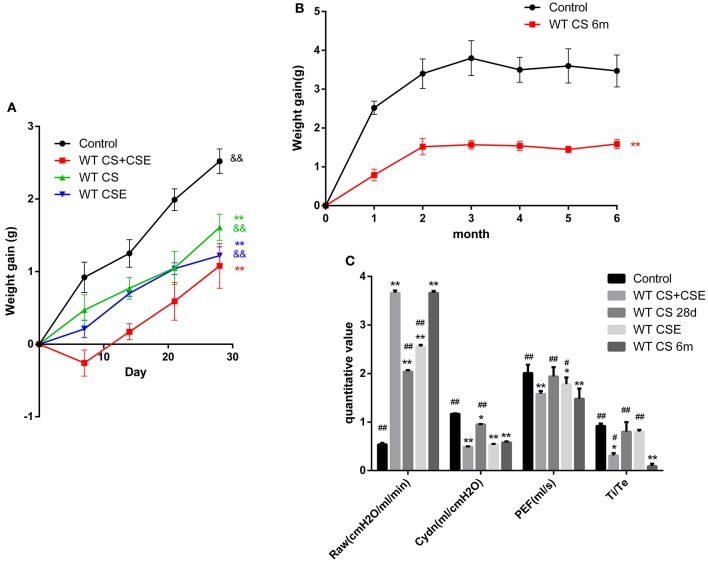
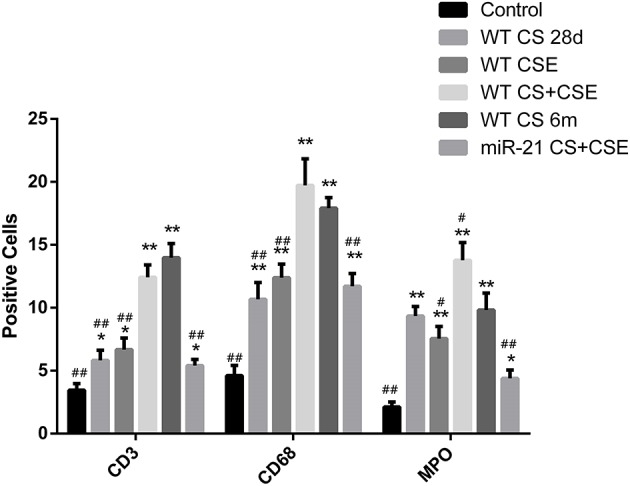
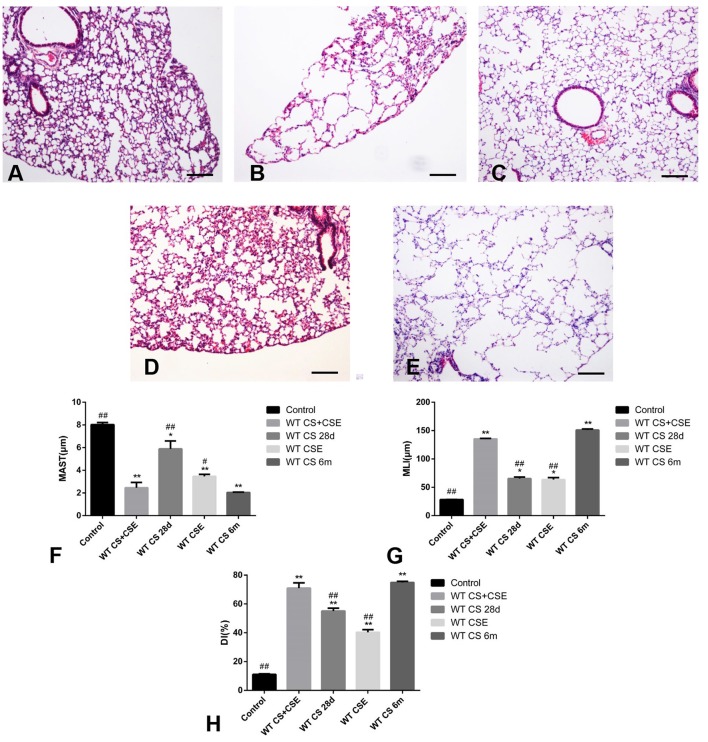
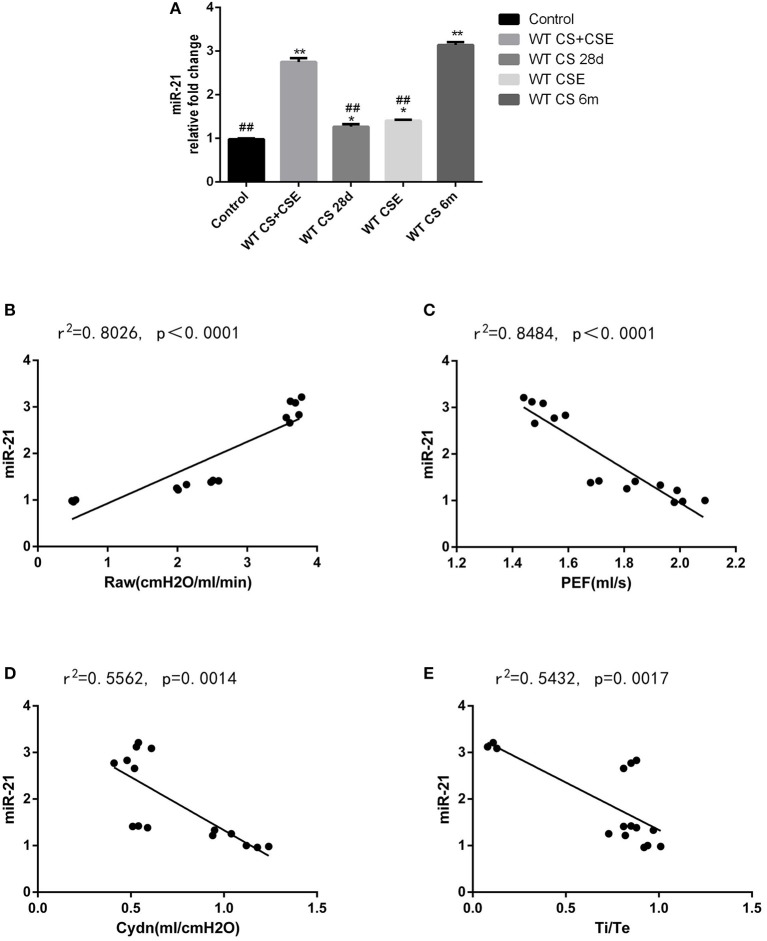
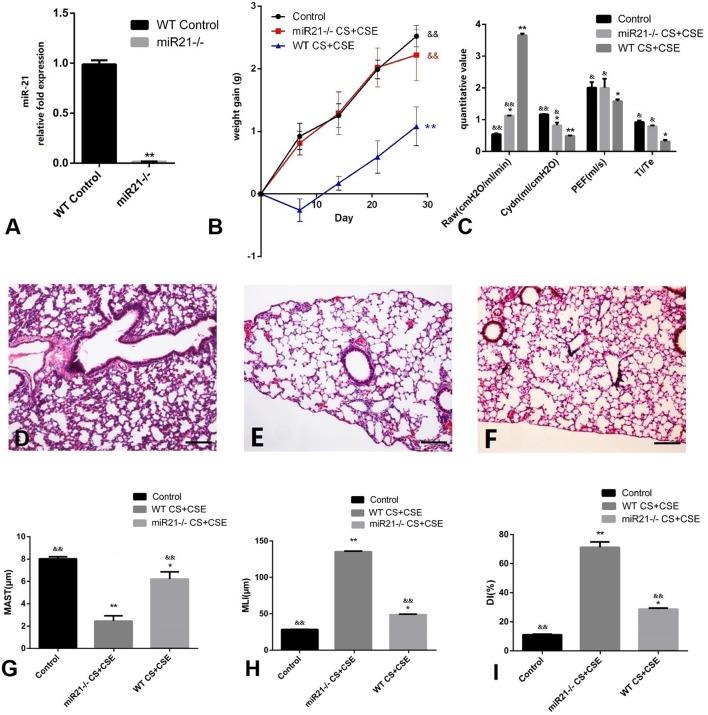
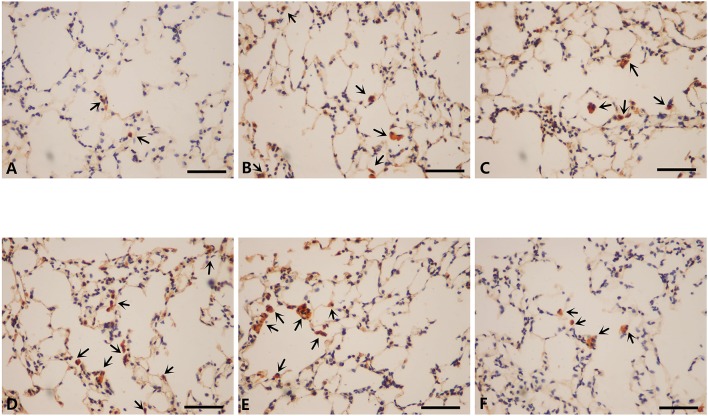
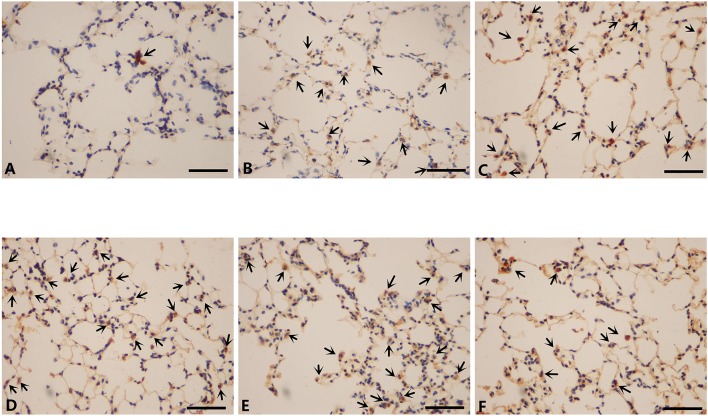
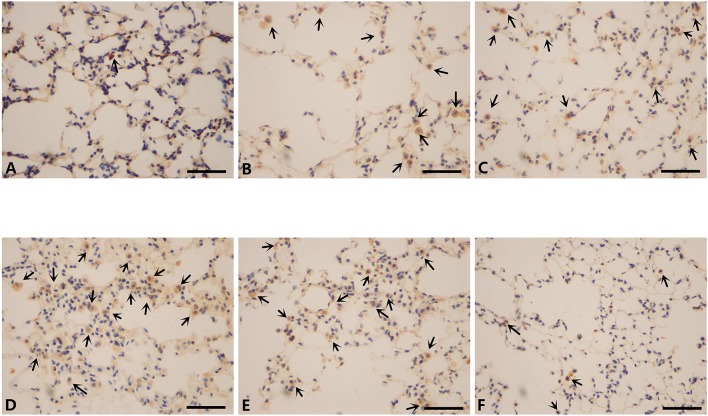
Chronic obstructive pulmonary disease (COPD) is a multi-pathogenesis chronic lung disease. The mechanisms underlying COPD have not been adequately illustrated. Many reseachers argue that microRNAs (miRs) could play a crucial role in COPD. The classic animal model of COPD is both time consuming and costly. This study proposes a novel mice COPD model and explores the role of miR-21 in COPD. A total of 50 wide-type (WT) C57BL/6 mice were separated into five euqlly-sized groups-(1) control group (CG), (2) the novel combined method group (NCM, cigarette smoke (CS) exposure for 28 days combined with cigarette smoke extract (CSE) intraperitoneal injection), (3) the short-term CS exposure group (SCSE, CS exposure for 28 days), (4) the CSE intraperitoneal injection group (CSEII, 28 days CSE intraperitoneal injection), and (5) the long-term CS exposure group (LCSE, CS exposure).The body weight gain of mice were recorded and lung function tested once the modeling was done. The pathological changes and the inflammation level by hematoxylin eosin (H&E) staining and immunohistochemical staining (IHS) on the lung tissue sections were also evaluated. The level of miR-21 in the mice lungs of the mice across all groups was detected by RT-qPCR and the effects of miR-21 knock-down in modeled mice were observed. The mice in LCSE and NCM exhibited the most severe inflammation levels and pathological and pathophysiological changes; while the changes for the mice in SCSE and CSEII were less, they remained more severe than the mice in the CG. The level of miR-21 was found to be negatively correlated with lung functions. Moreover, knocking miR-21 down from the modeled mice, ameliorated all those tested COPD-related changes. Our novel modeling method detected virtually the same changes as those detected in the classic method in WT mice, but in less time and cost. Further, it was determined that the level of miR-21 in the lungs could be an indicator of COPD severity and blocking functions of miR-21 could be a potential treatment for early stage COPD.
慢性阻塞性肺疾病(COPD)是一种多病因的慢性肺部疾病。COPD的潜在机制尚未得到充分阐明。许多研究人员认为,微小RNA(miRs)可能在COPD中起关键作用。经典的COPD动物模型既耗时又昂贵。本研究提出了一种新型的小鼠COPD模型,并探讨了miR-21在COPD中的作用。总共50只野生型(WT)C57BL/6小鼠被分成五个大小相等的组:(1)对照组(CG),(2)新型联合方法组(NCM,香烟烟雾(CS)暴露28天并腹腔注射香烟烟雾提取物(CSE)),(3)短期CS暴露组(SCSE,CS暴露28天),(4)CSE腹腔注射组(CSEII,28天CSE腹腔注射),以及(5)长期CS暴露组(LCSE,CS暴露)。建模完成后记录小鼠体重增加情况并测试肺功能。还通过苏木精-伊红(H&E)染色和免疫组织化学染色(IHS)评估肺组织切片的病理变化和炎症水平。通过RT-qPCR检测所有组小鼠肺中miR-21的水平,并观察在建模小鼠中敲低miR-21的效果。LCSE组和NCM组的小鼠表现出最严重的炎症水平以及病理和病理生理变化;而SCSE组和CSEII组小鼠的变化较小,但仍比CG组小鼠更严重。发现miR-21水平与肺功能呈负相关。此外,在建模小鼠中敲低miR-21可改善所有测试的与COPD相关的变化。我们的新型建模方法在WT小鼠中检测到的变化与经典方法几乎相同,但耗时更短、成本更低。此外,已确定肺中miR-21的水平可能是COPD严重程度的指标,阻断miR-21的功能可能是早期COPD的一种潜在治疗方法。