Peng Shuai, Liu Longxiang, Zhao Hongyu, Wang Hua, Li Hua
College of Enology, Northwest A & F University, Yangling, China.
Shaanxi Engineering Research Center for Viti-Viniculture, Yangling, China.
Front Microbiol. 2018 May 4;9:892. doi: 10.3389/fmicb.2018.00892. eCollection 2018.
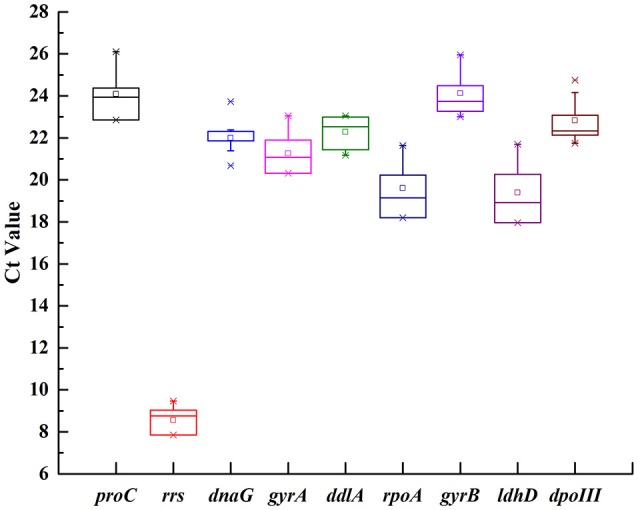
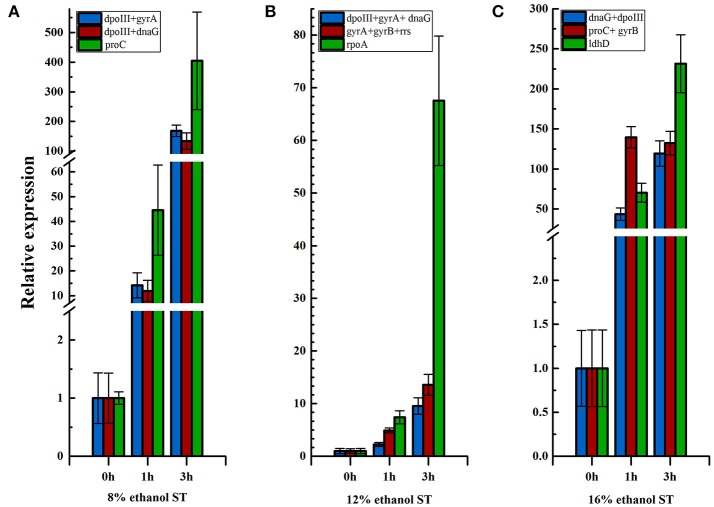
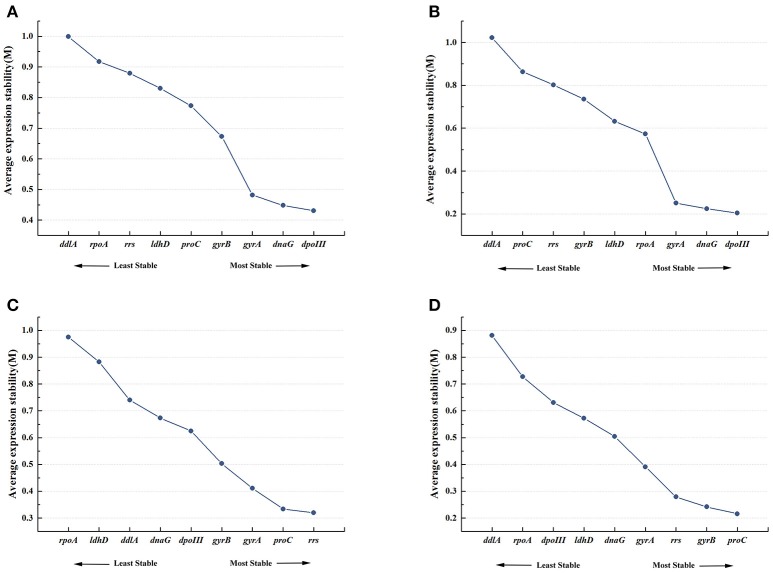
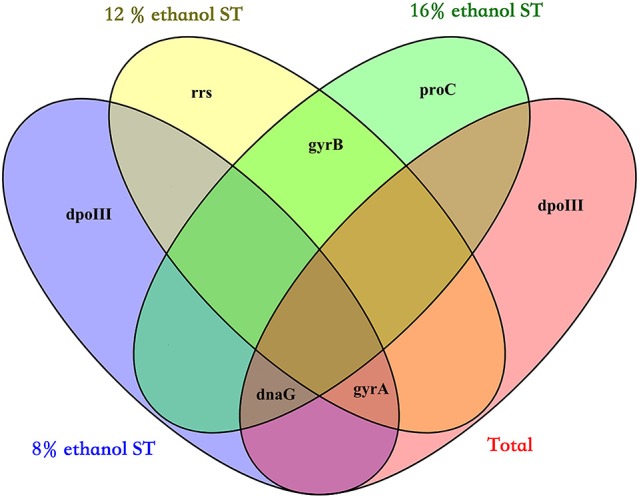
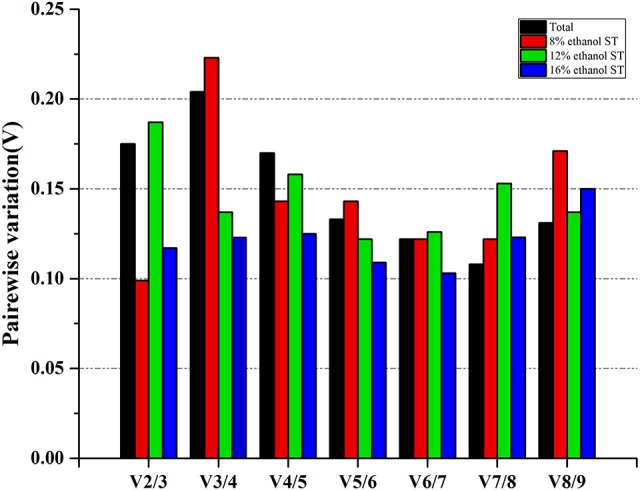
The powerful Quantitative real-time PCR (RT-qPCR) was widely used to assess gene expression levels, which requires the optimal reference genes used for normalization. (), as the one of most important microorganisms in wine industry and the most resistant lactic acid bacteria (LAB) species to ethanol, has not been investigated regarding the selection of stable reference genes for RT-qPCR normalization under ethanol stress conditions. In this study, nine candidate reference genes (, and ) were analyzed to determine the most stable reference genes for RT-qPCR in SD-2a under different ethanol stress conditions (8, 12, and 16% (v/v) ethanol). The transcript stabilities of these genes were evaluated using the algorithms geNorm, NormFinder, and BestKeeper. The results showed that and were selected as the best reference genes across all experimental ethanol conditions. Considering single stress experimental modes, and would be suitable to normalize expression level for 8% ethanol shock treatment, while the combination of , and would be suitable for 12% ethanol shock treatment. and revealed the most stable expression in 16% ethanol shock treatment. This study selected and validated for the first time the reference genes for RT-qPCR normalization in SD-2a under ethanol stress conditions.
强大的定量实时聚合酶链反应(RT-qPCR)被广泛用于评估基因表达水平,这需要使用最佳的内参基因进行标准化。()作为葡萄酒行业中最重要的微生物之一,也是对乙醇耐受性最强的乳酸菌(LAB)物种,尚未针对在乙醇胁迫条件下进行RT-qPCR标准化时稳定内参基因的选择进行研究。在本研究中,分析了九个候选内参基因(、和),以确定在不同乙醇胁迫条件(8%、12%和16%(v/v)乙醇)下,用于SD-2a中RT-qPCR的最稳定内参基因。使用geNorm、NormFinder和BestKeeper算法评估了这些基因的转录稳定性。结果表明,在所有实验乙醇条件下,和被选为最佳内参基因。考虑到单一胁迫实验模式,和适用于8%乙醇冲击处理时表达水平的标准化,而、和的组合适用于12%乙醇冲击处理。在16%乙醇冲击处理中,和表现出最稳定的表达。本研究首次选择并验证了乙醇胁迫条件下SD-2a中RT-qPCR标准化的内参基因。