Key Laboratory of Molecular Biology in High Cancer Incidence Coastal Chaoshan Area of Guangdong Higher Education Institutes, Shantou University Medical College, Shantou, Guangdong, 515041, P. R. China.
Department of Biochemistry and Molecular Biology, Shantou University Medical College, Shantou, Guangdong, 515041, P. R. China.
Cancer Commun (Lond). 2018 Apr 9;38(1):4. doi: 10.1186/s40880-018-0277-0.
Esophageal squamous cell carcinoma (ESCC) is the predominant subtype of esophageal carcinoma in China. This study was to develop a staging model to predict outcomes of patients with ESCC.
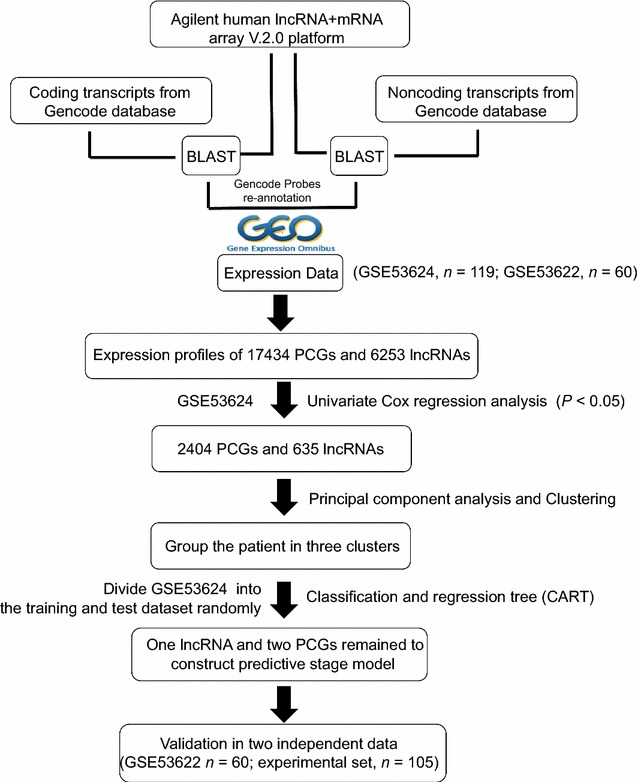
Using Cox regression analysis, principal component analysis (PCA), partitioning clustering, Kaplan-Meier analysis, receiver operating characteristic (ROC) curve analysis, and classification and regression tree (CART) analysis, we mined the Gene Expression Omnibus database to determine the expression profiles of genes in 179 patients with ESCC from GSE63624 and GSE63622 dataset.
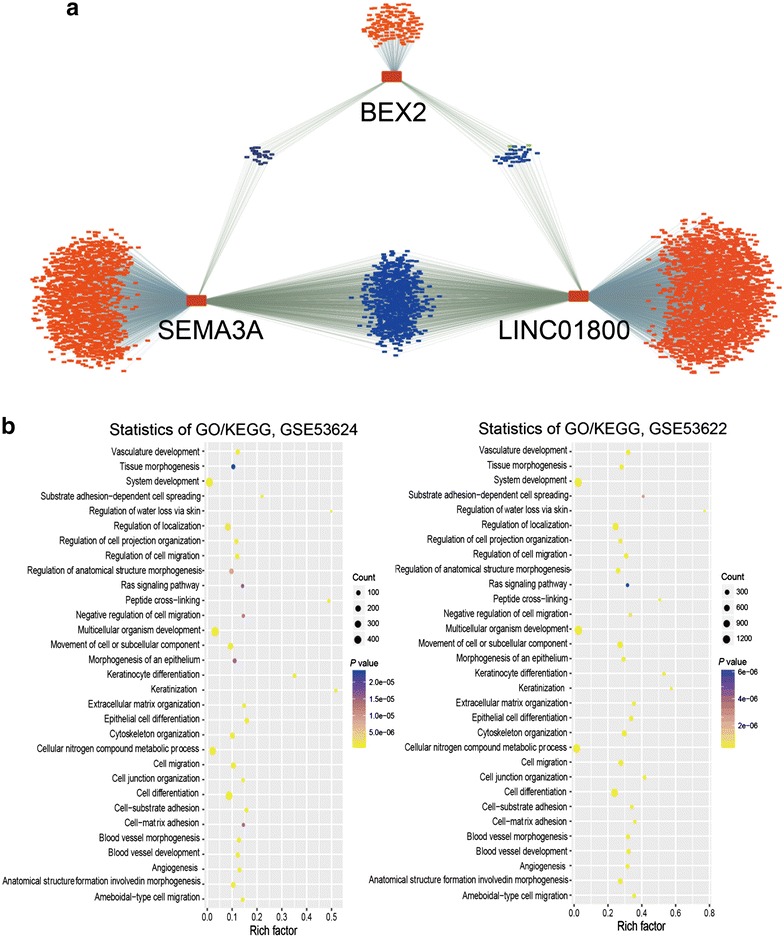
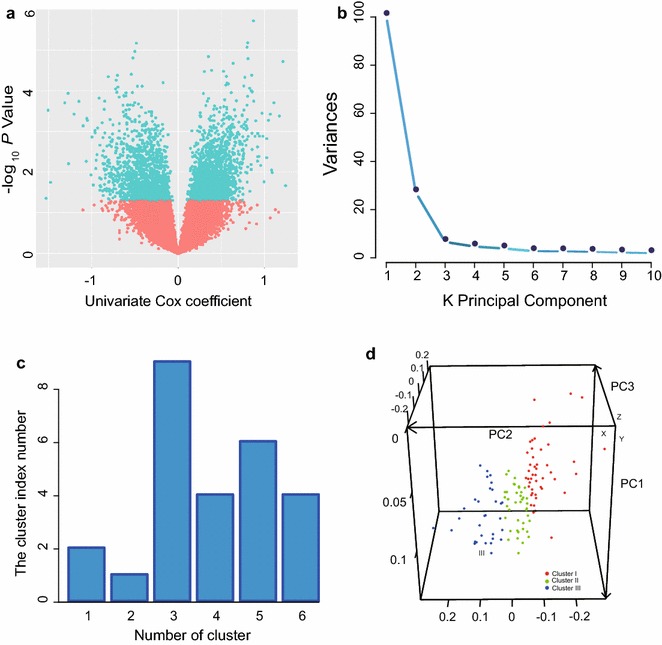
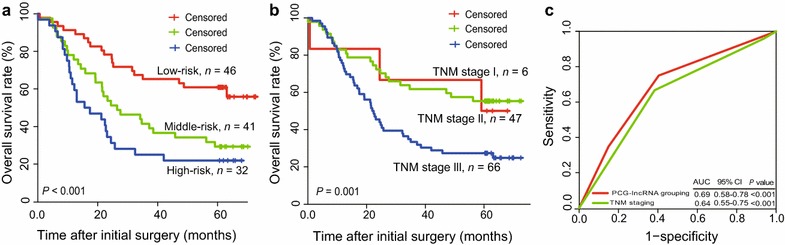
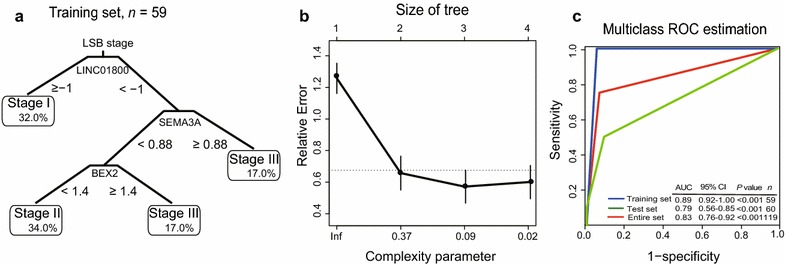
Univariate cox regression analysis of the GSE63624 dataset revealed that 2404 protein-coding genes (PCGs) and 635 long non-coding RNAs (lncRNAs) were associated with the survival of patients with ESCC. PCA categorized these PCGs and lncRNAs into three principal components (PCs), which were used to cluster the patients into three groups. ROC analysis demonstrated that the predictive ability of PCG-lncRNA PCs when applied to new patients was better than that of the tumor-node-metastasis staging (area under ROC curve [AUC]: 0.69 vs. 0.65, P < 0.05). Accordingly, we constructed a molecular disaggregated model comprising one lncRNA and two PCGs, which we designated as the LSB staging model using CART analysis in the GSE63624 dataset. This LSB staging model classified the GSE63622 dataset of patients into three different groups, and its effectiveness was validated by analysis of another cohort of 105 patients.
The LSB staging model has clinical significance for the prognosis prediction of patients with ESCC and may serve as a three-gene staging microarray.
食管鳞状细胞癌(ESCC)是中国食管癌的主要亚型。本研究旨在建立一种分期模型,以预测 ESCC 患者的预后。
使用 Cox 回归分析、主成分分析(PCA)、分区聚类、Kaplan-Meier 分析、受试者工作特征(ROC)曲线分析和分类回归树(CART)分析,我们从 GSE63624 和 GSE63622 数据集的基因表达综合数据库中挖掘了 179 例 ESCC 患者的基因表达谱。
GSE63624 数据集的单因素 Cox 回归分析显示,2404 个蛋白编码基因(PCGs)和 635 个长非编码 RNA(lncRNAs)与 ESCC 患者的生存相关。PCA 将这些 PCGs 和 lncRNAs 分为三个主成分(PCs),用于将患者分为三组。ROC 分析表明,PCG-lncRNA PCs 应用于新患者时的预测能力优于肿瘤-淋巴结-转移分期(ROC 曲线下面积 [AUC]:0.69 与 0.65,P<0.05)。因此,我们使用 CART 分析在 GSE63624 数据集中构建了一个由一个 lncRNA 和两个 PCGs 组成的分子离散模型,我们将其命名为 LSB 分期模型。该 LSB 分期模型将 GSE63622 数据集的患者分为三组,并通过对另一个 105 例患者的队列分析验证了其有效性。
LSB 分期模型对 ESCC 患者的预后预测具有临床意义,可能成为一个三基因分期微阵列。