Sanz-Reig J, Salvador Marín J, Ferrández Martínez J, Orozco Beltrán D, Martínez López J F, Quesada Rico J A
Department of Orthopedic Surgery, Sant Joan d' Alacant University Hospital, Alicante, Spain.
Department of Orthopedic Surgery, Sant Joan d' Alacant University Hospital, Alicante, Spain.
Chin J Traumatol. 2018 Jun;21(3):163-169. doi: 10.1016/j.cjtee.2017.10.006. Epub 2018 Apr 25.
The incidence of hip fractures is increasing within the aging population. Our objective was to identify and quantify the risk factors and develop a predictive model for the in-hospital mortality among hip fracture patients older than 65 years.
This is a prospective study conducted on 331 hip fracture patients older than 65 years admitted to our hospital from 2011 to 2014. Patients' demographics, prehospitalization residential status, prefracture comorbidity data, anti-aggregant and anticoagulant medication, preoperative hemoglobin value, type of fractures, type of treatments, time to surgery, and complications were recorded.
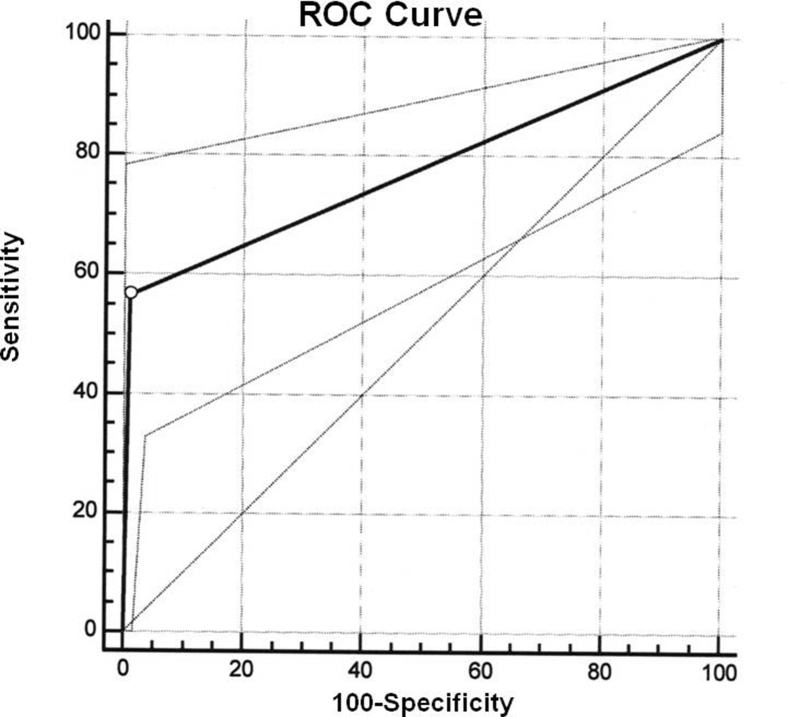
The average age was 83 years, 73% female, and 57% of them sustained a femoral neck fracture. In 62.8% of patients, the number of pre-fracture baseline comorbidities was ≥2. The in-hospital mortality rate was 11.4%. In multivariate analysis, age over 90 years, congestive heart failure, asthma, rheumatologic disease, lung cancer, and not taking antiaggregant medication were independently associated with in-hospital mortality. A formula and risk stratification scoring for predicting the risk for in-hospital mortality was developed. Risk-adjustment model based on these variables had acceptable accuracy for predicting in-hospital mortality (c-statistic 0.77).
Advanced age, and five prefracture comorbidities have a strong association with in-hospital mortality in a hip fracture patient older than 65 years old. Our predictive model was specifically designed for the old hip fracture population. It has an accuracy similar to other risk models. The specificity, positive predictive value, and negative predictive value are high. In addition, it could discriminate a high risk patient from a low risk patient for in-hospital mortality.
在老龄化人群中,髋部骨折的发生率正在上升。我们的目标是识别并量化风险因素,并为65岁以上髋部骨折患者的院内死亡率建立一个预测模型。
这是一项对2011年至2014年期间我院收治的331例65岁以上髋部骨折患者进行的前瞻性研究。记录了患者的人口统计学特征、院前居住状况、骨折前合并症数据、抗血小板和抗凝药物使用情况、术前血红蛋白值、骨折类型、治疗方式、手术时间和并发症。
平均年龄为83岁,女性占73%,其中57%为股骨颈骨折。62.8%的患者骨折前基线合并症数量≥2。院内死亡率为11.4%。多因素分析显示,90岁以上、充血性心力衰竭、哮喘、风湿性疾病、肺癌以及未使用抗血小板药物与院内死亡率独立相关。开发了一个预测院内死亡风险的公式和风险分层评分。基于这些变量的风险调整模型在预测院内死亡率方面具有可接受的准确性(c统计量为0.77)。
高龄以及五种骨折前合并症与65岁以上髋部骨折患者的院内死亡率密切相关。我们的预测模型是专门为老年髋部骨折人群设计的。其准确性与其他风险模型相似。特异性、阳性预测值和阴性预测值都很高。此外,它能够区分院内死亡的高风险患者和低风险患者。