Clinical Islet Transplant Program, Alberta Diabetes Institute, University of Alberta, Edmonton, AB, Canada.
Department of Surgery, University of Alberta, Edmonton, AB, Canada.
Cell Death Dis. 2018 May 22;9(6):595. doi: 10.1038/s41419-018-0506-0.
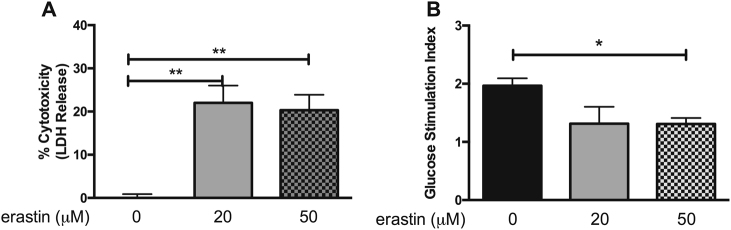
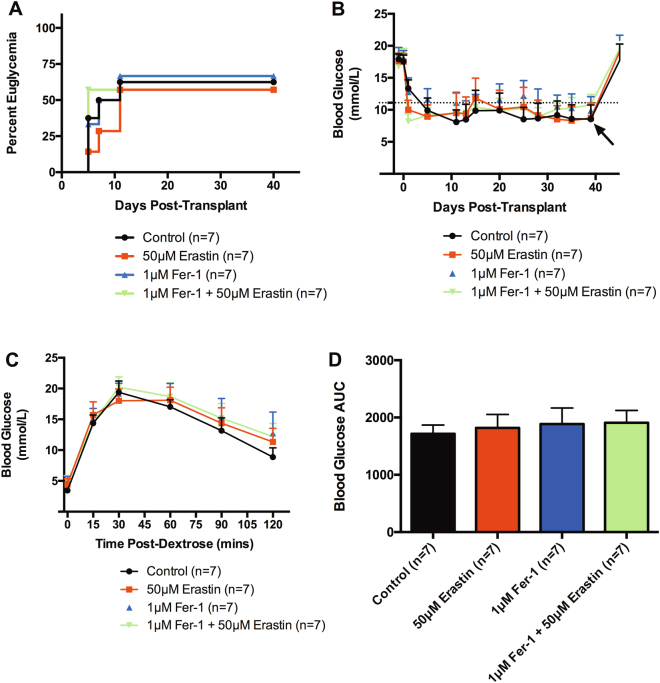
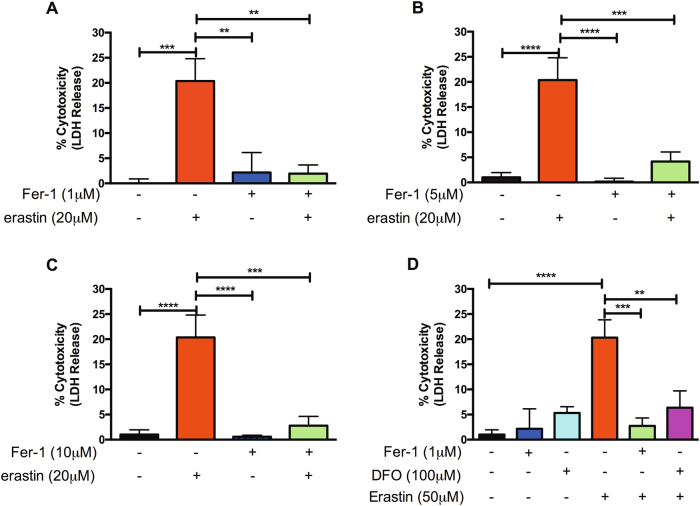
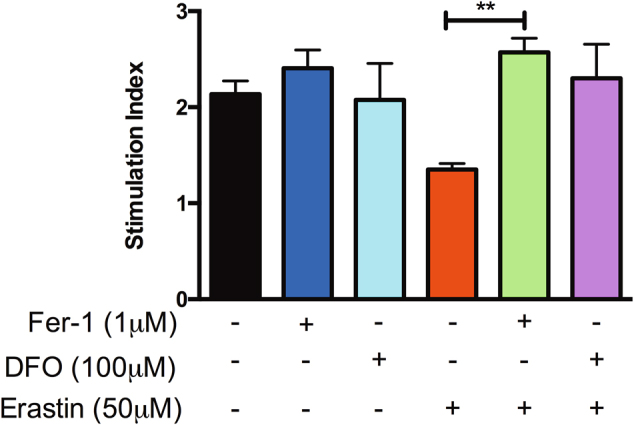
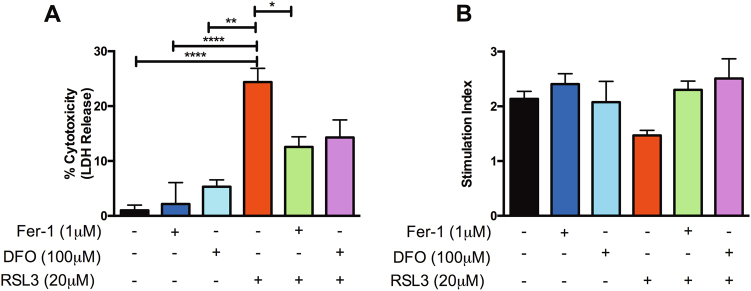
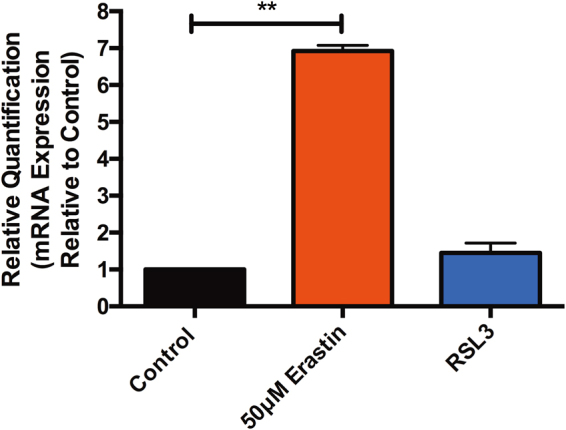
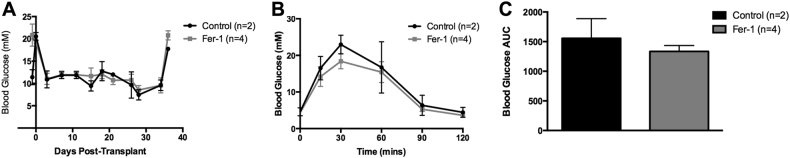
Human islet transplantation has been hampered by donor cell death associated with the islet preparation procedure before transplantation. Regulated necrosis pathways are biochemically and morphologically distinct from apoptosis. Recently, ferroptosis was identified as a non-apoptotic form of iron-dependent regulated necrosis implicated in various pathological conditions. Mediators of islet oxidative stress, including glutathione peroxidase-4 (GPX4), have been identified as inhibitors of ferroptosis, and mechanisms that affect GPX4 function can impact islet function and viability. Ferroptosis has not been investigated directly in human islets, and its relevance in islet transplantation remains unknown. Herein, we sought to determine whether in vitro human islet viability and function is compromised in the presence of two distinct ferroptosis-inducing agents (FIA), erastin or RSL3, and whether these effects could be rescued with ferroptosis inhibitors, ferrostatin-1 (Fer-1), or desferrioxamine (DFO). Viability, as assessed by lactate dehydrogenase (LDH) release, revealed significant death in erastin- and RSL3-treated islets, 20.3% ± 3.8 and 24.4% ± 2.5, 24 h post culture, respectively. These effects were ameliorated in islets pre-treated with Fer-1 or the iron chelator, desferrioxamine (DFO). Stimulation index, a marker of islet function revealed a significant reduction in function in erastin-treated islets (control 1.97 ± 0.13 vs. 50 μM erastin 1.32 ± 0.1) (p < 0.05). Fer-1 and DFO pre-treatment alone did not augment islet viability or function. Pre-treatment of islets with erastin or Fer-1 did not impact in vivo engraftment in an immunodeficient mouse transplant model. Our data reveal that islets are indeed susceptible to ferroptosis in vitro, and induction of this novel cell death modality leads to compromised islet function, which can be recoverable in the presence of the ferroptosis inhibitors. The in vivo impact of this pathway in islet transplantation remains elusive given the constraints of our study, but warrants continued investigation.
人类胰岛移植一直受到与移植前胰岛制备过程中供体细胞死亡相关的阻碍。调节性细胞坏死途径在生化和形态上与细胞凋亡不同。最近,铁死亡被确定为一种非凋亡形式的铁依赖性调节性细胞坏死,与各种病理状况有关。胰岛氧化应激的介质,包括谷胱甘肽过氧化物酶 4(GPX4),已被鉴定为铁死亡的抑制剂,影响 GPX4 功能的机制可以影响胰岛的功能和活力。铁死亡尚未在人类胰岛中直接研究,其在胰岛移植中的相关性尚不清楚。在此,我们试图确定两种不同的铁死亡诱导剂(FIA),依维莫司或 RSL3 是否会损害体外人胰岛的活力和功能,以及这些效应是否可以用铁死亡抑制剂,ferrostatin-1(Fer-1)或去铁胺(DFO)来挽救。通过乳酸脱氢酶(LDH)释放评估的活力显示,在依维莫司和 RSL3 处理的胰岛中,分别有 20.3%±3.8%和 24.4%±2.5%的显著死亡,在培养 24 小时后。用 Fer-1 或铁螯合剂去铁胺(DFO)预处理胰岛可以改善这些作用。胰岛功能的刺激指数显示,依维莫司处理的胰岛功能显著降低(对照 1.97±0.13 与 50μM 依维莫司 1.32±0.1)(p<0.05)。Fer-1 和 DFO 单独预处理不会增加胰岛的活力或功能。依维莫司或 Fer-1 预处理不会影响免疫缺陷小鼠移植模型中的体内植入。我们的数据表明,胰岛在体外确实容易发生铁死亡,并且这种新型细胞死亡方式的诱导导致胰岛功能受损,在铁死亡抑制剂存在的情况下可以恢复。由于我们研究的限制,这种途径在胰岛移植中的体内影响仍然难以捉摸,但值得进一步研究。