Horticulture College, Northwest A&F University, Yangling, Shaanxi, China.
The Agriculture Ministry Key Laboratory of Agricultural Engineering in the Middle and Lower Reaches of Yangze River, Nanjing, China.
BMC Plant Biol. 2018 May 24;18(1):92. doi: 10.1186/s12870-018-1310-9.
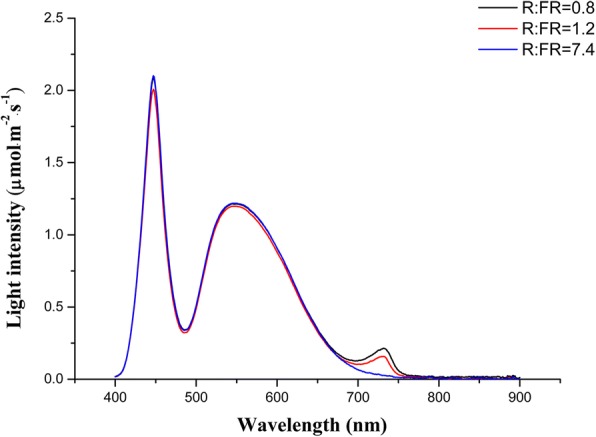
Red (R) and far-red (FR) light distinctly influence phytochrome-mediated initial tomato growth and development, and more recent evidence indicates that these spectra also modulate responses to a multitude of abiotic and biotic stresses. This research investigated whether different R: FR values affect tomato growth response and salinity tolerance. Tomato seedlings were exposed to different R: FR conditions (7.4, 1.2 and 0.8) under salinity stress (100 mM NaCl), and evaluated for their growth, biochemical changes, active reactive oxygen species (ROS) and ROS scavenging enzymes, pigments, rate of photosynthesis, and chlorophyll fluorescence.
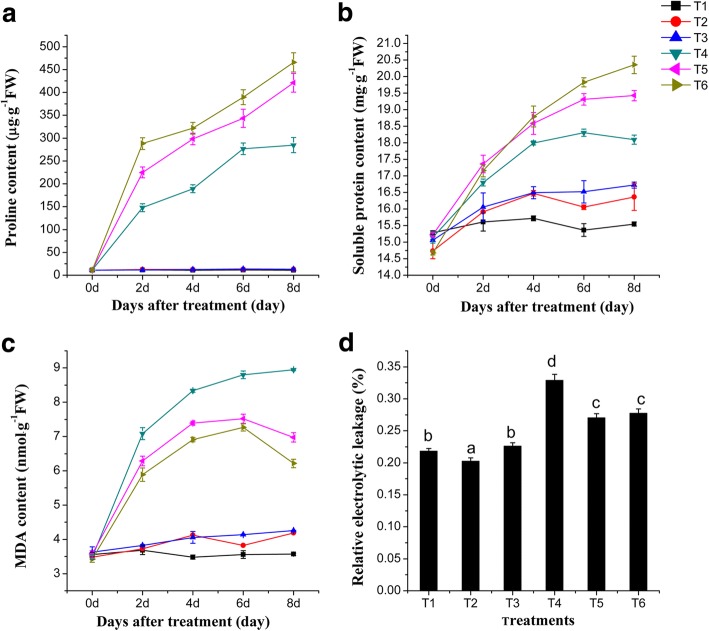
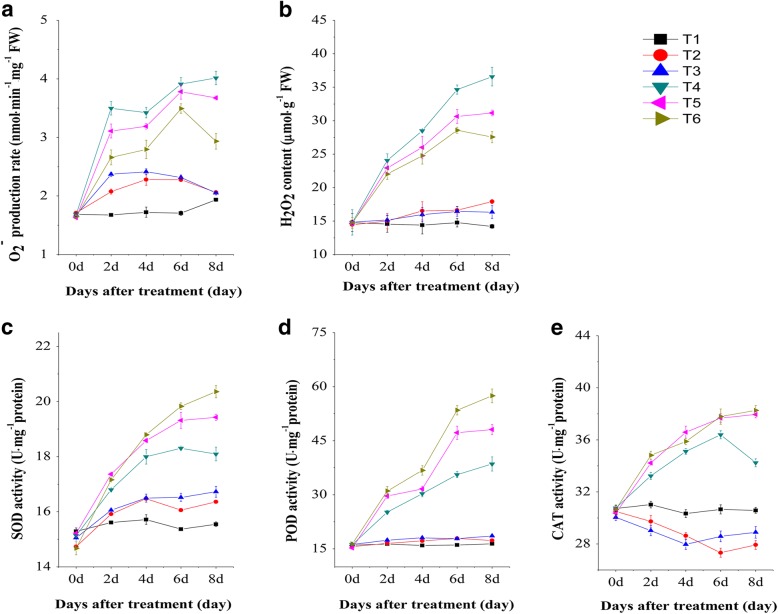
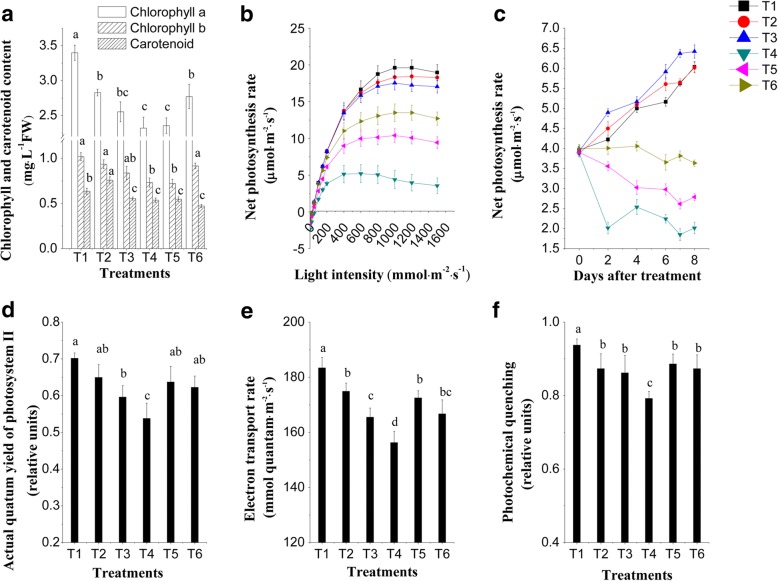
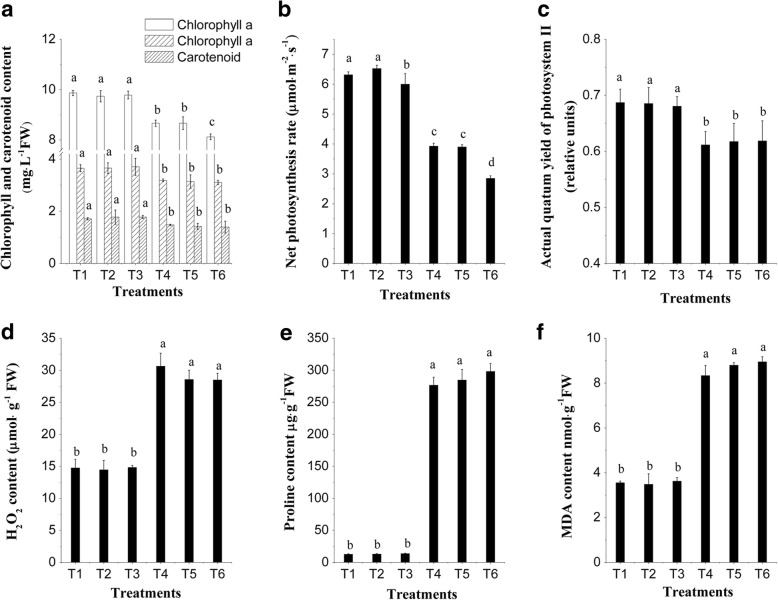
The results showed that under conditions of salinity, tomato seedlings subjected to a lower R: FR value (0.8) significantly increased both their growth, proline content, chlorophyll content and net photosynthesis rate (Pn), while they decreased malondialdehyde (MDA) compared to the higher R: FR value (7.4). Under conditions of salinity, the lower R: FR value caused a decrease in both the superoxide anion (O) and in hydrogen peroxide (HO) generation, an increase in the activities of superoxidase dismutase (SOD, EC 1.15.1.1), peroxidase (POD, EC 1.11.1.7) and catalase (CAT, EC 1.11.1.7). Tomato seedlings grown under the lower R: FR value and conditions of salinity showed a higher actual quantum yield of photosynthesis (ΦPSII), electron transport rate (ETR), and photochemical quenching (qP) than those exposed to a higher R: FR, indicating overall healthier growth. However, the salinity tolerance induced at the lower R: FR condition disappeared in the tomato phyB1 mutant.
These results suggest that growing tomato with a lower R: FR value could improve seedlings' salinity tolerance, and phytochrome B1 play an very important role in this process. Therefore, different qualities of light can be used to efficiently develop abiotic stress tolerance in tomato cultivation.
红光(R)和远红光(FR)光明显影响光敏色素介导的番茄初始生长和发育,最近的证据表明,这些光谱还调节对多种非生物和生物胁迫的反应。本研究探讨了不同的 R:FR 值是否会影响番茄的生长反应和耐盐性。在盐胁迫(100 mM NaCl)下,将番茄幼苗暴露于不同的 R:FR 条件(7.4、1.2 和 0.8)下,并评估其生长、生化变化、活性活性氧(ROS)和 ROS 清除酶、色素、光合作用率和叶绿素荧光。
结果表明,在盐胁迫条件下,番茄幼苗处于较低的 R:FR 值(0.8)下,其生长、脯氨酸含量、叶绿素含量和净光合速率(Pn)均显著增加,而 MDA 含量则低于较高的 R:FR 值(7.4)。在盐胁迫条件下,较低的 R:FR 值导致超氧阴离子(O)和过氧化氢(HO)的产生减少,超氧化物歧化酶(SOD,EC 1.15.1.1)、过氧化物酶(POD,EC 1.11.1.7)和过氧化氢酶(CAT,EC 1.11.1.7)的活性增加。在较低的 R:FR 值和盐胁迫条件下生长的番茄幼苗的实际光合量子产量(ΦPSII)、电子传递率(ETR)和光化学猝灭(qP)均高于暴露于较高的 R:FR 值的幼苗,表明整体生长更健康。然而,在较低的 R:FR 条件下诱导的耐盐性在番茄 phyB1 突变体中消失。
这些结果表明,用较低的 R:FR 值种植番茄可以提高幼苗的耐盐性,而光敏色素 B1 在这个过程中起着非常重要的作用。因此,不同质量的光可以用于有效地提高番茄的非生物胁迫耐受性。