Laboratory for Lipid Medicine and Technology, Department of Medicine, Massachusetts General Hospital and Harvard Medical School, Boston, MA, USA.
Teagasc Moorepark Food Research Centre, Fermoy, Co. Cork, Ireland.
Microbiome. 2018 May 24;6(1):95. doi: 10.1186/s40168-018-0476-6.
The early-life gut microbiota plays a critical role in host metabolism in later life. However, little is known about how the fatty acid profile of the maternal diet during gestation and lactation influences the development of the offspring gut microbiota and subsequent metabolic health outcomes.
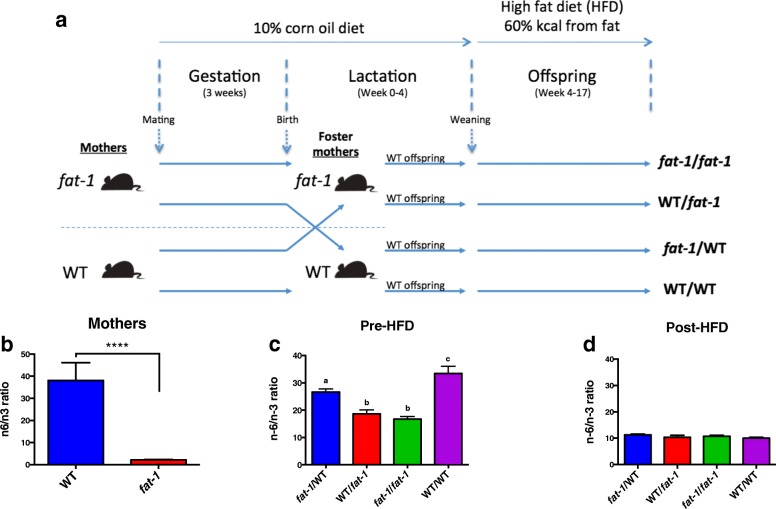
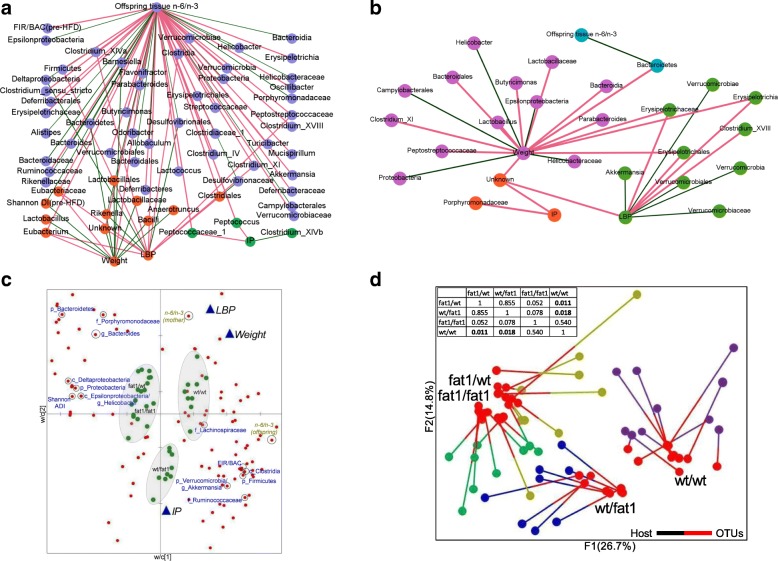
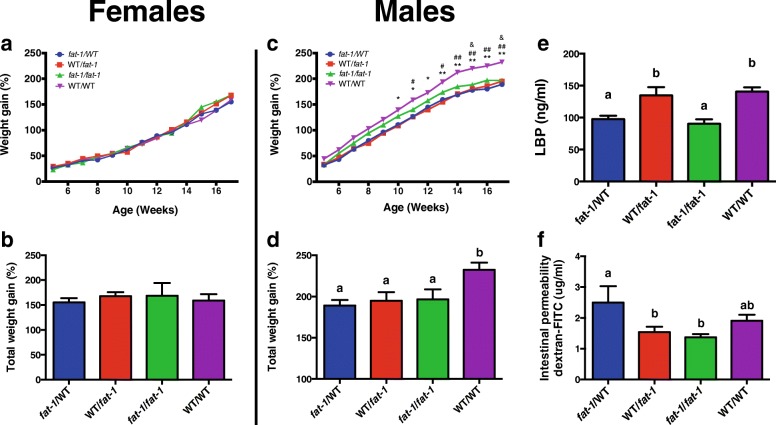
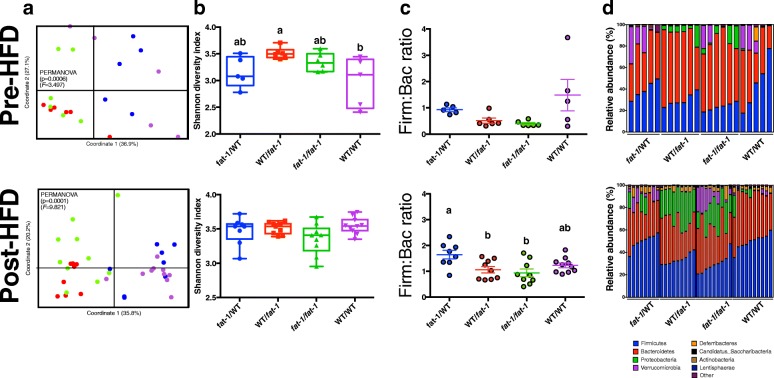
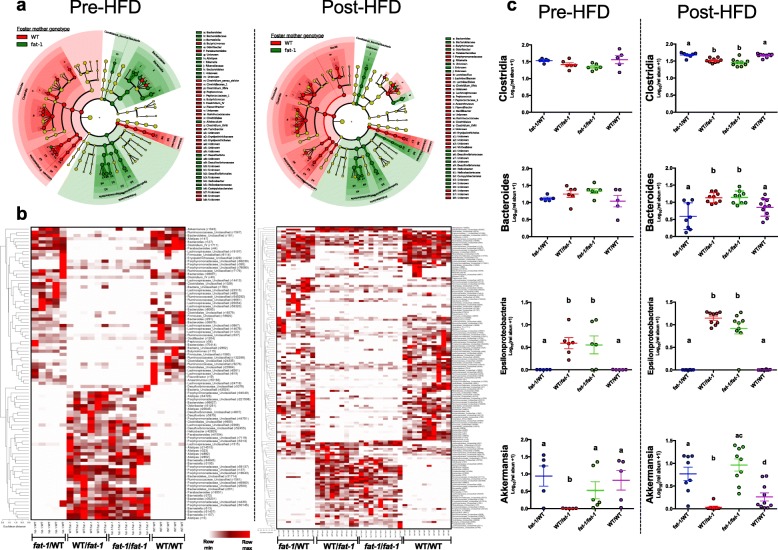
Here, using a unique transgenic model, we report that maternal endogenous n-3 polyunsaturated fatty acid (PUFA) production during gestation or lactation significantly reduces weight gain and markers of metabolic disruption in male murine offspring fed a high-fat diet. However, maternal fatty acid status appeared to have no significant effect on weight gain in female offspring. The metabolic phenotypes in male offspring appeared to be mediated by comprehensive restructuring of gut microbiota composition. Reduced maternal n-3 PUFA exposure led to significantly depleted Epsilonproteobacteria, Bacteroides, and Akkermansia and higher relative abundance of Clostridia. Interestingly, offspring metabolism and microbiota composition were more profoundly influenced by the maternal fatty acid profile during lactation than in utero. Furthermore, the maternal fatty acid profile appeared to have a long-lasting effect on offspring microbiota composition and function that persisted into adulthood after life-long high-fat diet feeding.
Our data provide novel evidence that weight gain and metabolic dysfunction in adulthood is mediated by maternal fatty acid status through long-lasting restructuring of the gut microbiota. These results have important implications for understanding the interaction between modern Western diets, metabolic health, and the intestinal microbiome.
生命早期的肠道微生物群在宿主的代谢中起着至关重要的作用。然而,人们对于母体在妊娠和哺乳期的脂肪酸谱如何影响后代肠道微生物群的发育以及随后的代谢健康结果知之甚少。
在这里,我们使用一种独特的转基因模型报告称,母体在妊娠或哺乳期内内源性 n-3 多不饱和脂肪酸(PUFA)的产生显著降低了高脂肪饮食喂养的雄性鼠后代的体重增加和代谢紊乱标志物。然而,母体脂肪酸状况似乎对雌性后代的体重增加没有显著影响。雄性后代的代谢表型似乎是通过肠道微生物群组成的全面重构来介导的。减少母体 n-3 PUFA 的暴露导致 Epsilonproteobacteria、Bacteroides 和 Akkermansia 的显著减少,而 Clostridia 的相对丰度增加。有趣的是,与宫内相比,母体脂肪酸谱在哺乳期对后代的代谢和微生物群组成的影响更为显著。此外,母体脂肪酸谱似乎对后代微生物群组成和功能具有持久的影响,这种影响在长期高脂肪饮食喂养后仍持续到成年期。
我们的数据提供了新的证据,表明母体脂肪酸状态通过对肠道微生物群的持久重构,介导了成年期的体重增加和代谢功能障碍。这些结果对于理解现代西方饮食、代谢健康和肠道微生物组之间的相互作用具有重要意义。