Department of Women and Children's Health, King's College London, London, SE1 7EH, UK.
Institute of Reproductive and Developmental Biology, Imperial College London, London, W12 0NN, UK.
Int J Obes (Lond). 2019 Feb;43(2):319-330. doi: 10.1038/s41366-018-0095-0. Epub 2018 May 24.
Obesity is a heterogeneous phenotype and risk associations to non-communicable diseases such as cardiovascular disease and type 2 diabetes are influenced by several factors. The paternal metabolic status at the time of conception influences offspring susceptibility to developing obesity and adiposity-associated cardiometabolic disease. Cholestatic liver diseases are characterized by raised circulating serum bile acid levels and dyslipidemia, and are commonly treated with ursodeoxycholic acid (UDCA). We hypothesized that paternal cholestasis alters offspring susceptibility to developing obesity and adiposity-associated cardiometabolic disease and that this may be modified by paternal UDCA treatment.
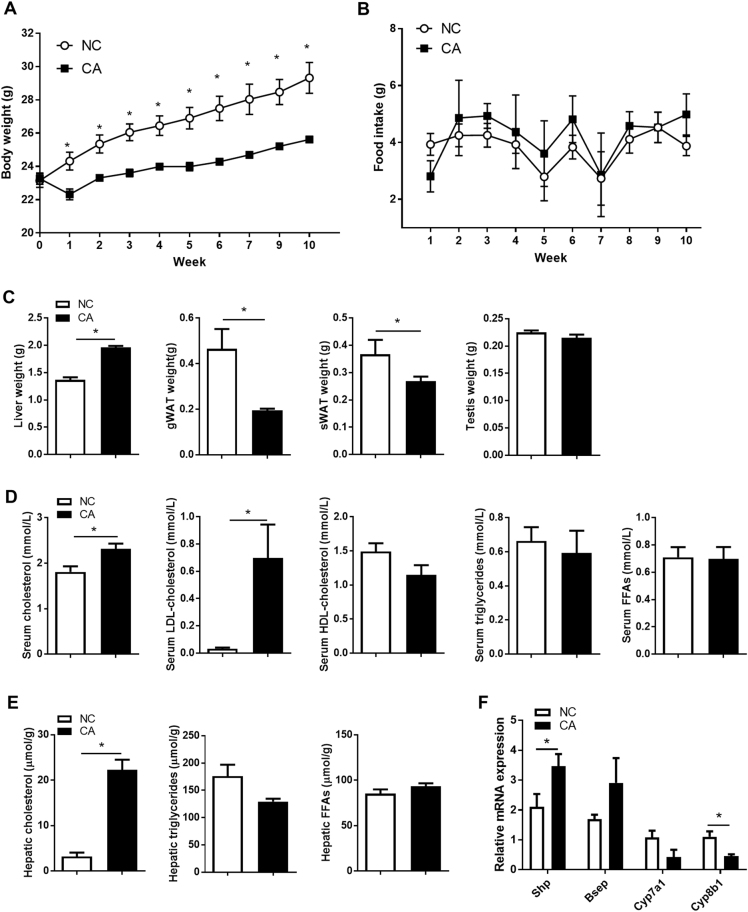
Cholestasis was induced in male C57BL/6 mice with a 0.5% cholic acid (CA)-supplemented diet for 10 weeks prior to mating with normal chow (NC)-fed females. Offspring of cholestatic and NC-fed fathers were fed either a NC diet or challenged with an obesogenic 'western diet' (WD) from 12 weeks of age. Offspring body weight and cardiometabolic function were assessed, and the impact of treatment of paternal cholestasis with UDCA was evaluated.
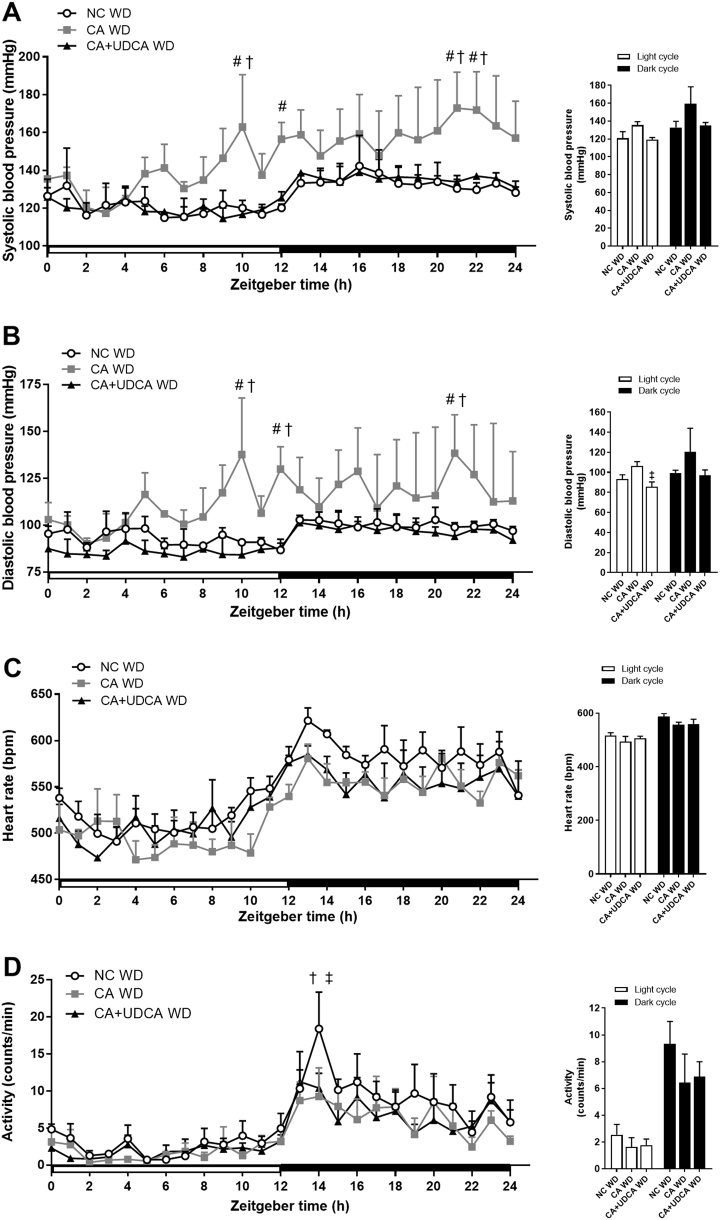
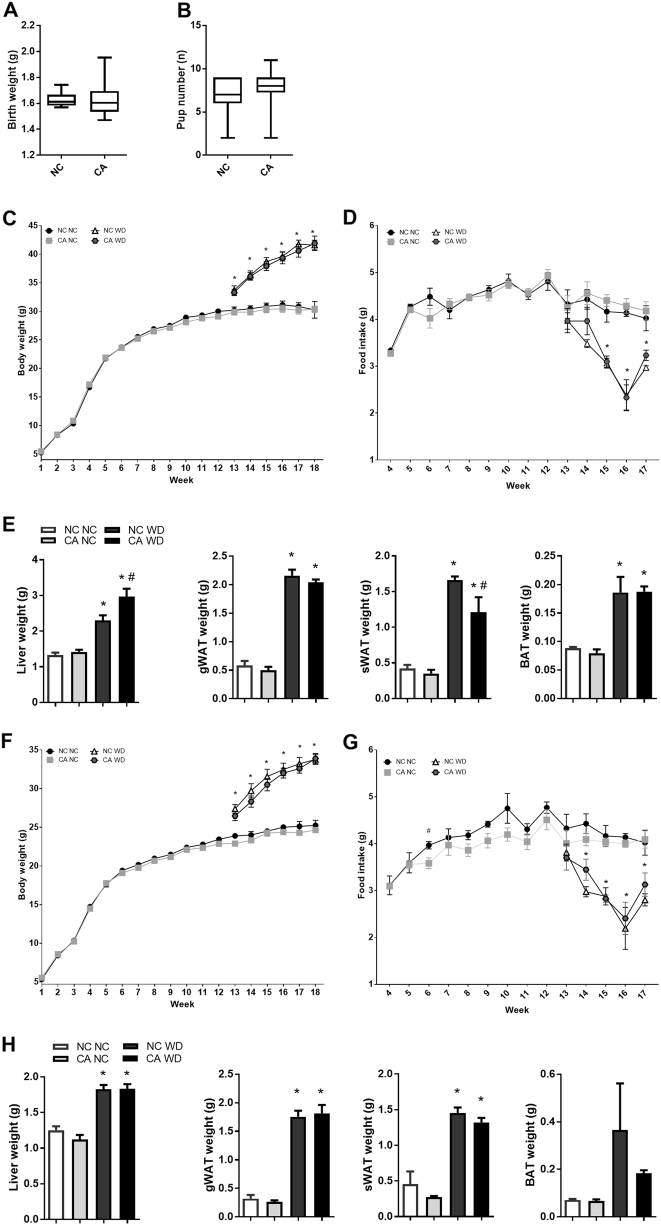
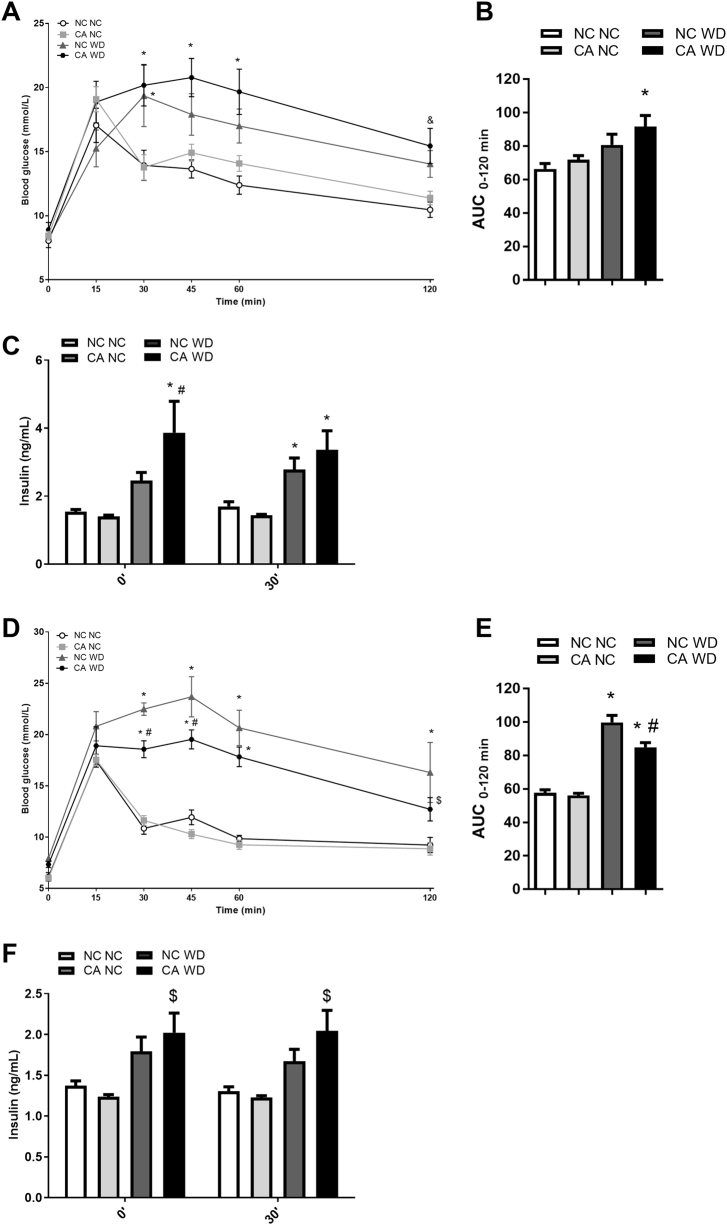
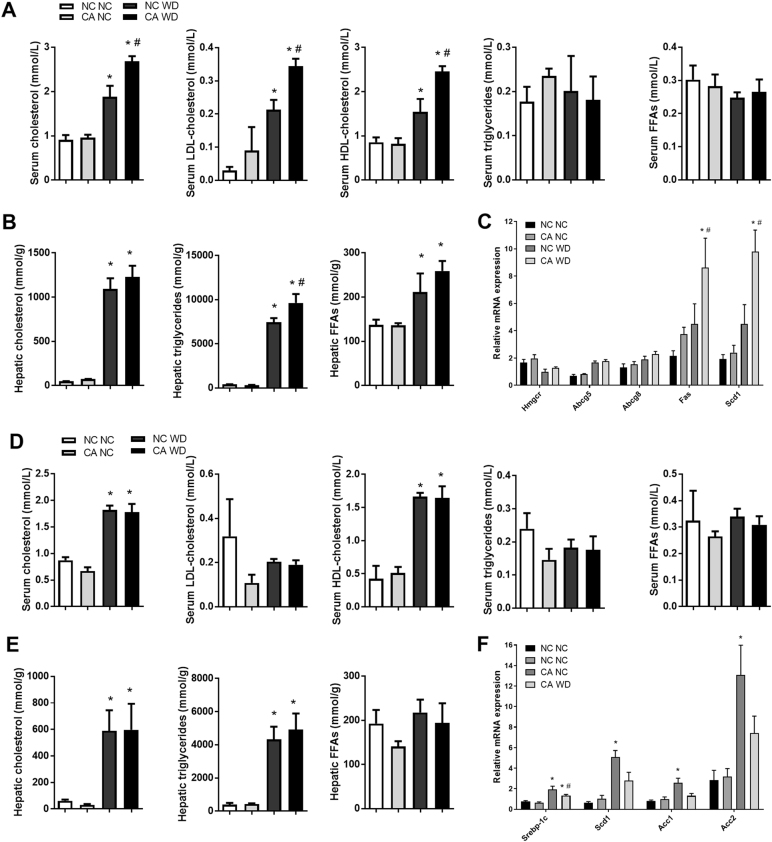
Male offspring (18 weeks old) of cholestatic fathers challenged with WD had raised fasting insulin, hepatic triglyceride content and serum cholesterol levels compared to diet-matched controls. At 25-29 weeks of age, WD-fed male offspring of cholestatic fathers had higher systolic and diastolic blood pressure than controls and this was prevented by paternal UDCA treatment. In contrast, WD-challenged female offspring of cholestatic fathers showed improved glucose tolerance compared to controls.
We demonstrated in our model of paternal cholestasis that offspring susceptibility to adiposity-associated cardiometabolic disease is affected in a sex-specific manner and paternal UDCA treatment had a protective effect against hypertension in the obese male offspring. The most prevalent human cholestatic conditions are primary sclerosing cholangitis and primary biliary cholangitis. These findings are of clinical relevance to children of men with these conditions.
肥胖是一种异质性表型,与心血管疾病和 2 型糖尿病等非传染性疾病的风险关联受到多种因素的影响。受孕时父亲的代谢状态会影响后代患肥胖和肥胖相关心血管代谢疾病的易感性。胆汁淤积性肝病的特征是循环血清胆汁酸水平升高和血脂异常,通常用熊去氧胆酸(UDCA)治疗。我们假设,父亲的胆汁淤积会改变后代患肥胖和肥胖相关心血管代谢疾病的易感性,而这种易感性可能会受到父亲用 UDCA 治疗的影响。
在与正常饮食(NC)喂养的雌性小鼠交配前,用 0.5%胆酸(CA)补充饮食喂养雄性 C57BL/6 小鼠 10 周,诱导胆汁淤积。胆汁淤积和 NC 喂养父亲的后代分别用 NC 饮食或 12 周龄时用致肥胖的“西式饮食”(WD)喂养。评估后代的体重和心血管代谢功能,并评估用 UDCA 治疗父亲胆汁淤积的影响。
用 WD 喂养的胆汁淤积父亲的雄性后代(18 周龄)空腹胰岛素、肝甘油三酯含量和血清胆固醇水平升高,与饮食匹配的对照组相比。在 25-29 周龄时,与对照组相比,WD 喂养的胆汁淤积父亲的雄性后代收缩压和舒张压更高,而这种情况可以通过父亲的 UDCA 治疗来预防。相比之下,用 WD 喂养的胆汁淤积父亲的雌性后代葡萄糖耐量得到改善。
我们在父亲胆汁淤积的模型中证明,肥胖相关心血管代谢疾病的易感性在性别特异性方面受到影响,而父亲的 UDCA 治疗对肥胖雄性后代的高血压有保护作用。人类最常见的胆汁淤积症是原发性硬化性胆管炎和原发性胆汁性胆管炎。这些发现与这些疾病男性的孩子有关。