Science Faculty of Bizerte, Carthage University, Bizerte, Tunisia.
Arid and Oases Cropping Laboratory, Arid Regions Institute of Medenine, Medenine, Tunisia.
PLoS One. 2018 May 24;13(5):e0196873. doi: 10.1371/journal.pone.0196873. eCollection 2018.
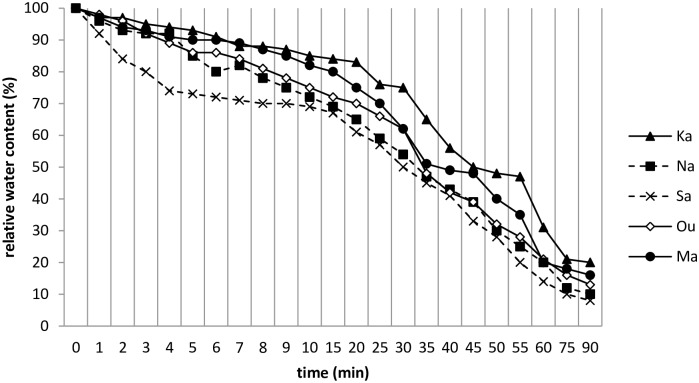
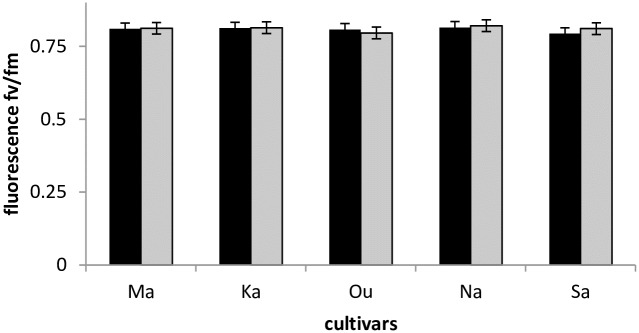
The objective of this work was to perform a comparative analysis of the physiological, biochemical and agronomical parameters of recent and heritage durum wheat cultivars (Triticum durum Desf.) under water-deficit conditions. Five cultivars were grown under irrigated (control) and rainfall (stressed) conditions. Different agro-physiological and biochemical parameters were studied: electrolyte leakage, relative water content, chlorophyll fluorescence, proline, soluble sugars, specific peroxidase activity, yield and drought stress indices. It was revealed that a water deficit increased proline content, electrolyte leakage, soluble sugars and specific peroxidase activity and decreased relative water content, fluorescence and grain yield. According to these parameters and drought stress indices, our investigation indicated that old cultivars are the best-adapted to local conditions and showed characteristics of drought tolerance, while recent cultivars showed more drought susceptibility. Therefore, local cultivars of each country should be kept by farmers and plant breeders to preserve their genetic heritage.
本研究旨在对近期和传统硬粒小麦品种(Triticum durum Desf.)在水分亏缺条件下的生理、生化和农艺参数进行比较分析。五个品种在灌溉(对照)和降雨(胁迫)条件下生长。研究了不同的农业生理和生化参数:电解质渗漏率、相对含水量、叶绿素荧光、脯氨酸、可溶性糖、过氧化物酶比活、产量和干旱胁迫指数。结果表明,水分亏缺增加了脯氨酸含量、电解质渗漏率、可溶性糖和过氧化物酶比活,降低了相对含水量、荧光和籽粒产量。根据这些参数和干旱胁迫指数,我们的研究表明,传统品种最适应当地条件,表现出耐旱特性,而近期品种则表现出更高的干旱敏感性。因此,每个国家的当地品种都应该由农民和植物育种者保留下来,以保护其遗传遗产。