Conti Veronica, Romi Marco, Parri Sara, Aloisi Iris, Marino Giovanni, Cai Giampiero, Cantini Claudio
Department of Life Sciences, University of Siena, 53100 Siena, Italy.
Department of Biological, Geological and Environmental Sciences, University of Bologna, Via Irnerio, 40126 Bologna, Italy.
Plants (Basel). 2021 Sep 2;10(9):1826. doi: 10.3390/plants10091826.
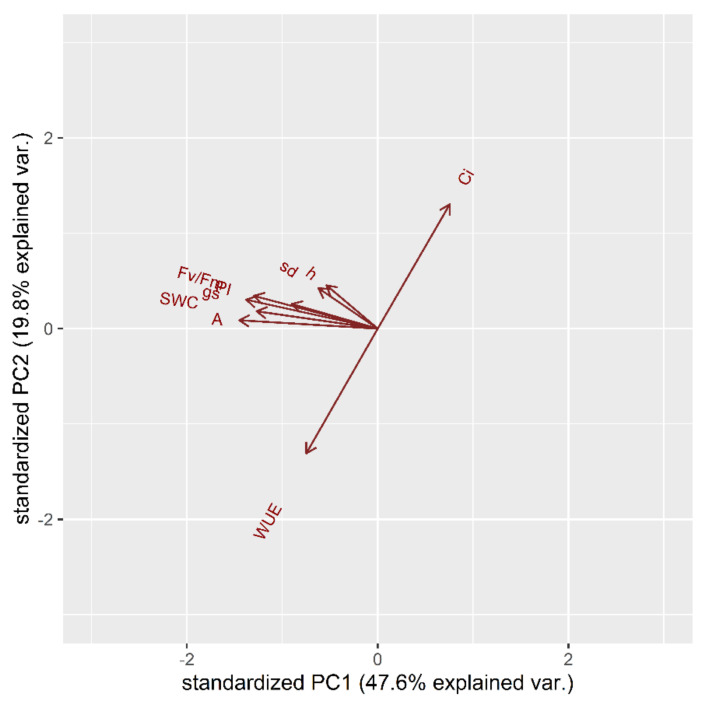
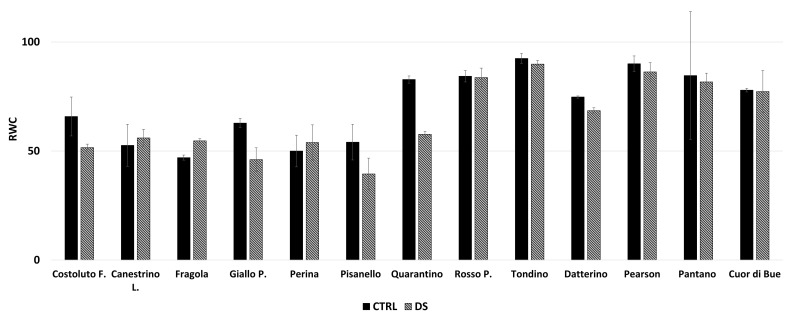
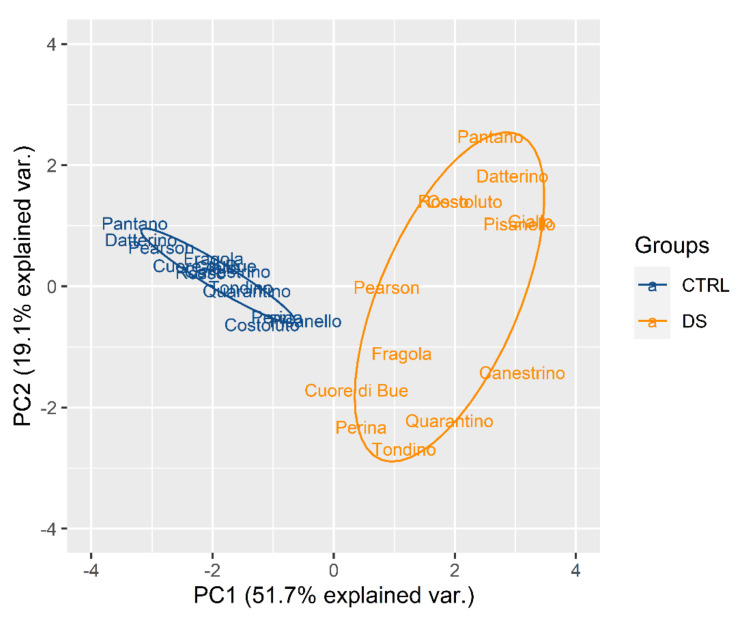
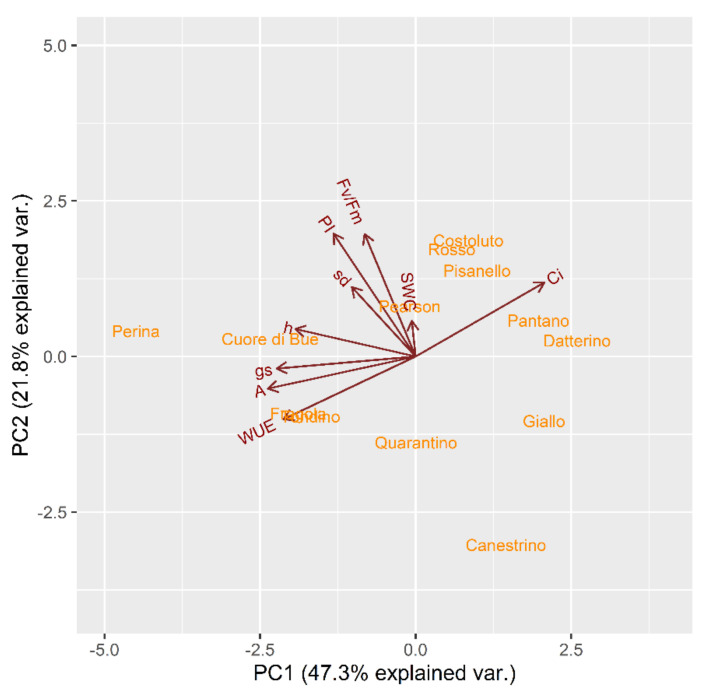
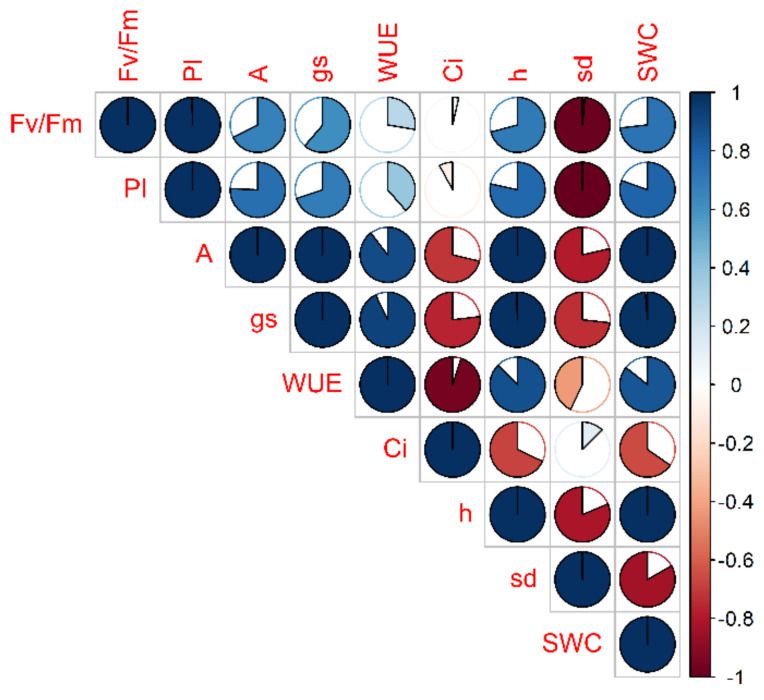
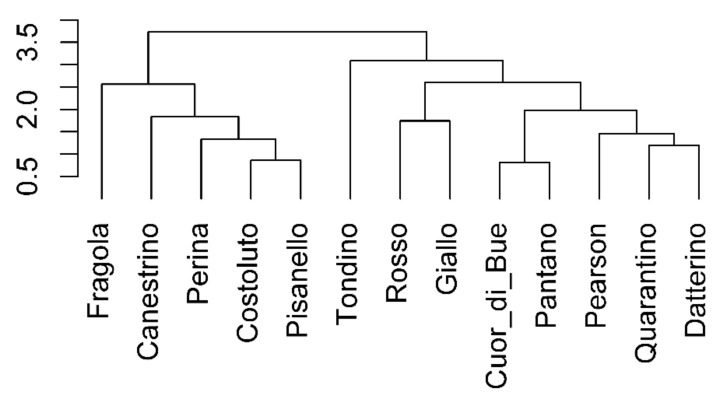
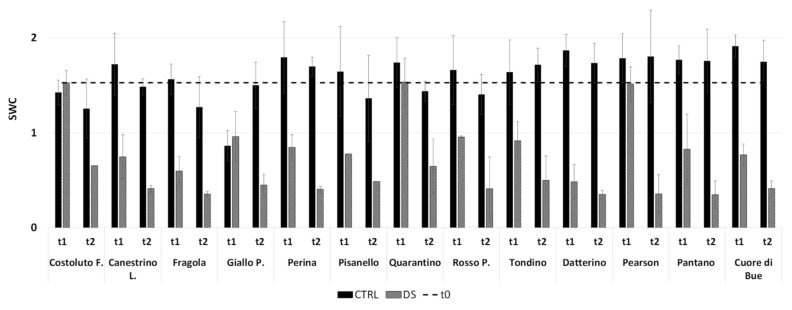
Irrigation is fundamental for agriculture but, as climate change becomes more persistent, there is a need to conserve water and use it more efficiently. It is therefore crucial to identify cultivars that can tolerate drought. For economically relevant crops, such as tomatoes, this purpose takes on an even more incisive role and local agrobiodiversity is a large genetic reservoir of promising cultivars. In this study, nine local Italian cultivars of tomatoes plus four widely used commercial cultivars were considered. These experienced about 20 d of drought, either at vegetative or reproductive phase. Various physio-morphological parameters were monitored, such as stomatal conductance (g), photosynthesis (A), water use efficiency (WUE), growth (GI) and soil water content (SWC). The different responses and behaviors allowed to divide the cultivars into three groups: tolerant, susceptible, and intermediate. The classification was also confirmed by a principal component analysis (PCA). The study, in addition to deepening the knowledge of local Italian tomato cultivars, reveals how some cultivars perform better under stress condition than commercial ones. Moreover, the different behavior depends on the genotype and on the growth phase of plants. In fact, the Perina cultivar is the most tolerant during vegetative growth while the Quarantino cultivar is mostly tolerant at reproductive stage. The results suggest that selection of cultivars could lead to a more sustainable agriculture and less wasteful irrigation plans.
灌溉对农业至关重要,但随着气候变化日益持久,节约用水并提高用水效率变得很有必要。因此,识别能够耐受干旱的品种至关重要。对于像番茄这样具有经济价值的作物来说,这一目标具有更为关键的作用,而当地的农业生物多样性是有前景品种的巨大基因库。在本研究中,考虑了九个意大利当地番茄品种以及四个广泛使用的商业品种。这些品种在营养期或生殖期经历了约20天的干旱。监测了各种生理形态参数,如气孔导度(g)、光合作用(A)、水分利用效率(WUE)、生长(GI)和土壤含水量(SWC)。不同的反应和表现使得这些品种可分为三组:耐受型、敏感型和中间型。主成分分析(PCA)也证实了这种分类。该研究除了加深对意大利当地番茄品种的了解外,还揭示了一些品种在胁迫条件下比商业品种表现更好。此外,不同的表现取决于基因型和植物的生长阶段。事实上,佩里纳品种在营养生长期间最耐受,而夸兰蒂诺品种在生殖阶段大多耐受。结果表明,品种的选择可以带来更可持续的农业和更节水的灌溉计划。