Department of Urology, Obihiro-Kosei General Hospital, Obihiro, Hokkaido, Japan.
Department of Urology, Jinyukai Hospital, Sapporo, Hokkaido, Japan.
PLoS One. 2018 May 24;13(5):e0197252. doi: 10.1371/journal.pone.0197252. eCollection 2018.
Intermittent androgen deprivation therapy is an effective treatment for metastatic prostate cancer. However, no study to date has evaluated the long-term outcomes of this treatment among patients with prostate cancer after radical prostatectomy. We retrospectively examined the treatment outcomes of patients with prostate-specific antigen recurrence who underwent radical prostatectomy at our department.
Of the 690 patients who underwent radical prostatectomy for local prostate cancer between 1988 and 2011, 129 patients who received androgen deprivation therapy for prostate-specific antigen recurrence were included in this study. Patient characteristics, luteinizing hormone-releasing hormone agonist administration, and outcomes were compared between the intermittent androgen deprivation group (n = 66) and the continuous androgen deprivation therapy group (n = 63). The non-recurrence and overall survival rates were compared between groups.
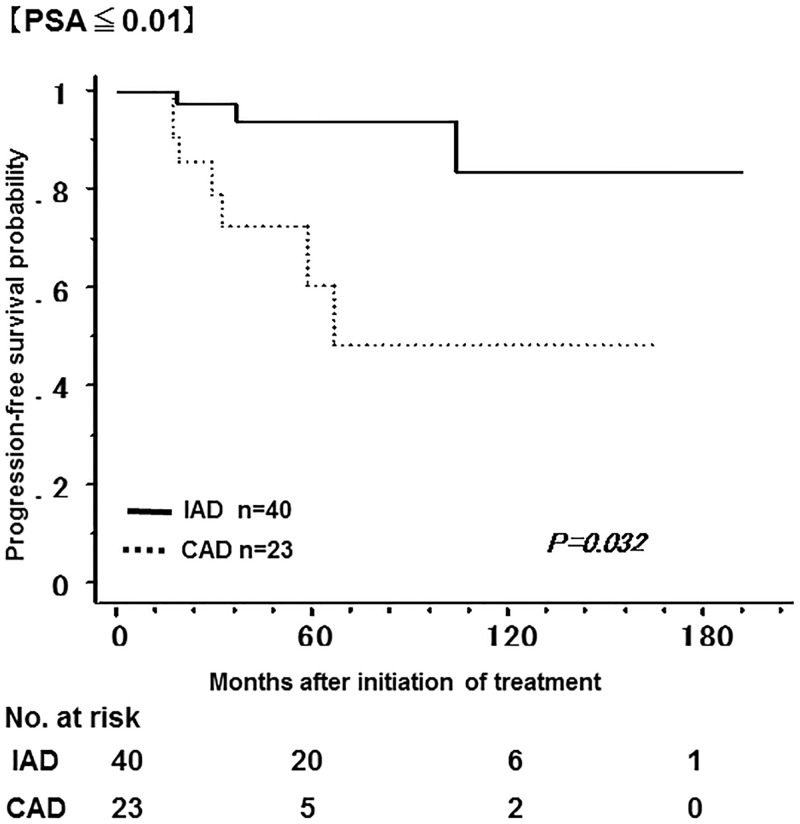
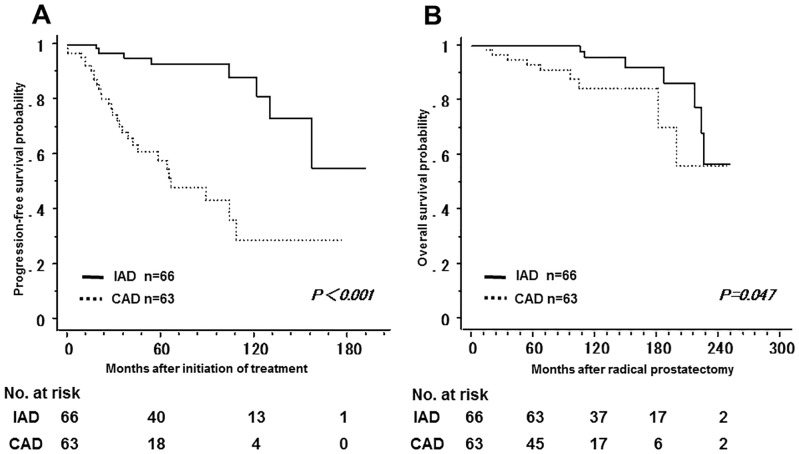
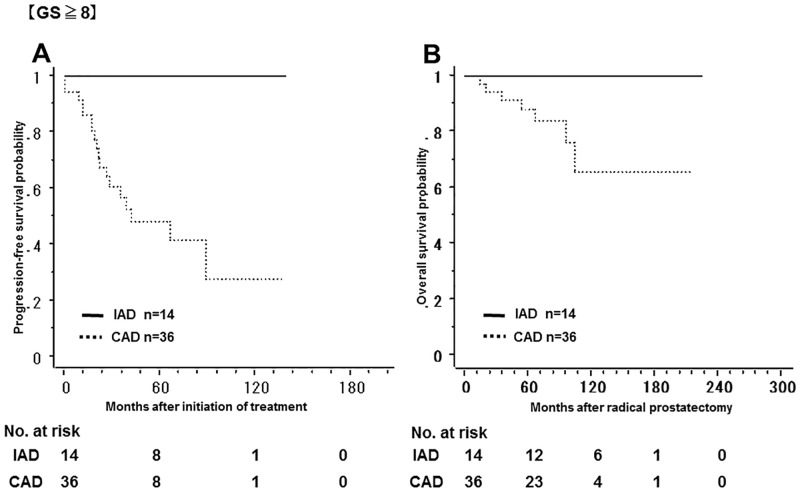
Thirty-six patients (27.9%) experienced recurrence after luteinizing hormone-releasing hormone agonist administration. The 5-year non-recurrence rate and 10-year overall survival rate were higher in the intermittent group (92.9%) than in the continuous group (92.9 vs 57.9%, P < 0.001; and 95.9% vs 84.3%, P = 0.047, respectively). Furthermore, 63 patients (48.8%) showed a PSA nadir of less than 0.01 ng/mL after initiation of luteinizing hormone-releasing hormone agonist; among these patients, the non-recurrence rate was significantly higher in the intermittent androgen deprivation group (P = 0.003).
Intermittent androgen deprivation therapy for prostate specific antigen recurrence after radical prostatectomy contributed to improvement of the non-recurrence rate and overall survival, and can be considered an effective therapy for better prognosis.
间歇性雄激素剥夺疗法是转移性前列腺癌的有效治疗方法。然而,迄今为止,尚无研究评估根治性前列腺切除术后前列腺癌患者接受这种治疗的长期结果。我们回顾性地检查了在我们科室接受根治性前列腺切除术且前列腺特异性抗原(PSA)复发的患者的治疗结果。
在 1988 年至 2011 年间,有 690 例局部前列腺癌患者接受了根治性前列腺切除术,其中 129 例 PSA 复发患者接受了雄激素剥夺治疗。对间歇性雄激素剥夺组(n = 66)和连续雄激素剥夺治疗组(n = 63)患者的特征、促黄体激素释放激素激动剂的使用情况和结果进行了比较。比较了两组之间的无复发生存率和总生存率。
36 例(27.9%)患者在促黄体激素释放激素激动剂治疗后出现复发。间歇性组的 5 年无复发生存率(92.9%)和 10 年总生存率(95.9%)均高于连续组(92.9%比 57.9%,P < 0.001;95.9%比 84.3%,P = 0.047)。此外,63 例(48.8%)患者在开始使用促黄体激素释放激素激动剂后 PSA 降至 0.01ng/mL 以下;其中,间歇性雄激素剥夺组的无复发生存率显著较高(P = 0.003)。
根治性前列腺切除术后 PSA 复发后采用间歇性雄激素剥夺疗法有助于提高无复发生存率和总生存率,可作为改善预后的有效治疗方法。