Hepburn Lydia A, McHugh Angela, Fernandes Kenneth, Boag Garry, Proby Charlotte M, Leigh Irene M, Saville Mark K
Division of Cancer Research, School of Medicine, University of Dundee, Dundee DD1 9SY, UK.
Centre for Cutaneous Research, Barts and The London School of Medicine and Dentistry, Queen Mary University of London, London E1 2AT, UK.
Oncotarget. 2018 May 1;9(33):23029-23046. doi: 10.18632/oncotarget.25196.
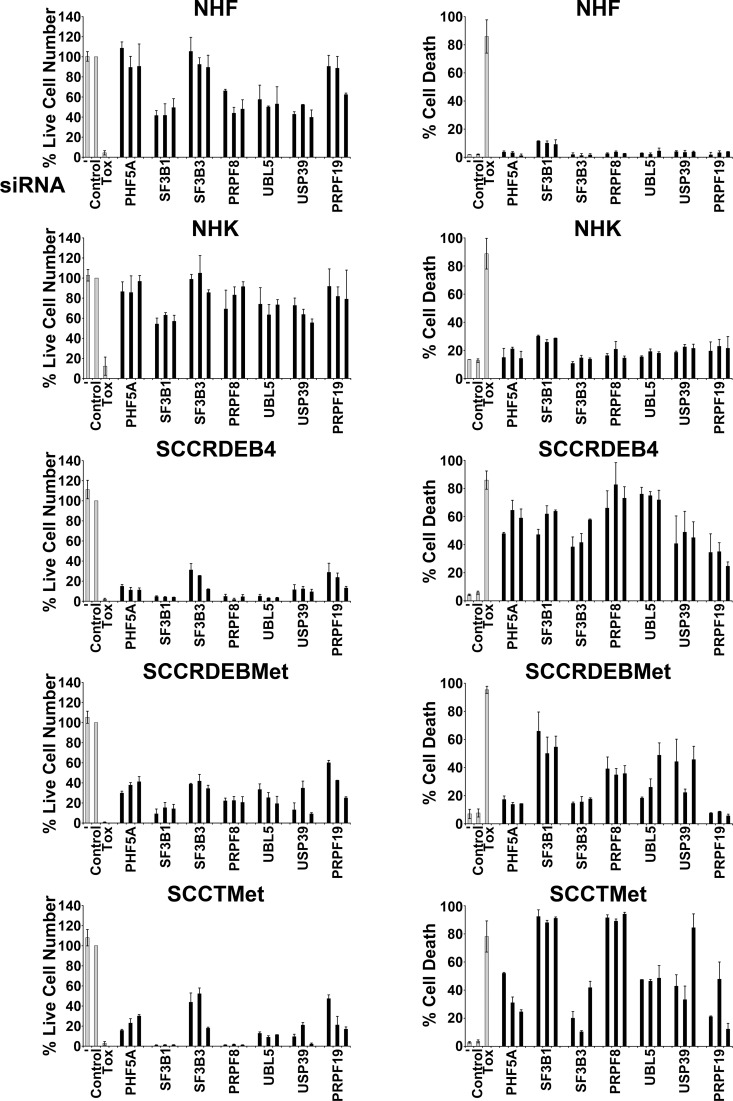
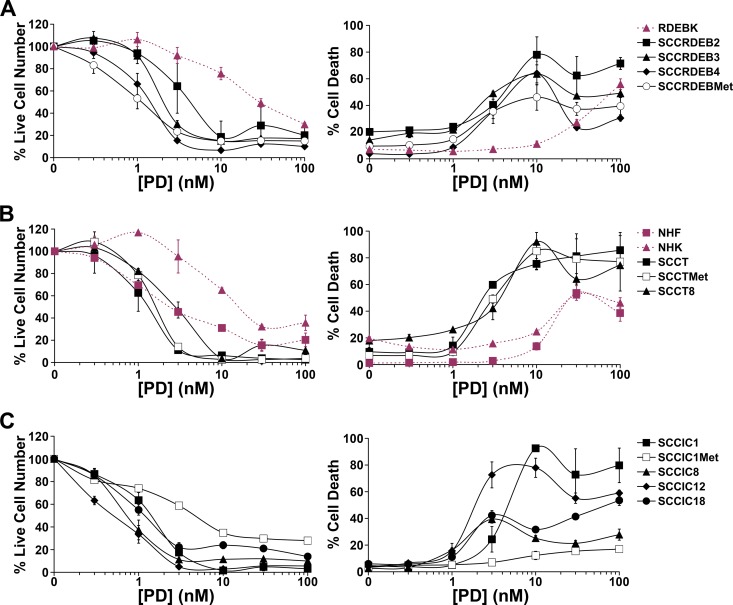
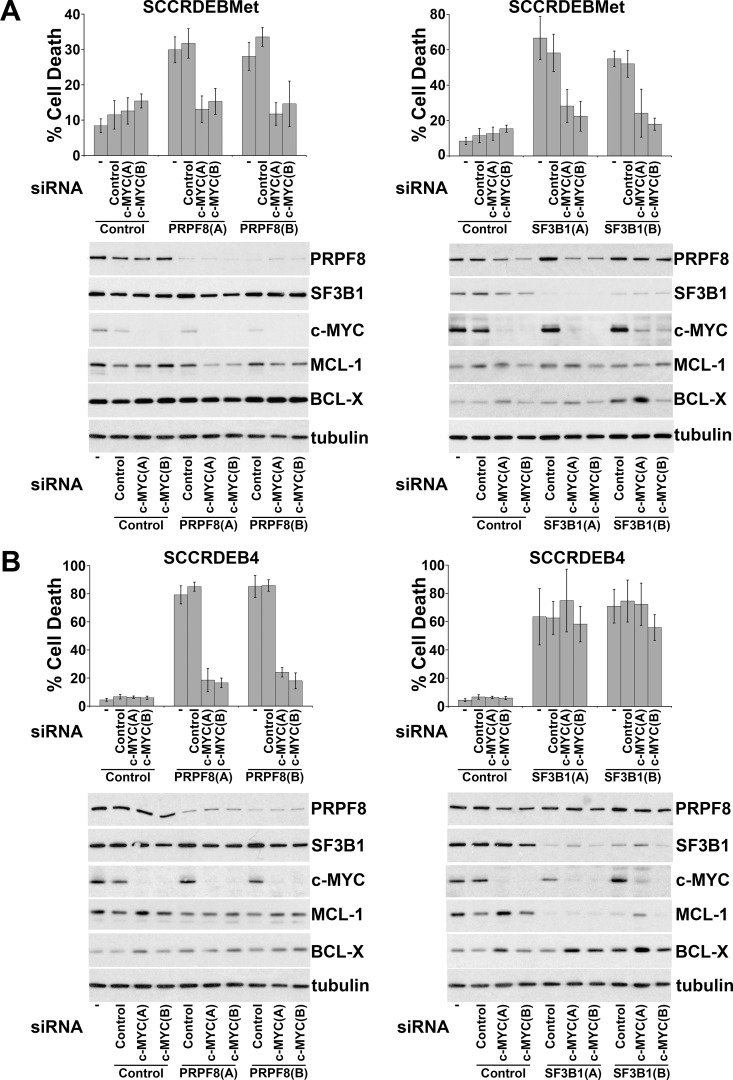
We show that suppression of the spliceosome has potential for the treatment of cutaneous squamous cell carcinoma (cSCC). The small-molecule inhibitors of the spliceosome at the most advanced stage of development target the splicing factor SF3B1/SF3b155. The majority of cSCC cell lines are more sensitive than normal skin cells to death induced by the SF3B1 inhibitor pladienolide B. Knockdown of SF3B1 and a range of other splicing factors with diverse roles in the spliceosome can also selectively kill cSCC cells. We demonstrate that endogenous c-MYC participates in conferring sensitivity to spliceosome inhibition. c-MYC expression is elevated in cSCC lines and its knockdown reduces alterations in mRNA splicing and attenuates cell death caused by interference with the spliceosome. In addition, this study provides further support for a key role of the p53 pathway in the response to spliceosome disruption. SF3B1 inhibition causes wild-type p53 upregulation associated with altered mRNA splicing and reduced protein expression of both principal p53 negative regulators MDMX/MDM4 and MDM2. We observed that wild-type p53 can promote pladienolide B-induced death in tumour cells. However, p53 is commonly inactivated by mutation in cSCCs and p53 participates in killing normal skin cells at high concentrations of pladienolide B. This may limit the therapeutic window of SF3B1 inhibitors for cSCC. We provide evidence that, while suppression of SF3B1 has promise for treating cSCCs with mutant p53, inhibitors which target the spliceosome through SF3B1-independent mechanisms could have greater cSCC selectivity as a consequence of reduced p53 upregulation in normal cells.
我们发现抑制剪接体具有治疗皮肤鳞状细胞癌(cSCC)的潜力。处于研发最先进阶段的剪接体小分子抑制剂靶向剪接因子SF3B1/SF3b155。大多数cSCC细胞系比正常皮肤细胞对SF3B1抑制剂普拉地诺内酯B诱导的死亡更敏感。敲低SF3B1以及剪接体中一系列具有不同作用的其他剪接因子也能选择性地杀死cSCC细胞。我们证明内源性c-MYC参与赋予对剪接体抑制的敏感性。c-MYC在cSCC细胞系中的表达升高,敲低它可减少mRNA剪接的改变,并减轻因干扰剪接体而导致的细胞死亡。此外,本研究进一步支持了p53通路在对剪接体破坏的反应中的关键作用。抑制SF3B1会导致野生型p53上调,这与mRNA剪接改变以及主要p53负调节因子MDMX/MDM4和MDM2的蛋白表达降低有关。我们观察到野生型p53可促进普拉地诺内酯B诱导的肿瘤细胞死亡。然而,p53在cSCC中通常因突变而失活,并且在高浓度普拉地诺内酯B时p53参与杀死正常皮肤细胞。这可能会限制SF3B1抑制剂对cSCC的治疗窗口。我们提供的证据表明,虽然抑制SF3B1有望治疗p53突变的cSCC,但通过不依赖SF3B1的机制靶向剪接体的抑制剂可能具有更高的cSCC选择性,因为正常细胞中p53上调减少。