Department of Gastroenterology and Hepatology, Clinical Nutrition Unit, Sahlgrenska University Hospital, Gothenburg, Sweden.
Department of Internal Medicine and Clinical Nutrition, Sahlgrenska Academy at the University of Gothenburg, Gothenburg, Sweden.
Eur J Nutr. 2019 Mar;58(2):853-864. doi: 10.1007/s00394-018-1722-1. Epub 2018 May 23.
To investigate the effects of eating wholegrain rye bread with high or low amounts of phytate on iron status in women under free-living conditions.
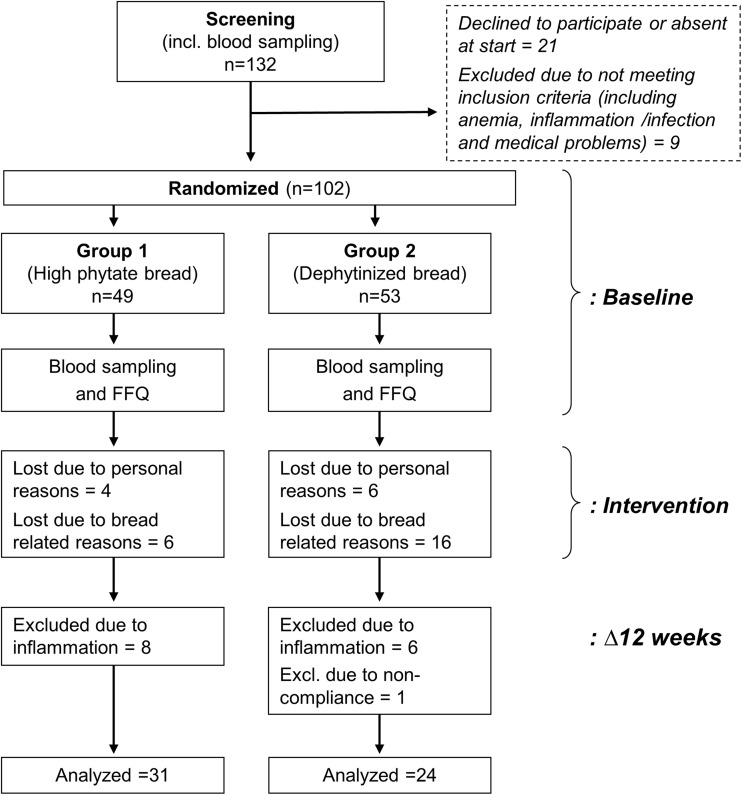
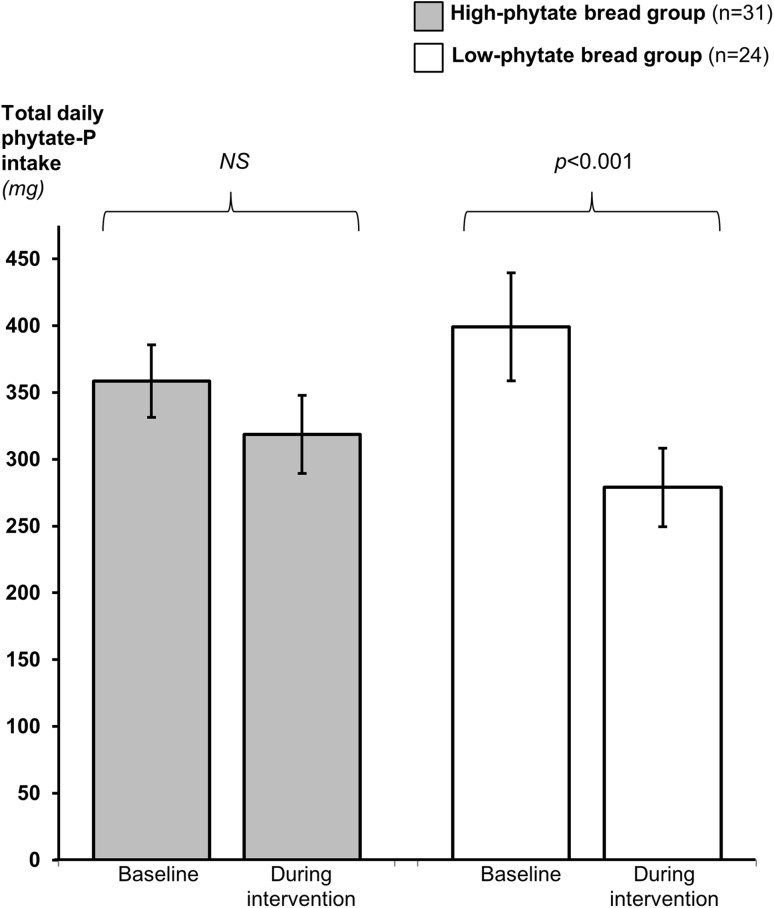
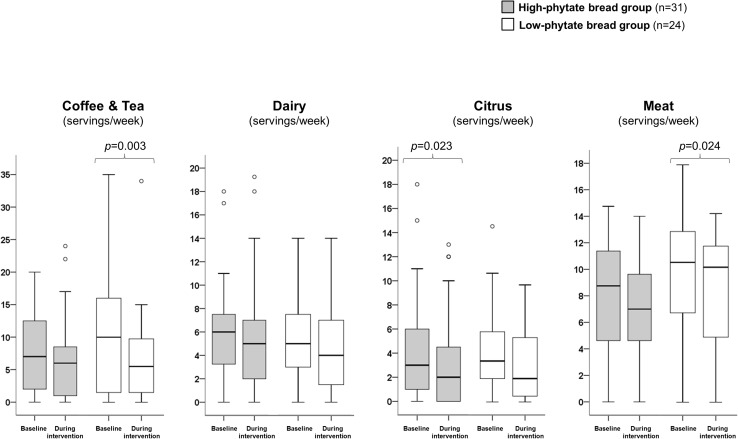
In this 12-week, randomized, parallel-design intervention study, 102 females were allocated into two groups, a high-phytate-bread group or a low-phytate-bread group. These two groups were administered: 200 g of blanched wholegrain rye bread/day, or 200 g dephytinized wholegrain rye bread/day. The bread was administered in addition to their habitual daily diet. Iron status biomarkers and plasma alkylresorcinols were analyzed at baseline and post-intervention.
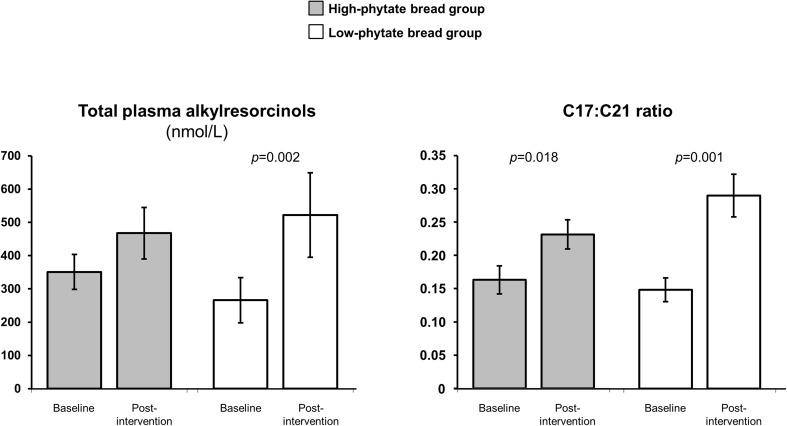
Fifty-five females completed the study. There was a significant difference in change over time in total body iron stores between the two groups (p < 0.035). In the low-phytate bread group (n = 24) there were significant within-group decreases in both ferritin (mean 12%; from 32 ± 7 to 27 ± 6 μg/L, geometric mean ± SEM, p < 0.018) and total body iron (mean 12%; from 6.9 ± 1.4 to 5.4 ± 1.1 mg/kg, p < 0.035). Plasma alkylresorcinols indicated that most subjects complied with the intervention
In Swedish females of reproductive age, no statistically significant difference in iron status was detected after 12 weeks of high-phytate wholegrain bread consumption. However, consumption of low-phytate wholegrain bread for 12 weeks resulted in a reduction of markers of iron status. Although single-meal studies clearly show an increase in iron bioavailability from dephytinization of cereals, medium-term consumption of reduced phytate bread under free-living conditions suggests that this strategy does not work to improve iron status in healthy women of reproductive age.
在自由生活条件下,研究食用高或低植酸全麦黑麦面包对女性铁状态的影响。
在这项为期 12 周的随机、平行设计干预研究中,将 102 名女性分为两组,高植酸面包组或低植酸面包组。两组均给予:200 克焯过的全麦黑麦面包/天,或 200 克去植酸全麦黑麦面包/天。这些面包是在他们的日常饮食之外给予的。在基线和干预后分析铁状态生物标志物和血浆烷基间苯二酚。
55 名女性完成了研究。两组间总铁储存的变化有显著差异(p < 0.035)。在低植酸面包组(n = 24),铁蛋白(均值 12%;从 32 ± 7 降至 27 ± 6 μg/L,几何均数 ± SEM,p < 0.018)和总铁(均值 12%;从 6.9 ± 1.4 降至 5.4 ± 1.1 mg/kg,p < 0.035)均有显著的组内下降。血浆烷基间苯二酚表明,大多数受试者遵守了干预措施。
在瑞典育龄女性中,12 周高植酸全麦黑麦面包消费后,铁状态未检测到统计学显著差异。然而,12 周食用低植酸全麦面包导致铁状态标志物减少。尽管单餐研究清楚地表明,谷物去植酸化可增加铁的生物利用度,但在自由生活条件下,中短期食用低植酸面包表明,这种策略不能改善育龄健康女性的铁状态。