Department of Molecular Physiology and Biophysics, Vanderbilt University, Nashville, TN, USA.
Division of Clinical Pharmacology, Department of Medicine, Vanderbilt University Medical Center, Nashville, TN, USA.
Cardiovasc Res. 2018 Sep 1;114(11):1547-1563. doi: 10.1093/cvr/cvy112.
Monocytes play an important role in hypertension. Circulating monocytes in humans exist as classical, intermediate, and non-classical forms. Monocyte differentiation can be influenced by the endothelium, which in turn is activated in hypertension by mechanical stretch. We sought to examine the role of increased endothelial stretch and hypertension on monocyte phenotype and function.
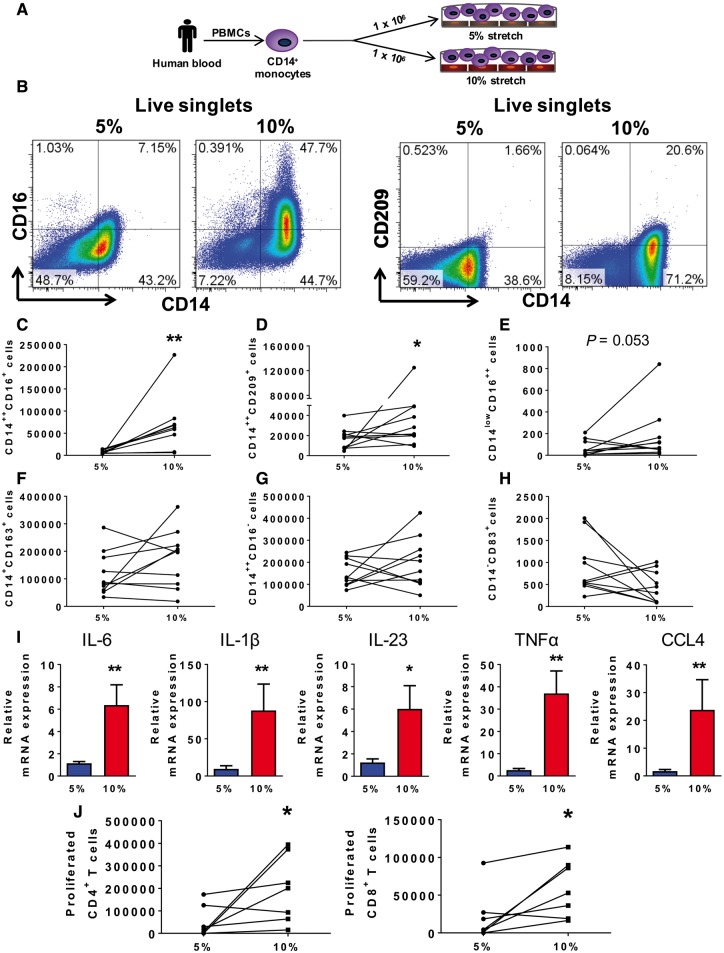
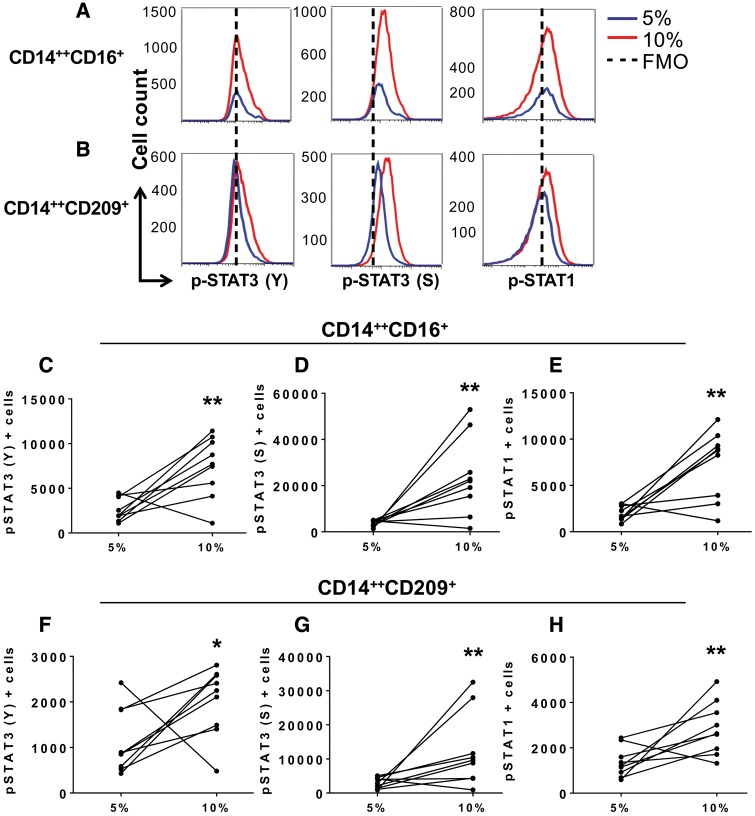
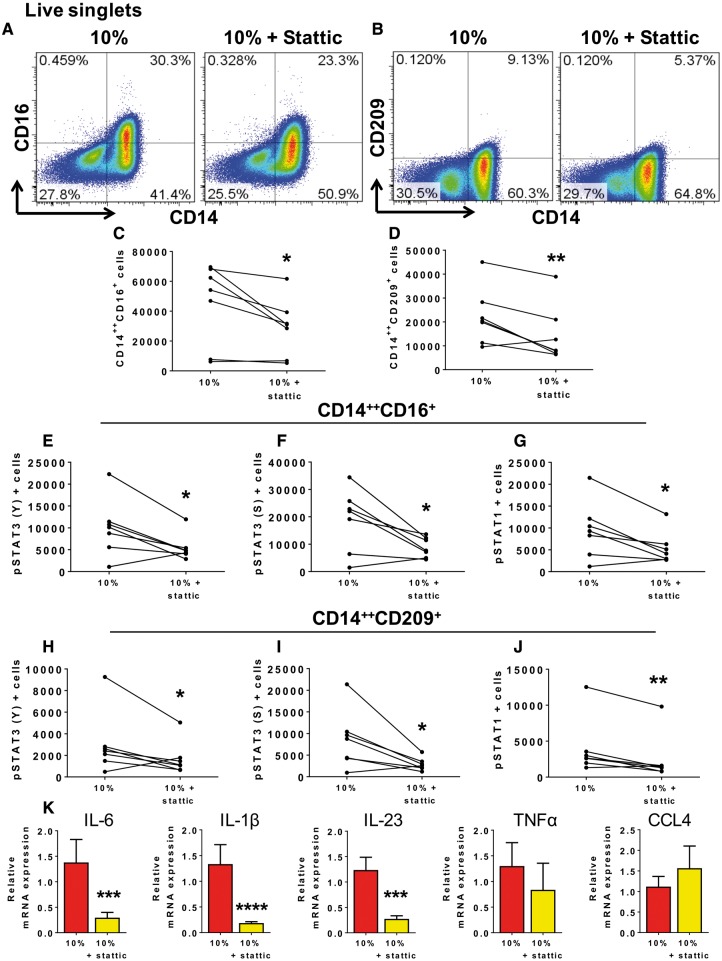
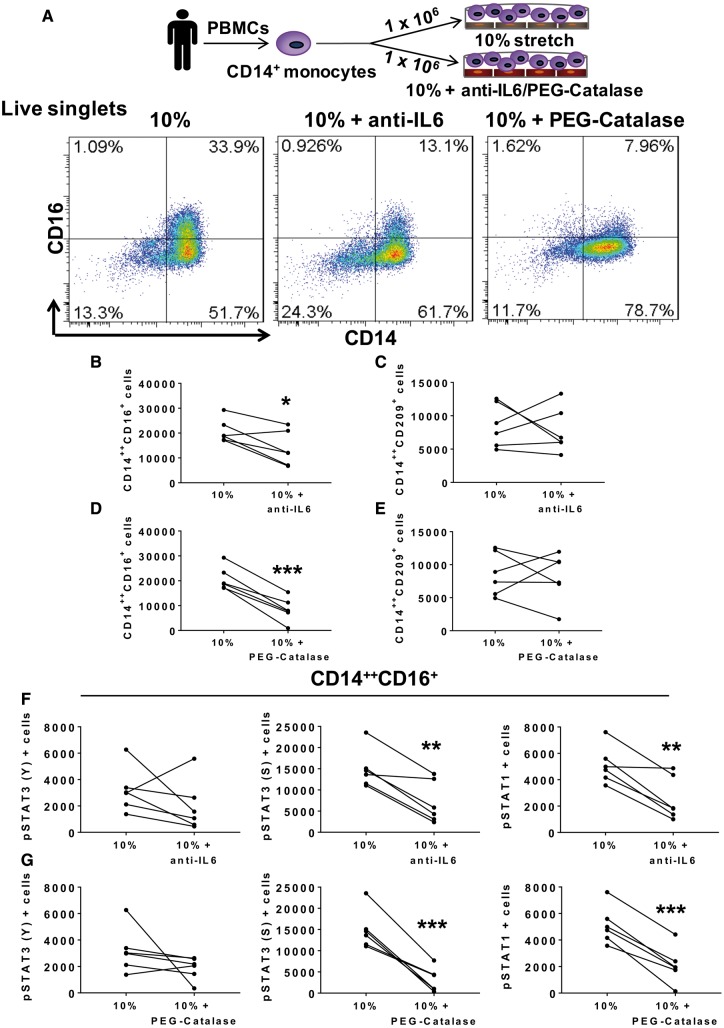
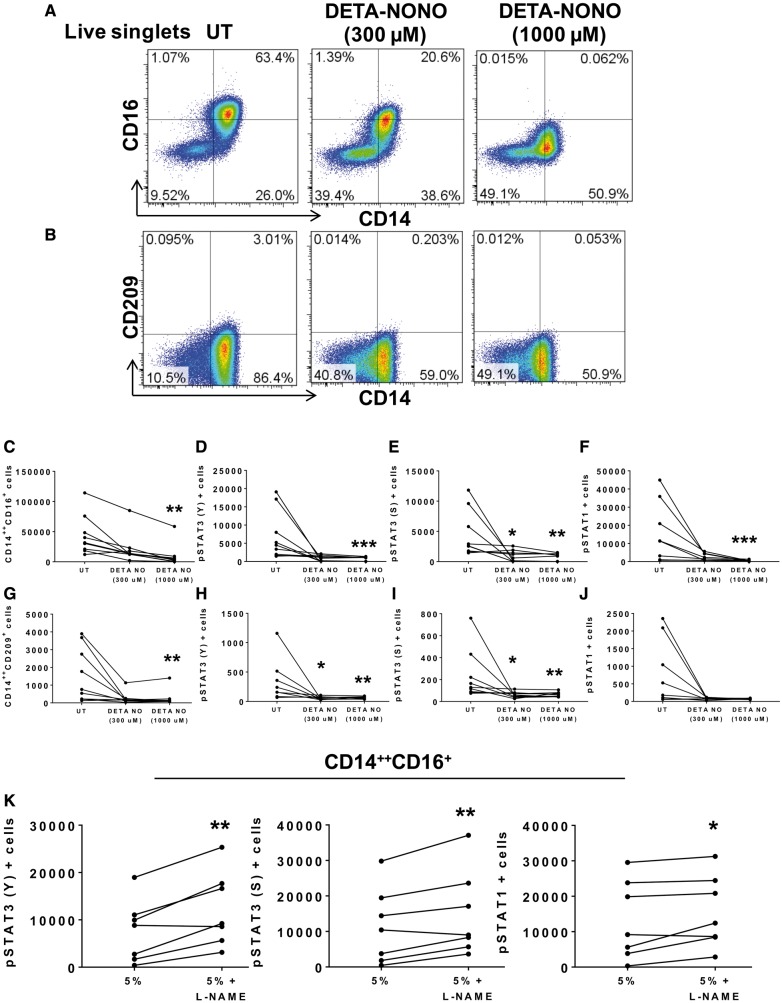
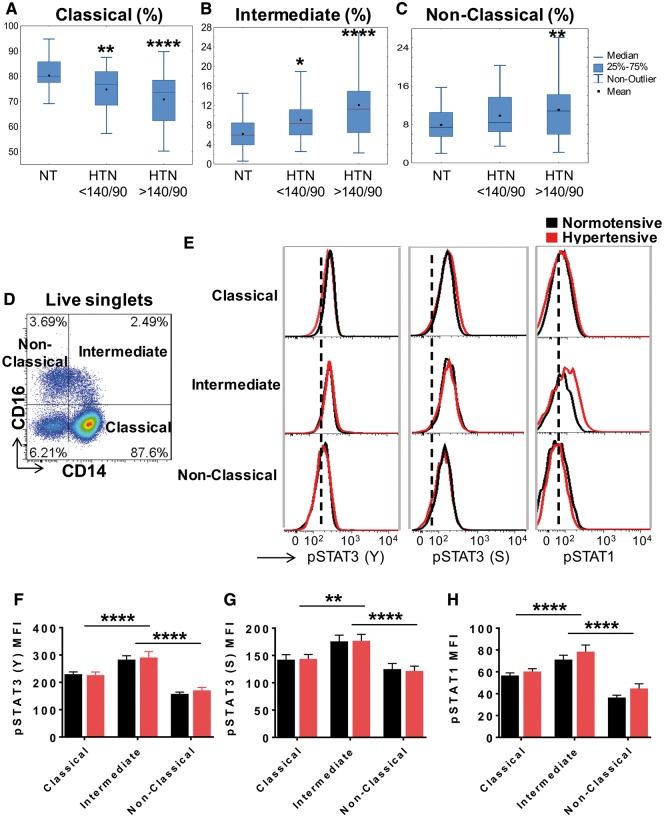
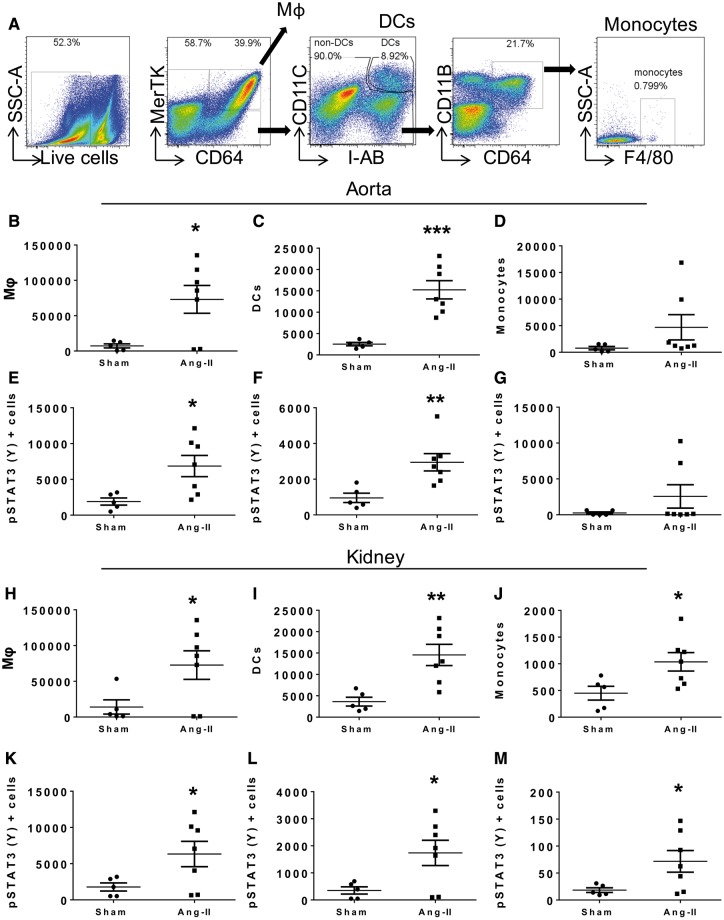
Human monocytes were cultured with confluent human aortic endothelial cells undergoing either 5% or 10% cyclical stretch. We also characterized circulating monocytes in normotensive and hypertensive humans. In addition, we quantified accumulation of activated monocytes and monocyte-derived cells in aortas and kidneys of mice with Angiotensin II-induced hypertension. Increased endothelial stretch enhanced monocyte conversion to CD14++CD16+ intermediate monocytes and monocytes bearing the CD209 marker and markedly stimulated monocyte mRNA expression of interleukin (IL)-6, IL-1β, IL-23, chemokine (C-C motif) ligand 4, and tumour necrosis factor α. STAT3 in monocytes was activated by increased endothelial stretch. Inhibition of STAT3, neutralization of IL-6 and scavenging of hydrogen peroxide prevented formation of intermediate monocytes in response to increased endothelial stretch. We also found evidence that nitric oxide (NO) inhibits formation of intermediate monocytes and STAT3 activation. In vivo studies demonstrated that humans with hypertension have increased intermediate and non-classical monocytes and that intermediate monocytes demonstrate evidence of STAT3 activation. Mice with experimental hypertension exhibit increased aortic and renal infiltration of monocytes, dendritic cells, and macrophages with activated STAT3.
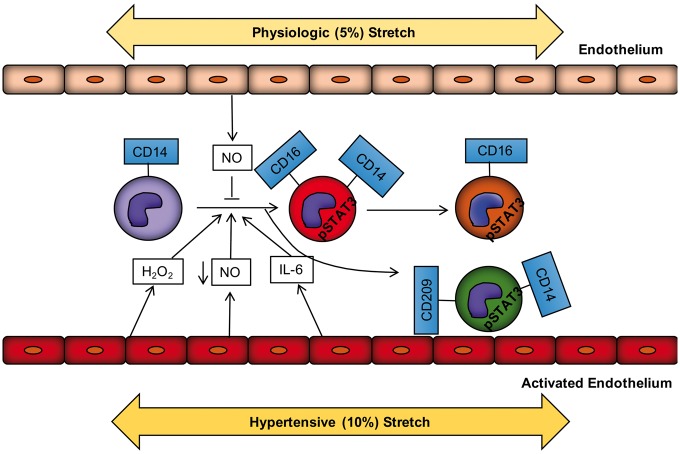
These findings provide insight into how monocytes are activated by the vascular endothelium during hypertension. This is likely in part due to a loss of NO signalling and increased release of IL-6 and hydrogen peroxide by the dysfunctional endothelium and a parallel increase in STAT activation in adjacent monocytes. Interventions to enhance bioavailable NO, reduce IL-6 or hydrogen peroxide production or to inhibit STAT3 may have anti-inflammatory roles in hypertension and related conditions.
单核细胞在高血压中起着重要作用。人类循环中的单核细胞存在经典、中间和非经典三种形式。单核细胞的分化可以受到内皮细胞的影响,而高血压则会导致内皮细胞受到机械拉伸而被激活。我们试图研究内皮细胞拉伸增加和高血压对单核细胞表型和功能的影响。
我们将人类单核细胞与经历 5%或 10%周期性拉伸的人主动脉内皮细胞共培养。我们还描述了正常血压和高血压患者的循环单核细胞特征。此外,我们量化了血管紧张素 II 诱导的高血压小鼠中激活的单核细胞和单核细胞衍生细胞在主动脉和肾脏中的积累。增加内皮细胞拉伸增强了单核细胞向 CD14++CD16+中间单核细胞和表达 CD209 标志物的单核细胞的转化,并显著刺激单核细胞白细胞介素(IL)-6、IL-1β、IL-23、趋化因子(C-C 基序)配体 4 和肿瘤坏死因子-α的 mRNA 表达。增加内皮细胞拉伸激活了单核细胞中的 STAT3。抑制 STAT3、中和 IL-6 和清除过氧化氢可防止中间单核细胞形成对增加内皮细胞拉伸的反应。我们还发现证据表明一氧化氮(NO)抑制中间单核细胞的形成和 STAT3 的激活。体内研究表明,高血压患者的中间单核细胞和非经典单核细胞增多,并且中间单核细胞表现出 STAT3 激活的证据。实验性高血压小鼠表现出主动脉和肾脏中单核细胞、树突状细胞和巨噬细胞的浸润增加,并且 STAT3 被激活。
这些发现为我们提供了关于高血压期间单核细胞如何被血管内皮细胞激活的深入了解。这可能部分归因于功能失调的内皮细胞中一氧化氮(NO)信号的丧失以及白细胞介素(IL)-6 和过氧化氢的释放增加,以及相邻单核细胞中 STAT 激活的平行增加。增强生物可利用的 NO、减少 IL-6 或过氧化氢的产生或抑制 STAT3 的干预措施可能在高血压和相关疾病中具有抗炎作用。