Velonjara Julia, Crouthamel Bonnie, O'Malley Gabrielle, Wiggins Mona, Matemo Daniel, John-Stewart Grace, Unger Jennifer A, Kinuthia John, Drake Alison L
Department of Global Health, University of Washington, 325 9th Ave, Box 359909, Seattle, WA 98104, United States.
Department of Obstetrics and Gynecology, University of Washington, 1959 NE Pacific St, Box 356460, Seattle, WA 98195, United States.
Sex Reprod Healthc. 2018 Jun;16:124-131. doi: 10.1016/j.srhc.2018.03.002. Epub 2018 Mar 15.
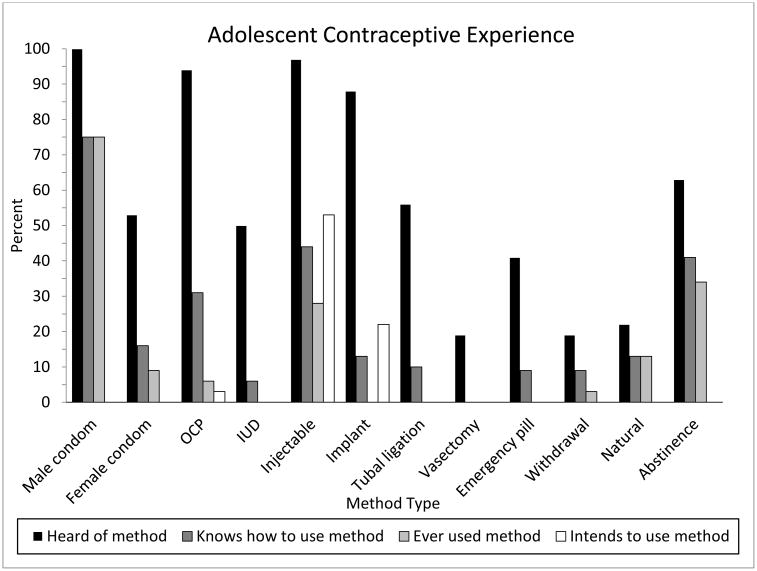
Adolescent fertility rates are high in Kenya, and increase the risks of unintended repeat pregnancies and maternal and infant morbidity and mortality. Our objective was to examine knowledge, practices, and influences surrounding contraceptive access and use among Kenyan postpartum adolescents.
We conducted a mixed methods study (surveys and focus group discussions) with postpartum adolescents and family planning (FP) providers at two maternal and child health clinics in Kenya.
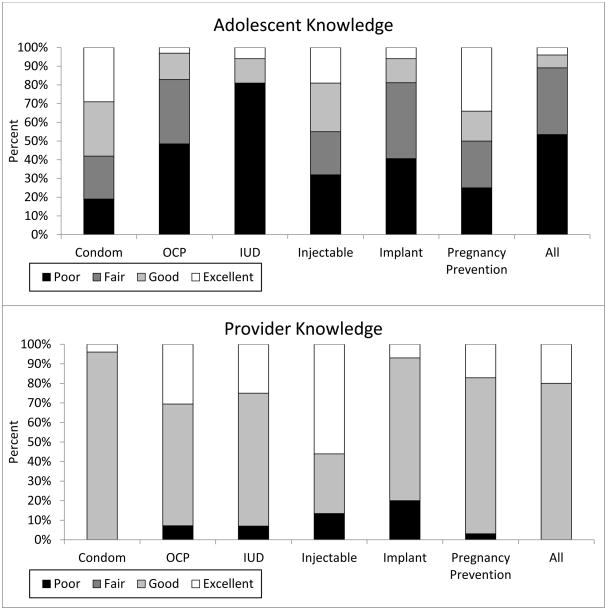
Four focus group discussions (FGDs) were conducted with postpartum adolescents (stratified by age and site), and two FGDs were conducted with FP providers (stratified by site). Transcripts were analyzed for prevalent themes. The participants also completed individual surveys that were analyzed for contraceptive knowledge.
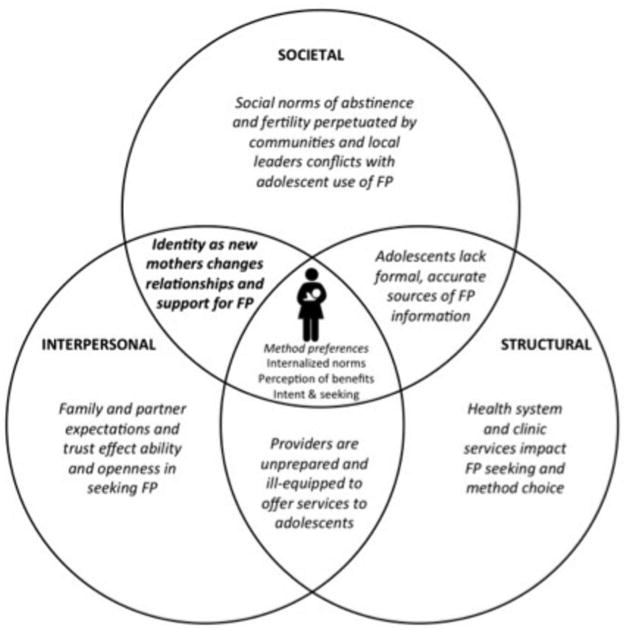
Adolescent contraceptive decision-making and use were shaped by social norms of adolescent sexual behaviour. Lack of FP knowledge, community misinformation, and insufficient counselling and time with providers all contributed to adolescent concerns about FP. However, as adolescents transitioned to motherhood, they felt more encouraged to use FP and had increased awareness of FP benefits.
Both postpartum adolescents and providers felt delivery of FP services could be improved if providers had better training and counselling tools.
肯尼亚青少年生育率较高,这增加了意外再次怀孕以及母婴发病和死亡的风险。我们的目的是调查肯尼亚产后青少年在避孕获取和使用方面的知识、行为及影响因素。
我们在肯尼亚的两家母婴健康诊所,对产后青少年和计划生育(FP)服务提供者开展了一项混合方法研究(调查和焦点小组讨论)。
与产后青少年(按年龄和地点分层)进行了四次焦点小组讨论(FGD),与FP服务提供者(按地点分层)进行了两次FGD。对访谈记录进行分析以找出普遍主题。参与者还完成了个人调查,对其避孕知识进行了分析。
青少年的避孕决策和使用受到青少年性行为社会规范的影响。缺乏计划生育知识、社区错误信息以及与服务提供者的咨询不足和时间不够,都导致青少年对计划生育存在担忧。然而,随着青少年过渡到母亲角色,他们更愿意使用计划生育措施,并且对计划生育益处的认识有所提高。
产后青少年和服务提供者都认为,如果服务提供者接受更好的培训并配备咨询工具,计划生育服务的提供情况会得到改善。